

A fever is one of the most common reasons adults feel unwell, and in many cases, it is actually a sign that the body is working to protect itself. When the immune system detects an infection or inflammation, it responds by increasing body temperature to slow down harmful organisms and support healing. In this way, fever is often a natural and helpful response.
Not all fevers are harmless. High or long-lasting fever, especially with severe symptoms, may signal a serious underlying condition. In such cases, del rio emergency room may be needed to prevent complications like dehydration, confusion, or organ stress.
What Is a Fever?
A fever is a temporary rise in body temperature that happens when the immune system reacts to infection or illness. In adults, it is usually considered a fever when the temperature reaches 100.4°F (38°C) or higher. It is not a disease itself but a sign that the body is fighting something.
Body Temperature
A fever is identified based on body temperature readings. Normal temperature stays between 97°F and 99°F, while anything above 100.4°F is considered a fever. Higher readings may indicate a more serious condition.
Why Fever Happens
Fever develops as part of the body’s immune response. It helps slow down the growth of viruses and bacteria while the immune system works to fight infection. This is why fever often appears during illness.
How Long Does a Fever Last?
The duration of a fever depends on its cause, but most mild viral fevers last between 2 to 3 days. If a fever persists longer or continues to worsen, it may indicate an underlying infection that requires medical evaluation.
When Fever Becomes a Concern
Fever becomes concerning when it is high, persistent, or accompanied by other symptoms. If it leads to weakness, dehydration, or worsening health, medical evaluation may be needed.
Seek immediate help from urgent care for high fever if the fever becomes very high, persists for several days, or is accompanied by severe symptoms such as confusion, dehydration, difficulty breathing, or seizures.
Fever Symptoms
Fever rarely appears alone. It is usually accompanied by a range of symptoms that reflect how the body is responding to illness. These symptoms can vary from mild discomfort to more serious warning signs.
Common symptoms include:
- Chills or shivering episodes
- Sweating as the body attempts to regulate temperature
- Headache caused by inflammation or dehydration
- Muscle aches and body pain
- General fatigue or lack of energy
These symptoms are commonly seen in viral infections such as the flu or respiratory illnesses. In many cases, they improve within a few days with rest, hydration, and basic care.
Signs of dehydration
Fever increases fluid loss in the body, making dehydration a common complication. Warning signs include:
- Dry mouth, cracked lips, or sticky saliva
- Reduced urination or dark-colored urine
- Dizziness or lightheadedness
- Strong thirst even after drinking fluids
When dehydration becomes more severe, it may affect blood pressure, energy levels, and organ function. In such cases, medical evaluation may be necessary, especially if the person is unable to keep fluids down or feels increasingly weak, including care at the closest emergency room near me .
What Causes a Fever
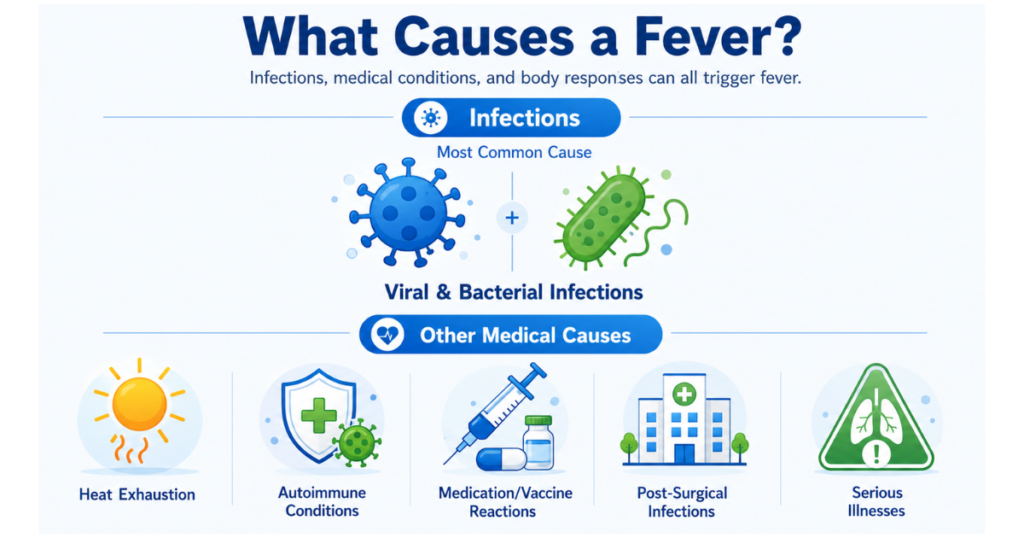
Fever can result from many different causes, ranging from mild infections to more serious underlying health conditions. Identifying the cause is important for proper treatment and recovery.
Infections
Infections are the most common cause of fever in adults. Viral illnesses like flu and colds usually cause mild fever and often improve on their own. Bacterial infections such as pneumonia or UTIs can cause higher or persistent fever and may need antibiotics. If untreated, they can lead to complications.
Other medical causes
Fever can also occur without an infection. Some possible causes include:
- Heat exhaustion from prolonged exposure to high temperatures
- Autoimmune or inflammatory conditions where the immune system is overactive
- Reactions to medications or recent vaccinations
- Post-surgical or post-procedure infections
- Serious underlying illnesses affecting normal body function
Can dehydration cause fever?
Dehydration does not directly cause fever, but it can contribute to an increase in body temperature and make an existing fever worse by reducing the body’s ability to regulate heat. Because fever has multiple possible causes, persistent, unexplained, or recurring cases should always be evaluated by a healthcare professional.
What Is a High Fever for an Adult
Understanding temperature ranges helps determine how serious a fever may be and when it requires closer attention.
- 100.4°F (38°C) → Fever begins
- 101°F–102°F (38.3°C–38.9°C) → Mild to moderate fever
- 103°F (39.4°C) → High fever warning
- 104°F (40°C) or higher → Medical emergency level
A high fever becomes concerning when it does not respond to medication or continues to rise despite treatment. At this point, the body may struggle to regulate temperature effectively. In such cases, visiting a 24/7 emergency room and waiting for at least 10 minutes for initial assessment ensures timely evaluation and treatment.
When to Go to the ER
Some fever cases require immediate emergency medical attention. Delaying care in these situations can increase the risk of serious complications. if you experience:
- Fever lasting more than 3 days without improvement
- Temperature above 103°F–104°F
- Confusion, disorientation, or unusual behavior
- Chest pain or difficulty breathing
- Severe dehydration or inability to keep fluids down
- Symptoms worsening despite medication
- Signs of severe infection or extreme weakness
These symptoms may indicate that the body is under significant stress or fighting a serious infection that cannot be managed at home. Prompt medical evaluation helps identify the cause and begin appropriate treatment quickly.
How to Reduce Fever in an Adult
Mild to moderate fever can often be managed at home with supportive care. The goal is not only to reduce temperature but also to support the body’s natural healing process.
Home care measures
- Drink plenty of fluids, such as water, herbal tea, or electrolyte solutions
- Get adequate rest to allow the immune system to recover
- Use over-the-counter medications like acetaminophen or ibuprofen as directed
- Wear lightweight clothing and avoid overheating
Cooling methods
- Take a lukewarm sponge bath to help lower body temperature
- Place a cool, damp cloth on the forehead or neck
- Keep the room ventilated and comfortably cool
These methods can help relieve discomfort, but they do not treat the underlying cause of fever. If symptoms persist, worsen, or return frequently, medical evaluation is necessary to rule out more serious conditions.
Get Prompt Treatment for High Fever
High fever in adults should never be ignored when it becomes severe, lasts longer than expected, or comes with unusual symptoms. While many cases improve with rest and basic care, some may indicate infections or conditions that need urgent medical attention. If you or a loved one is dealing with a persistent or high fever, seek timely medical evaluation at STAT Specialty Hospital to get accurate diagnosis and prompt treatment for a safe and faster recovery.
Key Takeaways
- A fever in adults is usually a sign that the immune system is fighting an infection or illness.
- High fever becomes concerning when it reaches 103°F or more or does not improve with treatment.
- Common causes include viral infections, bacterial infections, heat exhaustion, and inflammatory conditions.
- Warning symptoms like confusion, chest pain, or difficulty breathing require immediate medical attention.
- While mild fever can often be managed at home, persistent or severe fever should be evaluated by a healthcare provider.
FAQs
1. When should I worry about a high fever in adults?
You should be concerned if the fever is above 103°F, lasts more than 3 days, or is accompanied by symptoms like confusion, chest pain, or breathing difficulty.
2. Can a high fever go away on its own?
Mild fevers often improve with rest and fluids, but high or persistent fevers may not resolve without treating the underlying cause.
3. What is the fastest way to reduce a fever at home?
Staying hydrated, resting, using fever-reducing medication (like acetaminophen or ibuprofen), and keeping the body cool can help lower fever temporarily.