
Swimming pools offer a fun way to stay active, cool off, and spend time with family and friends. However, water-related accidents can happen quickly, often without warning. According to safety experts, drowning remains one of the leading causes of accidental injury deaths among children, making water safety an important priority for every household.
Learning how to prevent drowning in a swimming pool starts with understanding potential risks and implementing effective safety measures. From supervision and pool barriers to CPR training and emergency preparedness, taking proactive steps can help protect swimmers of all ages and create a safer pool environment. In case of a water-related emergency, visit us at our nearby facilities the Laredo emergency room, the emergency room in Eagle Pass, the emergency room in Laredo, TX, or the emergency room in Del Rio can help ensure fast evaluation and life-saving care when every second matters.
Key Ways to Prevent Drowning
Preventing drowning requires more than simply knowing how to swim. It involves active supervision, maintaining a safe environment, following pool safety rules, and being prepared to respond during emergencies.
By combining multiple layers of protection, families can significantly reduce the risk of drowning incidents. The following safety measures can help keep swimmers safer in and around the water.
Never Leave Children Unattended
Active supervision is one of the most effective ways to prevent drowning in a swimming pool. Young children can slip into the water silently and within seconds, even when adults are nearby. Drowning often occurs quickly and without the splashing or shouting many people expect.
When supervising children, avoid distractions such as phones, books, or lengthy conversations. Designating a responsible “water watcher” can help ensure someone is always focused on swimmer safety. Maintaining constant visual contact can significantly reduce the risk of a water-related emergency.
Enroll in Swimming Lessons
Swimming lessons provide essential skills that improve confidence, water awareness, and overall safety. Learning how to float, tread water, and safely exit a pool can help swimmers react appropriately in unexpected situations.
Both children and adults can benefit from professional swim instruction. Even experienced swimmers can improve their technique and learn additional safety practices that may help prevent accidents.
Swim With a Buddy
Swimming with another person provides an additional layer of protection in case of an emergency. Even experienced swimmers can encounter unexpected situations such as fatigue, cramps, medical issues, or sudden distress in the water.
A swimming partner can recognize warning signs, call for help, or provide assistance until emergency responders arrive. Whether swimming at a backyard pool, community facility, or recreational area, the buddy system remains one of the simplest and most effective water safety practices.
Essential Swimming Pool Safety Rules
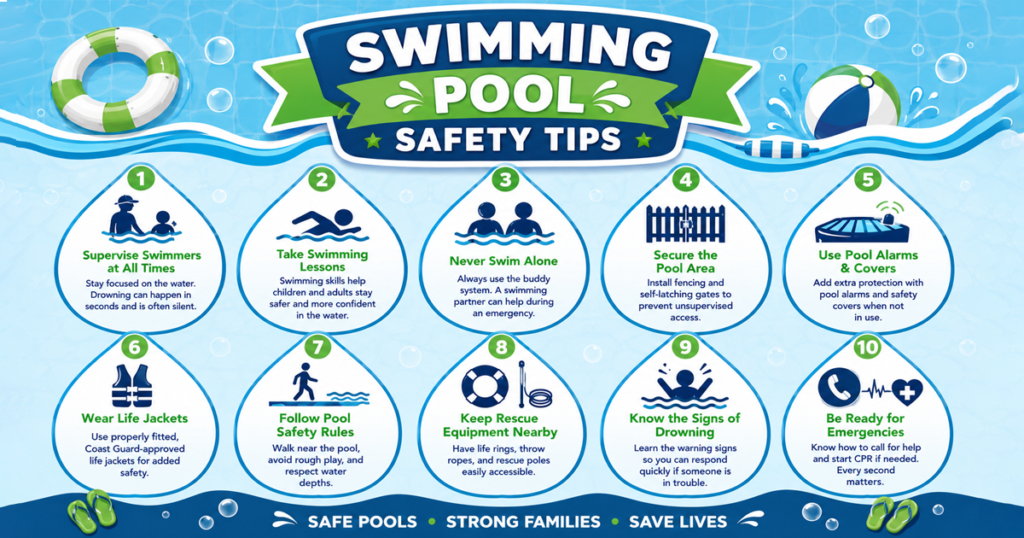
Following clear swimming pool safety rules helps create a safer environment and reduces preventable accidents. Establishing expectations before anyone enters the water can encourage responsible behavior and minimize risks.
Pool safety rules should be consistently enforced for children and adults alike. When everyone understands and follows the rules, the likelihood of accidents decreases significantly.
Walk, Don’t Run
Pool decks often become wet and slippery, increasing the likelihood of falls and injuries. Running around the pool can result in cuts, fractures, head injuries, or accidental entry into the water.
Children and adults should be encouraged to walk carefully around swimming areas at all times. Consistently enforcing this rule helps create a safer environment and reduces preventable accidents that may require medical attention.
Know the Pool Depth
Understanding the depth of a swimming pool is essential before entering the water. Diving or jumping into shallow areas can lead to serious head, neck, and spinal injuries that may have lifelong consequences.
Swimmers should pay attention to posted depth markers and only dive in designated areas where it is safe to do so. Taking a few moments to familiarize yourself with the pool layout can help prevent serious injuries and improve overall safety.
Avoid Horseplay
Roughhousing, pushing, and other unsafe behaviors can result in injuries and unexpected submersion incidents. Activities that may seem harmless can quickly become dangerous around water.
Encouraging respectful and responsible behavior helps maintain a safer environment for everyone. Adults should model safe practices and intervene when unsafe conduct occurs.
Secure Your Pool Area
Limiting unsupervised access to the pool is one of the most effective ways to prevent drowning. A secure pool area helps protect children and others who may not fully understand the dangers associated with water.
Combining physical barriers with safety devices provides stronger protection than relying on a single safety measure. Multiple layers of security help reduce the chances of accidental access.
Install Proper Pool Fencing
Pool fencing serves as a critical barrier between children and water, helping prevent unsupervised access to the pool area. Studies have consistently shown that properly installed fencing can significantly reduce the risk of childhood drowning incidents.
For maximum effectiveness, fences should completely surround the pool and include self-closing, self-latching gates. Combined with supervision and other safety measures, fencing provides an important layer of protection for families with young children.
Use Pool Covers and Alarms
Pool covers and alarms provide additional safeguards when the pool is not in use. These safety features help alert homeowners when someone enters the pool area and can discourage unsupervised access.
While these devices should never replace supervision, they can serve as valuable backup protection. Using multiple layers of security is one of the most effective strategies for drowning prevention.
Store Pool Toys Properly
Leaving toys in or around the pool may encourage children to approach the water unsupervised. Young children may attempt to retrieve toys without understanding the associated risks.
Removing toys after swimming sessions helps eliminate unnecessary temptation and keeps the area organized. It also reduces tripping hazards and contributes to a safer pool environment.
Swimming Pool Safety Equipment Every Pool Should Have
Having the right swimming pool safety equipment readily available can improve emergency response times and support rescue efforts. Safety equipment should be easy to access and regularly inspected to ensure proper functionality.
Preparedness plays a major role in drowning prevention. A well-equipped pool area allows for quicker intervention when emergencies occur.
Life Jackets and Flotation Devices
Properly fitted life jackets can help reduce drowning risks for inexperienced swimmers and young children. Unlike pool toys or inflatable arm bands, approved life jackets are specifically designed to provide buoyancy and support in the water.
When selecting a flotation device, ensure it is appropriate for the user’s size, weight, and intended activity. Life jackets are particularly important during boating activities and for swimmers who are still developing water safety skills.
Rescue Equipment
Emergency rescue tools should be easily accessible near every pool. Having the proper equipment nearby can help bystanders provide assistance while minimizing risks to themselves.
Recommended equipment includes:
- Life rings
- Rescue tubes
- Throw ropes
- Shepherd’s hooks
- Reaching poles
First Aid Supplies
Every pool area should have a well-stocked first aid kit readily available. Quick access to emergency supplies can help address minor injuries and support care while waiting for medical professionals.
Consider including bandages, antiseptic wipes, disposable gloves, emergency contact information, and a CPR mask. Regularly checking and replenishing supplies helps ensure readiness during emergencies.
Recognizing a Drowning Emergency
Drowning often looks very different from what is portrayed in movies and television. Many victims cannot wave for help or call out because they are struggling to breathe and remain above the water’s surface. Recognizing warning signs early can allow for faster intervention and improve outcomes. Understanding what drowning actually looks like is an important part of swimming pool safety.
A person who is drowning may be unable to communicate because their body is focused on breathing. Their movements are often subtle and easy to overlook, especially in a busy pool environment.
Common warning signs include:
- Head low in the water
- Mouth at water level
- Gasping or struggling to breathe
- Glassy or vacant eyes
- Little or no leg movement
- Inability to move toward safety
- Attempting to roll onto the back
- Sudden silence after visible distress
What to Do If Someone Is Drowning
Quick action can make a critical difference during a drowning emergency. Remaining calm and following basic rescue principles can help improve safety for both the victim and rescuer.
Knowing what steps to take before an emergency occurs can increase confidence and improve response times during a stressful situation.
Call for Emergency Assistance
If someone appears to be drowning, calling emergency services should be one of the first actions taken. Immediate professional medical assistance can significantly improve outcomes and ensure the individual receives appropriate care as quickly as possible.
When possible, assign a specific person to call emergency responders while others focus on rescue efforts. Clear communication and rapid action are critical during any water-related emergency.
Use Reach or Throw Techniques
Whenever possible, assist the victim without entering the water. Entering the water without proper training can place the rescuer at risk and create an additional emergency.
You can help by:
- Reaching with a pole or towel
- Throwing a life ring
- Using a rescue tube
- Extending a flotation device
Start CPR if Necessary
CPR can be a lifesaving intervention when a person is unresponsive and not breathing normally after being removed from the water. Providing immediate CPR helps maintain blood circulation and oxygen delivery until emergency personnel arrive.
Families who spend time around pools should strongly consider obtaining CPR certification. Knowing how to perform CPR can improve confidence during emergencies and may help save a life when every second matters.
When to Go to the ER After a Water Emergency
Even if someone appears to recover after a drowning or near-drowning incident, medical evaluation may still be necessary. Certain symptoms can indicate serious complications requiring immediate treatment.
Seek emergency care if a swimmer experiences:
- Difficulty breathing
- Persistent coughing
- Chest pain
- Loss of consciousness
- Blue or gray lips
- Extreme fatigue
- Confusion or unusual behavior
- Seizures or unresponsiveness
Prompt medical evaluation at our nearby emergency facilities which are Laredo emergency room, emergency room in Eagle Pass, emergency room in Laredo, TX, or emergency room in Del Rio can help identify complications early and ensure appropriate treatment before symptoms become more severe.
Why Choose STAT Specialty Hospital
Water-related emergencies can escalate quickly, making timely medical care essential. At STAT Specialty Hospital, our experienced emergency healthcare professionals are prepared to evaluate and treat patients experiencing breathing difficulties, near-drowning complications, and other urgent medical concerns.
With advanced diagnostic capabilities, specialized emergency care, and a commitment to patient-centered treatment, STAT Specialty Hospital provides comprehensive medical support when every second matters. Our team is dedicated to delivering prompt, compassionate care to help patients recover safely and confidently.
Key Takeaways
- Never leave children unattended near water.
- Enroll family members in swimming lessons.
- Follow swimming pool safety rules at all times.
- Install fencing, alarms, and other protective barriers.
- Keep rescue equipment and first aid supplies accessible.
- Learn CPR and basic water rescue techniques.
- Recognize the warning signs of drowning.
- Seek emergency medical care after serious water incidents.