

Sepsis is one of the most misunderstood medical emergencies in healthcare, and the confusion around whether it can spread between people is one of the most common sources of unnecessary fear for families and caregivers. The answer is clear: sepsis is not contagious. You cannot catch sepsis from another person through physical contact, shared air, or any other route of exposure. Sepsis is not an infection that travels from one body to another. It is a crisis that happens inside a specific person’s body in response to an infection they are already carrying.
Understanding this distinction is critical because sepsis itself is not contagious. The real danger is an untreated or unrecognized infection progressing into sepsis. Recognizing the warning signs early and seeking timely care at our emergency room Laredo, TX, can help prevent life-threatening complications.
What Is Sepsis?
Sepsis occurs when the immune system’s response to an infection becomes so dysregulated and overwhelming that it starts damaging the body’s own healthy tissues and organs rather than staying focused on eliminating the threat. It is not the infection itself but a dangerous physiological cascade triggered by one, and it can develop from bacterial, viral, or fungal sources located anywhere in the body. According to the Centers for Disease Control and Prevention, approximately 1.7 million adults in the United States develop sepsis annually, and without fast treatment, it can lead to organ failure and death within hours.
Sepsis vs The Infections That Cause It
This is the most important distinction to understand. Sepsis itself is not contagious, but many of the infections that can trigger it are, and those infections can spread to others who then face their own risk of developing sepsis if those infections become serious enough.
Contagious Infections Linked To Sepsis
Strep throat is one of the most common bacterial infections associated with sepsis risk and spreads readily through respiratory droplets between people in close contact. Pneumonia caused by bacterial pathogens is both highly transmissible and one of the most well-documented triggers of sepsis in older adults and people with weakened immune systems. Influenza can also set the stage for sepsis by creating secondary bacterial infections in people who are already vulnerable due to age, chronic illness, or immunosuppression.
Non-Contagious Infections Linked To Sepsis
Urinary tract infections that ascend to the kidneys are a leading sepsis trigger and are not typically spread between people, developing instead from the patient’s own bacteria entering the urinary tract. Skin infections like cellulitis and infected wounds can allow bacteria to penetrate deep tissue and eventually enter the bloodstream, causing the systemic inflammatory response that defines sepsis. Abdominal infections, including appendicitis and bowel perforations, are also serious sources of sepsis that develop internally rather than through person-to-person contact.
Who Is Most At Risk For Developing Sepsis?
While sepsis can develop in anyone with any type of infection, certain groups face a significantly elevated risk of progression to life-threatening illness.
- Older adults over 65 whose immune systems respond more slowly and less aggressively to infections, making even common illnesses potentially dangerous
- Infants under one year old whose immune systems are not yet fully developed and cannot contain serious infections before they spread systemically
- People with diabetes, kidney disease, cancer, or liver disease whose chronic conditions compromise the immune system’s ability to fight infections at the source
- Immunocompromised individuals on chemotherapy, long-term steroids, or living with HIV who face a dramatically reduced capacity to control infections before they escalate
- Anyone who has recently had surgery, a urinary catheter, or an IV line that created a potential entry point for bacteria into the body
What Are The Symptoms Of Sepsis?
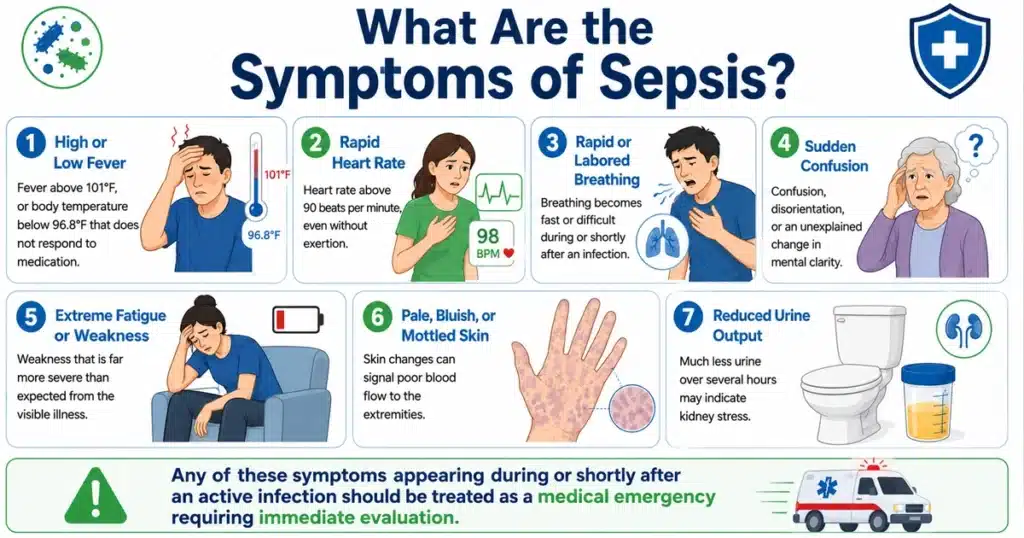
Sepsis symptoms can closely mimic a severe infection in the early stages, which makes recognizing the specific signs that indicate the body has moved beyond a normal immune response critically important for getting help in time.
- High fever in adults above 101°F or, in some cases, an abnormally low body temperature below 96.8°F that does not respond to medication.
- Rapid heart rate exceeding 90 beats per minute, even without exertion or obvious physical activity.
- Rapid or labored breathing developing alongside or shortly after any active infection.
- Sudden confusion, disorientation, or a significant and unexplained change in mental clarity.
- Extreme fatigue or weakness that is clearly out of proportion to the visible symptoms.
- Skin that appears pale, bluish, or mottled, signaling compromised blood flow to the extremities.
- Significantly reduced urine output over several hours, indicating the kidneys are under serious stress.
If you or a loved one experiences these warning signs, seek immediate medical attention. Our infection care team provides prompt evaluation, diagnosis, and treatment to help manage severe infections and reduce the risk of complications.
How Is Sepsis Treated?
Sepsis treatment is entirely time-dependent, and every hour of delay measurably worsens outcomes. Almost all cases require immediate hospitalization and intensive medical support to stop the condition from advancing.
- Intravenous antibiotics are started immediately upon suspected diagnosis to begin targeting the most likely bacterial sources before laboratory cultures confirm the specific organism.
- Fluid resuscitation restores blood volume and helps maintain blood pressure and adequate perfusion to vital organs that are already under stress.
- Vasopressor medications are used when IV fluids alone cannot bring blood pressure to a safe and stable level in cases of severe sepsis or septic shock.
- Oxygen therapy or mechanical ventilation supports breathing when the lungs are affected by the infection or the inflammatory response that sepsis generates.
- Source control through targeted antibiotics, surgical drainage, or removal of infected tissue directly addresses the underlying infection driving the septic response.
How To Reduce Your Risk Of Sepsis
Since sepsis starts with an infection, preventing and promptly treating infections is the most effective strategy for reducing personal risk.
- Stay current on vaccinations, including influenza and pneumococcal vaccines that protect against common sepsis-triggering infections
- Practice consistent handwashing and hygiene habits that reduce the transmission of bacterial and viral infections in everyday settings
- Seek prompt medical evaluation for any infection that is worsening, not improving after 48 hours, or producing a fever above 101°F
- Keep cuts, wounds, and surgical sites clean and monitored for any signs of spreading redness, warmth, or discharge
- Manage chronic conditions like diabetes and kidney disease consistently, since uncontrolled chronic illness significantly increases infection risk
If an infection worsens or you notice signs that may indicate a serious complication, do not delay seeking medical care. Visit the closest emergency room near me for prompt evaluation and treatment to help prevent infections from progressing to sepsis.
When To Go To The ER?
Sepsis moves fast, and every hour of delay worsens outcomes. Do not wait to see if symptoms improve on their own if any of the following appear alongside an active infection:
- Sudden confusion or a dramatic change in mental status during or after an illness
- Fever above 103°F or a temperature drop below 96.8°F not responding to medication
- Rapid heart rate or difficulty breathing alongside a known or suspected infection
- Pale, mottled, or bluish skin tone appearing during a febrile illness
- No urine output or drastically reduced output over several consecutive hours
If you or a loved one experiences these warning signs, do not delay seeking care. With our ER wait times of 5 minutes, you can receive prompt evaluation and treatment to help identify sepsis early and reduce the risk of serious complications.
Sepsis Care At STAT Specialty Hospital
Sepsis is survivable when it is caught fast and treated aggressively from the very first moment symptoms appear. At STAT Specialty Hospital, our team is equipped to recognize sepsis early, initiate targeted IV antibiotic therapy immediately, and monitor every organ system throughout treatment to prevent the cascade from advancing. Whether your symptoms started with a respiratory illness, a urinary infection, a skin infection, or another source entirely, we are ready around the clock to provide the fast and comprehensive emergency care that sepsis demands.
Key Takeaways
- Sepsis is not contagious and absolutely cannot be transmitted from one person to another
- Sepsis is the body’s own extreme immune overreaction to an existing internal infection
- Some infections that trigger sepsis, like strep and pneumonia, can spread to others
- Older adults, infants, and people with chronic conditions face the highest sepsis risk
- Warning signs like confusion, rapid heart rate, and high fever during an infection require immediate ER evaluation
- Early IV antibiotic treatment and supportive care dramatically improve survival and recovery outcomes