
Urinary retention can be frustrating, uncomfortable, and even alarming. If you’ve ever felt the urge to urinate but struggled to start or empty your bladder, you’re not alone. Urinary retention is a condition in which the bladder cannot empty fully or at all, causing urine to remain trapped inside. It can develop suddenly or gradually and may affect people of all ages, although it is more common in older adults.
While mild symptoms may seem manageable at first, urinary retention can quickly become a medical emergency if left untreated. A severely overfilled bladder can lead to intense pain, urinary tract infections, bladder damage, kidney problems, and other serious complications. If you are experiencing these symptoms, visiting the Emergency Room in Eagle Pass ensures prompt evaluation and care before the condition has a chance to worsen or cause lasting damage.
Urinary Retention Symptoms You Should Never Ignore
Urinary retention can become serious if not treated promptly. Sudden or worsening symptoms may lead to bladder damage, infection, or kidney problems. Any combination of the symptoms below, especially complete inability to urinate, should be treated as a urological emergency requiring immediate medical evaluation.
- Difficulty starting urination
- A weak or interrupted urine stream
- Feeling unable to fully empty the bladder
- Frequent urges to urinate with little urine output
- Lower abdominal pain or pressure
- Swelling or fullness in the lower abdomen
- Dribbling urine after urination
- Needing to strain to pass urine
- Complete inability to urinate, which is a medical emergency
What Causes Urinary Retention?
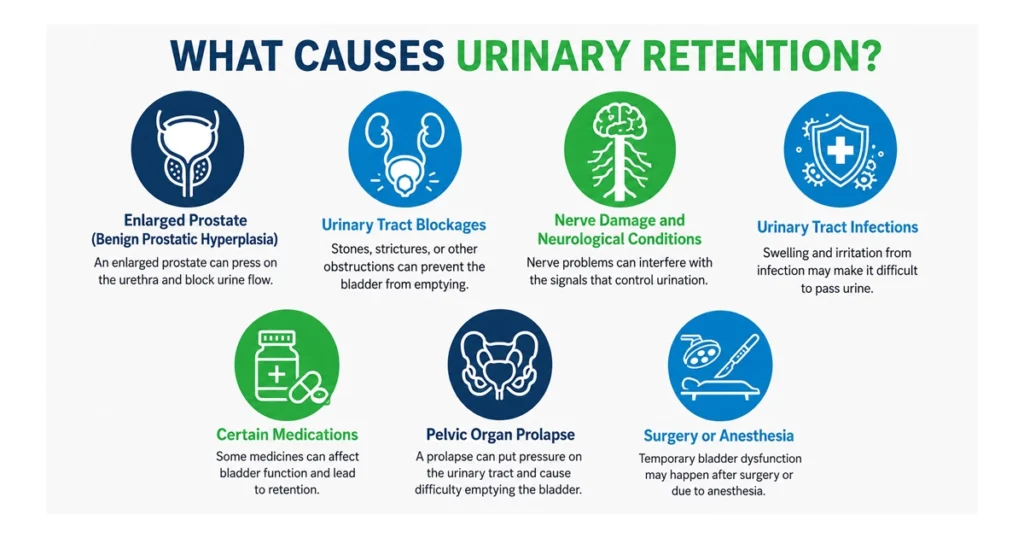
If you’re experiencing urinary retention, it can be frustrating and concerning not knowing why your bladder is not emptying properly. Urinary retention is not a disease itself but a symptom of an underlying problem affecting the urinary tract, nerves, muscles, or surrounding structures.
Enlarged Prostate (Benign Prostatic Hyperplasia)
An enlarged prostate is one of the most common causes of urinary retention in men, especially as they age. As the prostate grows, it can press against the urethra and restrict the flow of urine from the bladder. This blockage may lead to a weak urine stream, difficulty starting urination, and incomplete bladder emptying. In severe cases, it can cause complete urinary retention.
Symptoms
- Weak urine stream
- Difficulty starting urination
- Frequent nighttime urination
- Feeling of incomplete bladder emptying
Urinary Tract Blockages
Anything that blocks the normal flow of urine can lead to urinary retention. Common examples include kidney stones, bladder stones, urethral strictures, and certain tumors. These obstructions narrow or block the urinary passage, making it difficult for urine to leave the bladder. The severity of symptoms often depends on the location and size of the blockage.
Symptoms
- Sudden difficulty urinating
- Pain or discomfort during urination
- Weak or interrupted urine flow
- Lower abdominal pressure
Nerve Damage And Neurological Conditions
The bladder relies on signals between the brain, spinal cord, and nerves to function properly. Conditions such as stroke, multiple sclerosis, Parkinson’s disease, spinal cord injuries, and diabetic nerve damage can disrupt these signals. When communication is impaired, the bladder may not contract effectively or may fail to empty completely. This can result in chronic urinary retention.
Symptoms
- Loss of bladder control
- Difficulty sensing bladder fullness
- Incomplete emptying of urine
- Sudden or unpredictable urinary issues
Urinary Tract Infections
Urinary tract infections can cause inflammation and swelling within the urinary system, making urination painful and difficult. In some cases, severe infections may temporarily block urine flow or interfere with normal bladder function. Retention caused by infection is more likely to occur when swelling becomes significant. Prompt treatment can help prevent complications.
Symptoms
- Burning sensation during urination
- Frequent urge to urinate
- Cloudy or foul-smelling urine
- Lower abdominal pain or discomfort
Also read: Can a UTI Cause Nausea?
Certain Medications
Some medications can affect the nerves or muscles involved in urination and increase the risk of urinary retention. Common examples include antihistamines, decongestants, antidepressants, muscle relaxants, and certain pain medications. These drugs may reduce bladder contractions or tighten the muscles around the bladder outlet. Patients should always discuss medication-related symptoms with a healthcare provider.
Symptoms
- Difficulty starting urination
- Weak urine flow
- Sudden inability to urinate
- Bladder pressure or fullness
Pelvic Organ Prolapse
In women, pelvic organ prolapse can contribute to urinary retention. This condition occurs when pelvic organs, such as the bladder or uterus, shift from their normal position and place pressure on the urinary tract. The resulting obstruction can make it difficult to fully empty the bladder. Symptoms often worsen over time if left untreated.
Symptoms
- Feeling of vaginal or pelvic pressure
- Difficulty fully emptying the bladder
- Urinary leakage or dribbling
- Frequent urination
Surgery Or Anesthesia
Temporary urinary retention is a common complication after surgery. Anesthesia and certain pain medications can interfere with bladder muscle function and reduce the sensation of needing to urinate. Most cases improve as the effects of medication wear off, but some patients may require short-term treatment to empty the bladder safely.
Symptoms
- Inability to urinate after surgery
- Bladder fullness or discomfort
- Weak or absent urine flow
- Abdominal distension
When To Go To The ER
Urinary retention can quickly become a medical emergency when the bladder is unable to empty at all or symptoms suddenly worsen. Delaying care may increase pressure in the bladder and raise the risk of infection, kidney damage, or severe pain. Check the ER wait time and head in immediately if you experience any of the following.
- Complete inability to urinate despite a strong urge
- Severe lower abdominal pain or swelling
- Fever with chills along with urinary symptoms
- Blood in the urine
- Sudden worsening of urinary symptoms
- Confusion, weakness, or signs of infection spreading
- Persistent vomiting with urinary discomfort
How To Treat Urinary Retention
Urinary retention requires prompt medical attention because the bladder is unable to empty properly, which can lead to pain, infection, or serious complications. The condition is usually managed in a clinical setting after identifying the underlying issue through proper evaluation. If symptoms are worsening or you are unable to urinate at all, finding an ER near me and seeking immediate care is the safest and most effective first step.
Bladder Catheterization
Bladder catheterization is one of the most common and immediate treatments for urinary retention. A healthcare professional inserts a thin, flexible tube into the bladder to drain trapped urine and relieve pressure. This procedure provides quick relief from discomfort and prevents bladder overstretching. It is typically done in a hospital or emergency setting and may be temporary or short-term.
Prescription Medications
Doctors may prescribe medications to improve urine flow and address the underlying functional issue causing retention. These can include drugs that relax bladder muscles or improve urine passage, depending on the patient’s condition. If infection is present, prescribed antibiotics may also be used. All medications should only be taken under medical supervision for safety and effectiveness.
Intermittent Or Indwelling Catheter Use
In some cases, doctors may recommend intermittent catheterization or a temporary indwelling catheter to ensure regular bladder emptying. This approach helps prevent urine buildup and reduces pressure on the urinary system. It may be used short-term or while further evaluation is being done. Proper hygiene and medical guidance are essential during catheter use.
Surgical Or Procedural Intervention
If urinary retention does not improve with initial management, doctors may recommend surgical or procedural treatment. These procedures are performed by specialists to remove blockages or correct structural problems affecting urine flow. The goal is to restore normal bladder function and prevent recurrence. The choice of procedure depends on severity and medical findings.
Bladder Training And Supportive Care
After stabilization, some patients may benefit from bladder training techniques and supportive care under medical guidance. This may include scheduled urination attempts and lifestyle adjustments recommended by a healthcare provider. It helps improve bladder function over time in selected cases. Follow-up care is important to monitor recovery and prevent recurrence.
Urinary Retention Care at STAT Specialty Hospital
Urinary retention can be painful and may signal an underlying medical issue that needs prompt attention. At STAT Specialty Hospital, patients are evaluated quickly, diagnosed accurately, and given personalized care to relieve symptoms and prevent complications like infection or kidney strain.
At STAT Specialty Hospital, urinary retention is managed with evidence-based treatment tailored to each patient’s needs. Our focus is on restoring normal bladder function, easing discomfort, and ensuring proper follow-up care for better recovery and urinary health.
Key Takeaways
- Urinary retention is the inability to fully or partially empty the bladder and can develop suddenly or gradually.
- It can become a medical emergency, especially if you cannot urinate at all or have severe lower abdominal pain.
- Common symptoms include weak urine flow, frequent urges, incomplete emptying, and bladder pressure.
- Causes range from enlarged prostate and infections to nerve damage, medications, blockages, and post-surgical effects.
- Complete inability to urinate, fever, blood in urine, or worsening pain requires immediate ER care.
- Treatment often includes catheterization to quickly relieve bladder pressure and restore urine flow.
- Addressing the underlying cause is essential to prevent recurrence and long-term complications.
- Prompt medical evaluation helps prevent kidney damage, infection, and bladder injury.