

A bladder infection can start as mild discomfort, but it often raises an important question: Do Bladder Infections Heal on Their Own? In some very mild cases, the body may temporarily control early bacterial growth, but most bladder infections do not fully resolve without treatment and can worsen quickly if ignored.
What begins as burning during urination or frequent bathroom trips can escalate into severe pelvic pain, fever, or even kidney infection if bacteria spread upward. This is why timely attention is important, especially when symptoms persist, intensify, or occur with blood in the urine, back pain, or chills. If these symptoms develop, seek prompt care at our emergency room in Eagle Pass for urgent evaluation and treatment.
What Does A Bladder Infection Feel Like?
A bladder infection (cystitis) often feels like a burning or stinging sensation during urination, along with a frequent, urgent need to urinate even when only small amounts come out. Many people also experience lower abdominal pressure or discomfort and a feeling of incomplete bladder emptying. Research shows that painful urination is one of the most commonly reported symptoms of urinary tract infections, making it a key clinical sign doctors look for.
Dangerous Bladder Infection Symptoms You Should Never Ignore
- Burning or pain during urination that becomes severe or persistent.
- Strong, frequent urge to urinate with little or no urine output.
- Blood in urine (pink, red, or cola-colored urine).
- Lower abdominal or pelvic pain that worsens over time.
- Fever, chills, or body aches indicating possible infection spread.
- Back or side pain (flank pain), which may suggest kidney involvement.
- Nausea or vomiting along with urinary symptoms.
These warning signs may indicate a urological emergency that requires immediate medical evaluation to prevent serious complications, including kidney infection or sepsis.
Also read: What Causes Kidney Infections
Can A Bladder Infection Heal Itself?
In mild cases, a bladder infection may seem to improve temporarily as the immune system fights the bacteria, but this is not always a complete cure. Most bladder infections do not fully heal on their own and can return or worsen without treatment. If left untreated, the infection may spread to the kidneys and cause more serious complications.
What Happens If A Bladder Infection Is Left Untreated?
- Infection Worsens: The bacteria continue to multiply in the bladder, leading to increased pain, burning during urination, and stronger urinary urgency over time.
- Spread To Kidneys: The infection may travel upward to the kidneys, causing flank pain, fever, chills, and nausea, which can become more serious.
- Blood In Urine: Irritation and inflammation of the bladder lining can lead to visible or microscopic blood in the urine.
- Chronic or Recurrent UTI: Untreated infections can increase the risk of repeated bladder infections or long-term urinary tract issues.
- Severe Complications: In rare cases, the infection can enter the bloodstream, leading to a life-threatening condition called sepsis requiring emergency care.
What Causes Bladder Infections
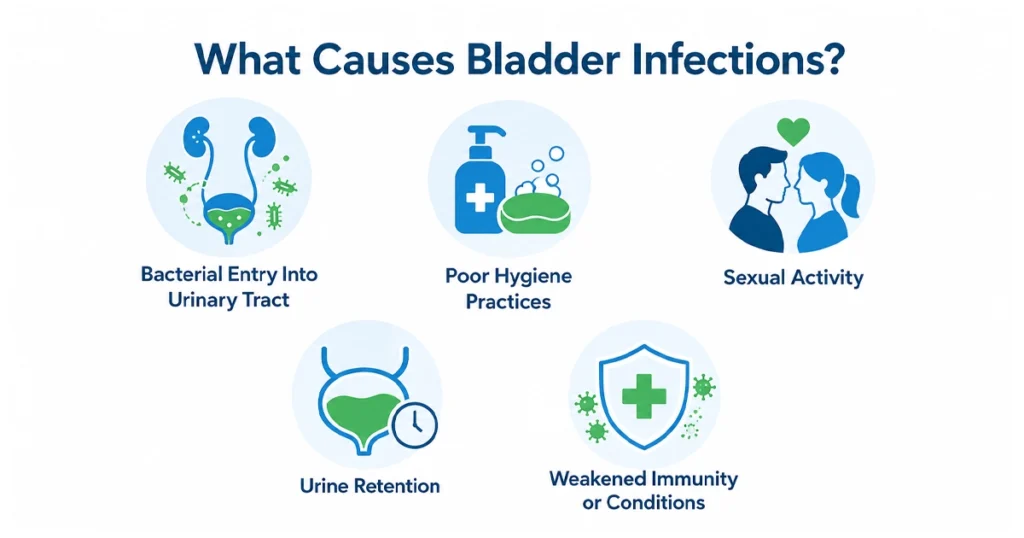
Bladder infections happen when bacteria enter the urinary tract and begin multiplying in the bladder, causing irritation and inflammation. They can affect anyone, but certain habits and health factors increase the risk. Symptoms often appear quickly and can become uncomfortable if not addressed early.
- Bacterial Entry Into Urinary Tract: Most infections occur when bacteria enter the urethra and reach the bladder, where they multiply.
- Poor Hygiene Practices: Improper wiping or hygiene can allow bacteria to spread toward the urinary tract.
- Sexual Activity: Intercourse may introduce bacteria into the urethra, increasing infection risk.
- Urine Retention: Holding urine too long can encourage bacterial growth in the bladder.
- Weakened Immunity or Conditions: Conditions like diabetes or low immunity make it harder for the body to fight infections.
When To Go To The ER
A bladder infection can sometimes be managed with timely medical treatment, but in certain cases, it may become serious and require emergency care. If symptoms worsen quickly or show signs of spreading beyond the bladder, it is important not to delay seeking help.
- Severe back or side (flank) pain that does not improve.
- High fever or chills along with urinary symptoms.
- Nausea or vomiting that prevents keeping fluids down.
- Blood in urine that is heavy or persistent.
- Confusion, weakness, or feeling extremely unwell.
- Symptoms that rapidly worsen despite initial treatment.
If you are experiencing any of these warning signs, seek immediate care at an ER near me for prompt evaluation and treatment to help prevent serious complications.
How Can You Treat A Bladder Infection
Treating a bladder infection focuses on clearing the infection, easing symptoms, and preventing it from spreading. Because symptoms like burning, urgency, and pelvic discomfort can worsen quickly, timely care is important. The right treatment depends on severity, medical history, and whether the infection is simple or recurring.
- Antibiotic Treatment: Prescription antibiotics are the main treatment, and most doctors recommend them based on the infection type and symptoms.
- Over-The-Counter Pain Relief: Medicines like phenazopyridine are sometimes recommended by doctors to help relieve burning and discomfort, but they do not cure the infection.
- Increased Fluid Intake: Drinking more water helps flush bacteria from the urinary tract and supports recovery.
- Urine Culture Testing: Doctors may recommend testing to identify bacteria and choose the most effective antibiotic.
- Lifestyle Adjustments: Avoiding bladder irritants and maintaining hygiene can help support healing and prevent recurrence.
Bladder Infection Care at STAT Specialty Hospital
Understanding urinary symptoms early is important because what may seem mild at first can progress quickly if a bladder infection is not properly managed. While some people wonder, “Do bladder infections heal on their own?”, most cases require timely medical evaluation to prevent worsening discomfort or complications such as kidney involvement.
At STAT Specialty Hospital, patients with bladder infection symptoms receive careful evaluation, accurate diagnosis, and personalized treatment plans based on their condition. Our specialists focus on relieving pain, controlling infection, and preventing recurrence through evidence-based care and close medical monitoring for better urinary health outcomes. Our ER wait time is just 16 minutes, helping ensure you are seen quickly and treatment can begin without delay.
Key Takeaways
- Bladder infections usually occur when bacteria enter the urinary tract and multiply in the bladder.
- Common symptoms include burning urination, frequent urge to pee, and lower abdominal discomfort.
- Most bladder infections do not fully heal on their own and may worsen without proper treatment.
- Untreated infections can spread to the kidneys and lead to serious complications like fever and back pain.
- Timely medical care, usually including antibiotics, helps relieve symptoms and prevent recurrence.
Frequently Asked Questions
What Causes A Bladder Infection In Men?
Bladder infections in men occur when bacteria enter the urinary tract and multiply in the bladder. Common risk factors include an enlarged prostate that blocks urine flow, urinary retention, kidney stones, catheter use, and structural abnormalities of the urinary system. A weakened immune system can further increase susceptibility and make infections harder to clear.
Is A Bladder Infection An STD?
No, a bladder infection is not classified as a sexually transmitted disease. It is most often caused by bacteria entering the urinary tract from the digestive system. However, sexual activity can increase the risk by introducing or pushing bacteria closer to the urethra, especially in women.
Will A Bladder Infection Cause Nausea?
Yes, nausea can occur in some cases, particularly when the infection becomes more severe or spreads to the kidneys. It may be accompanied by vomiting, fever, chills, or pain in the lower back or sides. These symptoms usually indicate a more serious infection that needs prompt medical attention.
Can A Bladder Infection Affect Your Period?
A bladder infection does not directly affect the menstrual cycle, but it can sometimes make pelvic pain or cramping feel worse and similar to period discomfort. Stress and illness from an infection may occasionally cause minor changes in cycle timing, but this is not common.
Can a UTI Cause Nausea?
Yes, a UTI can sometimes cause nausea, particularly when the infection is more severe or has spread to the kidneys. It may occur along with symptoms like fever, vomiting, chills, or back pain.