

Frequent diarrhea is common and is usually caused by a temporary infection, dietary trigger, or medication. However, when it persists, keeps returning, or occurs with unusual symptoms, it may indicate a more serious condition, including certain types of cancer. Knowing when to seek medical attention can make a significant difference. If you’re experiencing severe symptoms, our emergency room in Laredo, TX, is available 24/7 for prompt evaluation and treatment.
Not every episode of loose stools warrants immediate concern, but there are patterns and red flags that should prompt you to seek medical evaluation sooner rather than later. If you have been dealing with recurring digestive issues and are struggling to stop diarrhea fast using typical home remedies, that persistence alone is a reason to get checked by a medical professional without further delay.
Can Diarrhea Be a Sign of Cancer?
Yes, diarrhea can be a sign of cancer in certain circumstances, though it is far more commonly caused by benign and treatable conditions. According to the National Cancer Institute, diarrhea is a recognized symptom of several gastrointestinal cancers and can also occur as a direct side effect of cancer treatments, including chemotherapy and radiation therapy. What distinguishes cancer-related diarrhea from ordinary diarrhea is that it tends to be ongoing rather than resolving within a few days, it does not respond to typical dietary adjustments or over-the-counter remedies, and it is usually paired with other physical changes that suggest something systemic is occurring inside the body.
What Types of Cancer Cause Frequent Diarrhea?
Several cancers are specifically associated with persistent bowel changes, and knowing which ones can help you recognize when symptoms deserve more than a wait-and-see approach.
Colorectal Cancer
Colorectal cancer is the most frequently cited cancer when bowel habits change, with persistent diarrhea alternating with constipation being one of its earliest warning signs. Tumors in the colon or rectum disrupt stool formation, irritate the bowel lining, and cause chronic loose stools alongside cramping, bleeding, and a persistent feeling of incomplete emptying. Any sustained bowel habit change lasting more than four weeks without a clear cause should be investigated promptly.
Pancreatic Cancer
When cancer affects the pancreas, the body loses its ability to produce enzymes needed to properly digest food, resulting in chronic diarrhea with pale, greasy, or foul-smelling stools due to undigested fat. This diarrhea is typically difficult to manage and accompanied by unexplained weight loss, upper abdominal discomfort, and sometimes jaundice, signaling bile flow disruption. Persistent digestive changes paired with these systemic symptoms should always trigger medical evaluation rather than continued home management.
Carcinoid Tumors
Carcinoid tumors develop within the gastrointestinal tract and produce hormones that directly overstimulate bowel activity, causing unpredictable watery diarrhea that closely mimics irritable bowel syndrome and is frequently misdiagnosed for extended periods. Flushing of the skin, wheezing, and abdominal cramping alongside recurring diarrhea are the symptom combination that most often leads doctors to investigate carcinoid tumors. Specialized hormonal testing is required to confirm the diagnosis since standard digestive evaluations often miss these tumors entirely.
How Long Does Cancer-Related Diarrhea Last?
Cancer-related diarrhea differs from acute diarrhea that resolves within a few days. Instead, it often lasts four weeks or longer, may improve temporarily before returning, and continues without a clear cause. Persistent diarrhea should always be medically evaluated to identify the underlying condition. If ongoing diarrhea causes severe fluid loss or weakness, visit our ER for dehydration for rapid treatment and IV hydration.
What Else Can Cause Frequent Diarrhea Besides Cancer?
The important thing to understand is that the vast majority of frequent diarrhea cases are not caused by cancer, and many common and easily treatable conditions can produce identical symptoms that persist for weeks or even months without proper management.
- Viral and bacterial gastrointestinal infections that linger longer than expected, particularly in people with reduced immune function
- Irritable bowel syndrome, which causes recurring cycles of diarrhea and constipation without any identifiable structural cause
- Inflammatory bowel disease, including Crohn’s disease and ulcerative colitis, causes chronic gut inflammation and persistent loose stools
- Food intolerances like lactose intolerance or celiac disease that cause ongoing digestive distress when trigger foods are consumed regularly
- Antibiotics and other medications that disrupt the balance of gut bacteria and produce diarrhea as a consistent and prolonged side effect
- Chronic stress and anxiety are well-established drivers of gastrointestinal motility changes that can cause persistent and difficult-to-control diarrhea
What Are Other Symptoms of Cancer Besides Diarrhea?
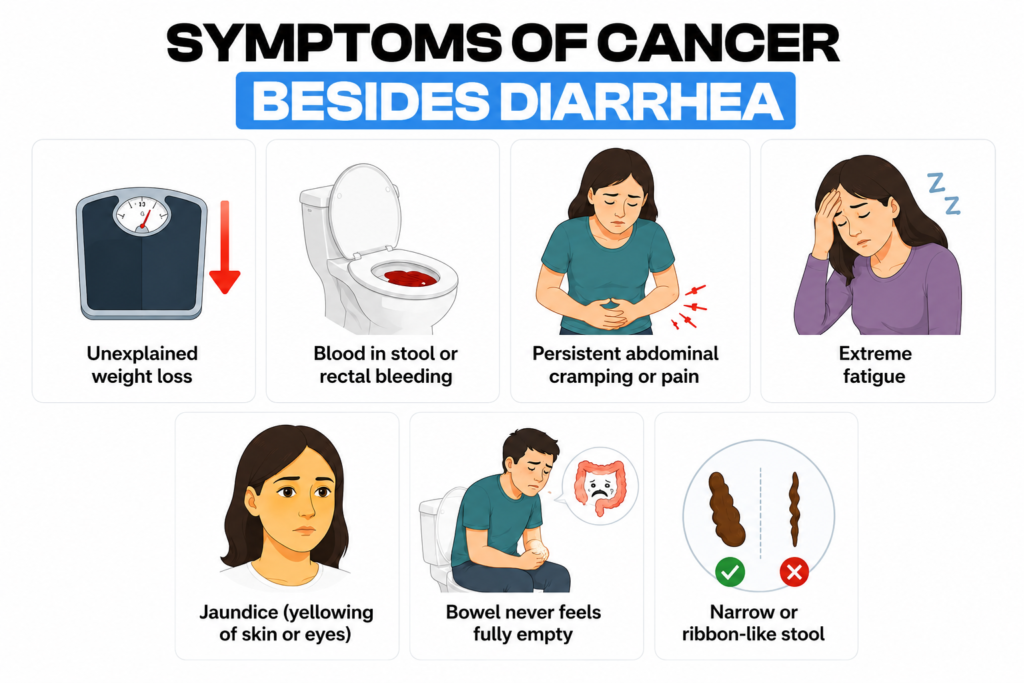
When diarrhea is related to cancer rather than a more common condition, it rarely appears in isolation. According to MedlinePlus, certain accompanying symptoms should significantly raise the level of concern and prompt faster medical evaluation.
- Unexplained weight loss of 10 pounds or more that occurs without any intentional change in diet or physical activity
- Blood appearing in the stool or rectal bleeding that happens consistently and cannot be attributed to hemorrhoids or another known source
- Persistent cramping or lower abdominal pain that does not improve and seems to be getting gradually worse over time
- Extreme fatigue that is disproportionate to your activity level and does not improve with adequate rest or sleep
- Jaundice or yellowing of the skin and eyes, particularly when it occurs alongside changes in bowel habits or abdominal discomfort
- A persistent sensation that the bowel is never fully empty, even immediately after a complete bowel movement has occurred
- A stool that appears narrower or ribbon-like in shape, which can indicate something is narrowing the passage inside the lower colon or rectum
If you experience any of these warning signs and are searching for the closest emergency room near me, our team is available 24/7 to provide timely emergency care.
When Should Frequent Diarrhea Be Checked by a Doctor?
The general guidance from medical professionals is that diarrhea lasting more than four weeks without a clear and confirmed cause warrants formal diagnostic evaluation. Earlier evaluation is warranted when diarrhea is severe, blood is present in the stool, significant weight loss has occurred alongside the digestive changes, or symptoms are accompanied by any of the red flags described above. Do not wait for symptoms to resolve on their own when the pattern is persistent or when the combination of symptoms you are experiencing does not match a simple digestive infection or known dietary sensitivity.
When to Go to the ER for Frequent Diarrhea?
While most chronic diarrhea can be addressed through a scheduled medical appointment, certain accompanying symptoms indicate a situation that should not wait. Visit STAT Specialty Hospital immediately if you experience any of the following.
- Blood in the stool or black and tarry stools that appear suddenly and cannot be explained by a known source
- Signs of severe dehydration, including extreme thirst, markedly reduced urination, confusion, or dizziness
- Diarrhea that has been occurring for more than four weeks without any improvement or identifiable cause
- Significant unintentional weight loss occurring at the same time as persistent bowel changes
- Severe or worsening abdominal pain accompanying the diarrhea that does not ease with rest or position changes
- High fever above 102°F, alongside persistent diarrhea that does not improve with standard fever management
- Symptoms occurring in elderly patients, young children, or anyone with a known underlying health condition that increases risk
Our 24/7 emergency room is equipped to diagnose and treat serious complications before they become life-threatening.
Digestive Symptom Care at STAT Specialty Hospital
Persistent or concerning diarrhea deserves professional evaluation, not prolonged home management that delays identifying what is actually causing your symptoms. At STAT Specialty Hospital, our experienced medical team provides thorough diagnostic evaluation, advanced testing, and comprehensive emergency care for patients experiencing serious or ongoing digestive symptoms at any of our locations. Do not wait until symptoms become severe before seeking the evaluation you need. Visit STAT Specialty Hospital today for fast, expert care that gets to the bottom of what is happening and starts you on the right path toward recovery and answers.