
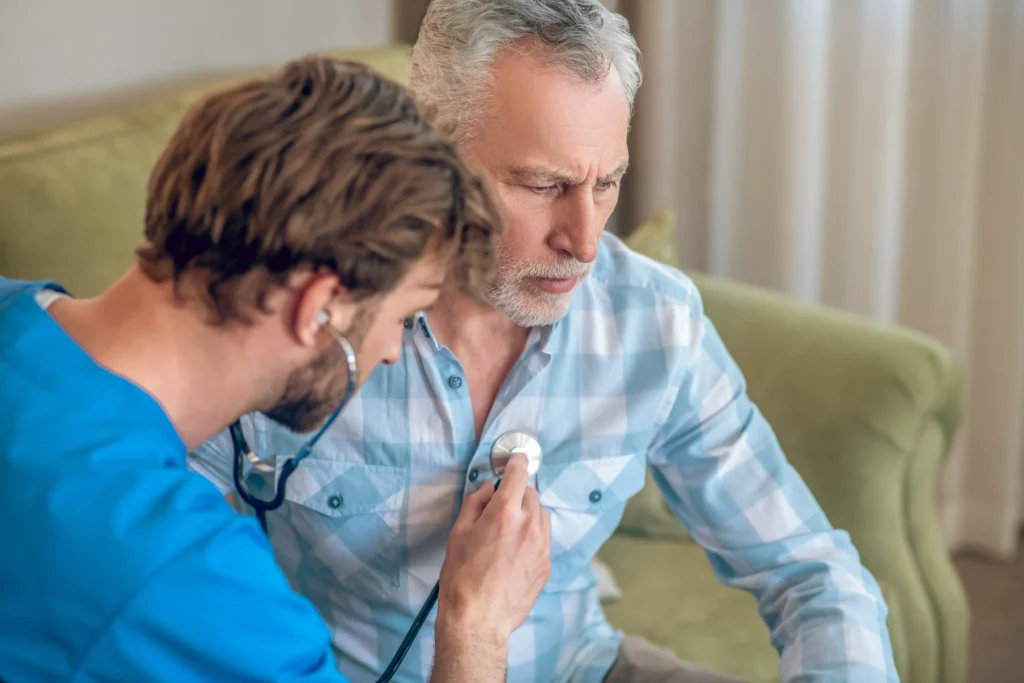
A normal resting heart rate for adults is between 60 and 100 beats per minute. When your heart beats faster than 100 times per minute at rest, it is called tachycardia. Sometimes a fast heart rate is a normal response to exercise, fever, stress, or caffeine. Other times, it signals a heart rhythm problem that can reduce blood flow to the brain and body and, in rare cases, lead to cardiac arrest.
Knowing the difference can be difficult without testing. If your heart is racing and you feel dizzy, short of breath, or have chest pain, call 911 or go to the nearest emergency room right away.
How The Heart’s Rhythm Works
Your heartbeat is controlled by electrical signals that start in a natural pacemaker called the sinoatrial (SA) node. These signals travel through the upper chambers (atria) to the lower chambers (ventricles), causing the heart to squeeze and pump blood. Tachycardia happens when these signals fire too fast or travel along an abnormal pathway.
Types Of Tachycardia
1. Sinus Tachycardia (Normal Rhythm, Faster Rate)
The heart’s rhythm is normal but faster than usual. This is often a response to exercise, fever, dehydration, anxiety, pain, anemia, or an overactive thyroid. Treating the underlying cause usually brings the heart rate back down.
2. Atrial Fibrillation (Irregular Upper Chamber Rhythm)
Known as AFib, this is the most common heart rhythm disorder. The upper chambers quiver instead of beating effectively, causing a fast, irregular heartbeat. AFib raises the risk of stroke.
3. Atrial Flutter (Organized But Rapid Rhythm)
Similar to AFib, but the atria beat in a faster, more organized pattern. It can also increase stroke risk.
4. Supraventricular Tachycardia (SVT)
SVT is a sudden, very fast heartbeat that starts above the ventricles. It often begins and ends abruptly and is common in younger adults.
5. Ventricular Tachycardia (Lower Chamber Rhythm)
This rhythm starts in the ventricles and prevents the heart from filling properly. It is often linked to heart disease and can be life-threatening.
6. Ventricular Fibrillation (Cardiac Emergency)
The ventricles quiver chaotically and stop pumping blood. This causes cardiac arrest and requires immediate CPR and defibrillation.
Common Causes Of Tachycardia
- Heart disease: including past heart attacks and heart failure.
- High blood pressure.
- Dehydration: especially during hot South Texas summers.
- Fever and infection.
- Thyroid problems.
- Electrolyte imbalances: such as low potassium or magnesium.
- Caffeine, energy drinks, alcohol, or nicotine.
- Stimulant drugs: including some cold medicines and illegal drugs.
- Anemia.
- Anxiety or panic attacks.
Symptoms To Watch For
- A racing, pounding, or fluttering heartbeat.
- Dizziness or lightheadedness.
- Shortness of breath.
- Chest pain or pressure.
- Fatigue or weakness.
- Fainting or nearly fainting.
Some people, especially older adults, may have no symptoms at all and only find out about tachycardia during a routine checkup or from a smartwatch alert.
When To See A Doctor
See your doctor if you often notice a fast heartbeat without a clear reason. Call 911 or go to the ER right away if a fast heart rate comes with:
- Chest pain or pressure.
- Severe shortness of breath.
- Fainting or nearly fainting.
- Confusion or sudden weakness.
- A heart rate over 150 beats per minute at rest.
- A racing heartbeat that does not slow down after several minutes of rest.
If someone collapses and is not breathing, call 911, start CPR, and use an AED if one is available.
Diagnosis And Testing
- EKG: records the heart’s rhythm and identifies the type of tachycardia.
- Heart monitor: watches the rhythm continuously.
- Blood tests: check electrolytes, thyroid levels, and heart enzymes.
- Chest X-ray: looks at the heart and lungs.
- Echocardiogram: an ultrasound that shows how well the heart is pumping.
Treatment Options
- Vagal maneuvers: such as bearing down, which can sometimes stop SVT.
- IV medicines: such as adenosine, beta blockers, or calcium channel blockers to slow the heart.
- Electrical cardioversion: a controlled shock that resets the heart’s rhythm.
- IV fluids and electrolytes: for dehydration or imbalances.
- Long-term treatment: including daily medicines, blood thinners for AFib, catheter ablation, or an implanted defibrillator.
Because many types of tachycardia look similar from the outside, fast testing is key. When you search for an emergency room near me, look for one with on-site EKG, lab testing, and cardiac monitoring available 24/7. The American Heart Association also offers helpful information on managing heart rhythm disorders.
Tips To Help Prevent Episodes
- Limit caffeine, energy drinks, and alcohol.
- Stay hydrated, especially in hot weather.
- Quit smoking and vaping.
- Manage stress and get enough sleep.
- Take heart and thyroid medicines as prescribed.
Frequently Asked Questions
Is Tachycardia Always Dangerous?
No. Sinus tachycardia from exercise or fever is usually harmless. But unexplained or very fast heart rates should be checked.
Can Anxiety Cause Tachycardia?
Yes. Anxiety and panic attacks can raise your heart rate. However, it is important to rule out heart problems first.
Can Dehydration Cause A Fast Heart Rate?
Yes. When you are dehydrated, your heart beats faster to keep blood pressure stable.
Need Emergency Help? Visit STAT Specialty Hospital
A racing heart can be a warning sign that should never be ignored. STAT Specialty Hospital provides EKGs, cardiac monitoring, on-site labs, and board-certified physicians around the clock. If you need the nearest emergency room in Eagle Pass, our team is ready 24/7. For life-threatening emergencies, call 911 right away.
Visit STAT Specialty Hospital today – where emergency care meets excellence.