
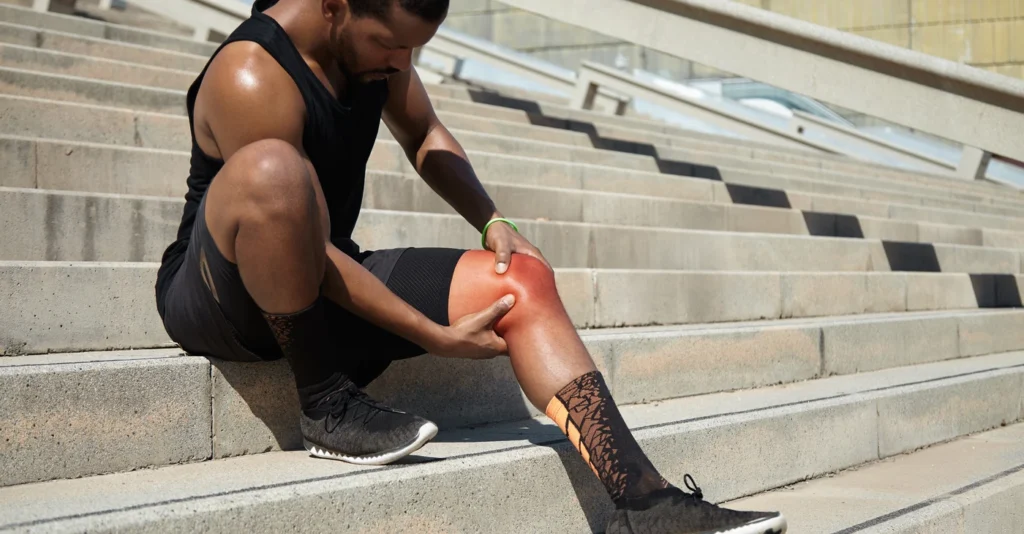
A meniscus tear is one of the most common knee injuries, affecting the C-shaped cartilage that cushions and stabilizes your knee joint. If you’ve been struggling with knee pain, swelling, or a feeling that your knee just doesn’t move the way it should, you’re not alone. Even a small tear can make simple activities like walking, climbing stairs, or getting out of a chair painful and frustrating, making it difficult to keep up with your daily routine.
Ignoring meniscus tear symptoms can worsen the injury and increase the risk of long-term knee problems. If your knee locks, swells rapidly, or you cannot bear weight, seek prompt care at our Laredo emergency room for evaluation and treatment.
Types Of Meniscus Tears
Meniscus tears vary in shape, size, and severity, which affects both symptoms and treatment options. While some tears can heal with conservative care, others require prompt medical attention or surgery. Identifying the type of tear helps guide the best treatment plan and reduces the risk of long-term knee damage.
- Radial Tear: A radial tear starts at the inner edge of the meniscus and extends outward. It is one of the most common tear patterns and can significantly reduce the meniscus’s ability to absorb shock if left untreated.
- Horizontal Tear: This tear runs parallel to the surface of the meniscus, separating it into upper and lower sections. It may lead to fluid-filled cysts around the knee and often causes persistent pain and swelling.
- Vertical (Longitudinal) Tear: A vertical tear follows the natural curve of the meniscus. When diagnosed early, especially in areas with a good blood supply, it has a better chance of healing after surgical repair.
- Bucket-Handle Tear: This is a large vertical tear in which a portion of the meniscus flips into the center of the knee joint. It commonly causes knee locking, limited movement, and severe pain, requiring urgent medical evaluation.
- Flap Tear: A flap tear creates a loose piece of cartilage that can catch within the knee joint during movement. This often causes sharp pain, clicking sensations, and episodes where the knee suddenly gives way.
- Complex Tear: A complex tear combines two or more tear patterns, making it more difficult to treat. It is frequently seen in older adults with degenerative knee changes and may require advanced treatment.
- Root Tear: A root tear occurs where the meniscus attaches to the bone. Because it disrupts the meniscus’s stability, it can rapidly increase pressure on the knee joint and accelerate cartilage damage if not treated promptly.
What Causes A Meniscus Tear?
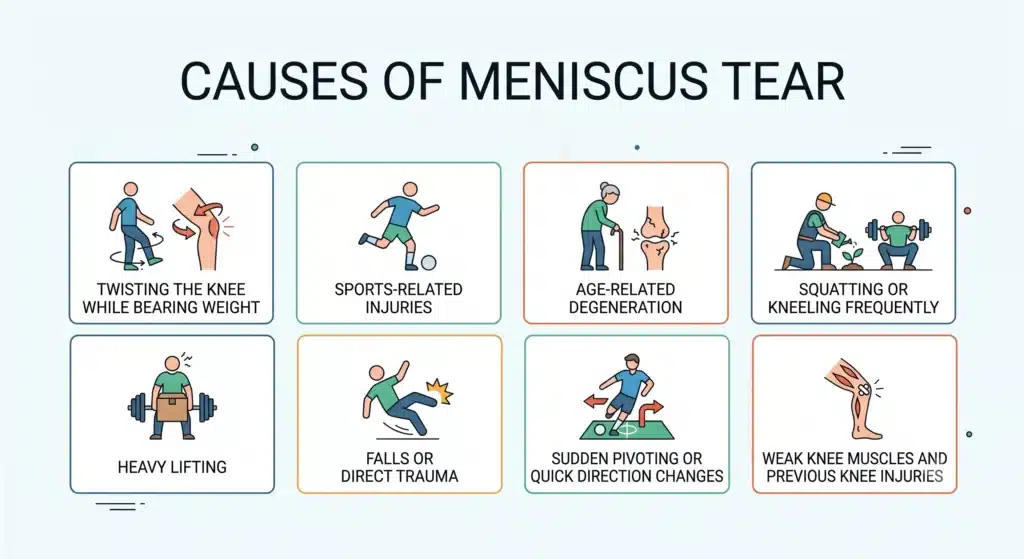
A meniscus tear can happen suddenly during an injury or develop gradually as the knee weakens over time. Knowing what commonly leads to this injury can help you protect your knees and recognize when pain may signal something more serious. Understanding these causes also makes it easier to seek timely treatment before permanent joint damage occurs.
Twisting The Knee While Bearing Weight
One of the most common causes of a meniscus tear is twisting the knee while your foot remains firmly planted on the ground. This often happens during sports or sudden directional changes. The twisting motion places excessive stress on the meniscus, causing the cartilage to tear. Even a single awkward movement can result in a painful injury that requires medical attention.
Symptoms
- Sudden sharp knee pain
- A popping sensation during injury
- Swelling within several hours
- Difficulty rotating the knee
Sports-Related Injuries
High-impact sports such as football, basketball, soccer, and tennis involve frequent pivoting, jumping, and rapid stops. These repetitive movements increase the risk of tearing the meniscus, especially during collisions or awkward landings. Athletes are particularly vulnerable because the knee experiences repeated stress throughout training and competition.
Symptoms
- Immediate knee pain
- Swelling after activity
- Knee instability
- Reduced athletic performance
Age-Related Degeneration
As people age, the meniscus gradually becomes thinner and less flexible, making it easier to tear during normal daily activities. Simple movements like squatting, kneeling, or stepping off a curb may cause injury. Degenerative tears are especially common in adults over the age of 40 and may develop without a major accident.
Symptoms
- Gradually worsening knee pain
- Mild but persistent swelling
- Stiffness after inactivity
- Pain during everyday movements
Squatting Or Kneeling Frequently
Jobs and activities that require repeated squatting or kneeling place continuous pressure on the knee joint. Over time, this repetitive strain weakens the meniscus and increases the likelihood of a tear. Workers in construction, gardening, and flooring are commonly affected by this type of injury.
Symptoms
- Pain while squatting
- Tenderness along the knee
- Difficulty standing up
- Occasional knee catching
Heavy Lifting
Improper lifting techniques or carrying heavy loads can place excessive force on the knees, especially when combined with twisting movements. This added pressure may damage the meniscus, particularly if the cartilage has already weakened with age or repetitive use.
Symptoms
- Pain after lifting
- Swollen knee
- Difficulty bending
- Pain while walking
Falls Or Direct Trauma
A direct blow to the knee or a fall can compress or twist the meniscus, resulting in a tear. Motor vehicle accidents, workplace injuries, and slips on uneven surfaces commonly produce this type of damage. The severity depends on the force of impact and associated ligament injuries.
Symptoms
- Immediate severe pain
- Rapid swelling
- Bruising around the knee
- Difficulty bearing weight
Sudden Pivoting Or Quick Direction Changes
Quick turns while running or changing direction suddenly can overload the knee joint. The meniscus may become trapped between the thighbone and shinbone, causing it to tear. This mechanism is frequently seen during recreational sports and fitness activities.
Symptoms
- Sharp pain during movement
- Knee locking
- Clicking sensation
- Limited range of motion
Weak Knee Muscles And Previous Knee Injuries
Weak muscles around the knee reduce joint stability and increase stress on the meniscus during movement. People with previous ligament injuries or untreated knee problems are also at greater risk because the knee is less able to absorb force effectively. Strengthening exercises and rehabilitation can help reduce future injuries.
Symptoms
- Recurrent knee pain
- Feeling that the knee gives way
- Swelling after activity
- Difficulty with stairs
Dangerous Meniscus Tear Symptoms
While some meniscus tears cause only mild discomfort, others can signal a more serious knee injury that requires urgent medical attention. If you experience any of the following symptoms, seek prompt evaluation to prevent further cartilage damage and long-term joint complications.
- Severe or worsening knee pain that does not improve with rest.
- Rapid swelling within a few hours after the injury.
- Knee locking or inability to fully bend or straighten the knee.
- Inability to bear weight on the affected leg.
- A feeling that the knee gives way or buckles unexpectedly.
- Loud popping sound at the time of injury followed by severe pain.
- Significant loss of knee movement or stiffness.
- Persistent clicking or catching sensation during movement.
- Visible knee deformity after trauma.
- Pain, swelling, or instability that continues for several days despite home care.
If you or a loved one experiences these warning signs, timely evaluation can help prevent further knee damage. Our knee pain treatment provides proper assessment and care to address symptoms, improve mobility, and support recovery.
Meniscus Tear Recovery Time
Recovery from a meniscus tear depends on the type, size, and severity of the injury, as well as the treatment you receive. While some people recover with rest and physical therapy, others may need surgery and a longer rehabilitation period.
- Minor Meniscus Tear: Typically heals within 4–8 weeks with rest, ice, physical therapy, and activity modification.
- Moderate Meniscus Tear: Recovery usually takes 6–12 weeks, depending on the extent of the tear and response to rehabilitation.
- Meniscus Repair Surgery: Most patients recover in 3–6 months, as the repaired cartilage needs time to heal before returning to full activity.
- Partial Meniscectomy: Recovery generally takes 4–8 weeks, although return to high-impact sports may require additional rehabilitation.
- Return To Daily Activities: Many people can resume light daily activities within 2–6 weeks, depending on pain, swelling, and knee stability.
- Return To Sports: Athletes are often cleared to return in 3–6 months after repair surgery, provided strength, flexibility, and knee function have fully recovered.
When To Go To The ER
Not every meniscus tear is a medical emergency, but some symptoms can indicate a serious knee injury that requires immediate evaluation. Delaying emergency care may increase the risk of permanent cartilage damage, joint instability, or additional injuries. Go to the nearest emergency room if you experience any of the following:
- Severe knee pain that becomes worse or is unbearable.
- Inability to bear weight on the injured leg.
- Rapid swelling that develops within a few hours after the injury.
- Your knee locks and you cannot fully bend or straighten it.
- A visible deformity of the knee after trauma.
- Heavy bleeding or an open wound around the knee.
- A loud popping sound followed by severe pain and loss of movement.
- The knee repeatedly gives way or feels completely unstable.
- Numbness, tingling, or the foot becomes cold or pale.
- Fever, redness, warmth, or drainage from the knee, which may indicate an infection.
If you or a loved one experiences any of these serious symptoms, do not delay medical care. Visit an emergency room near me for prompt evaluation and treatment to help prevent further knee damage and complications.
Meniscus Tear Treatments
Treatment for a meniscus tear depends on the severity of the injury, your symptoms, and your activity level. While many tears heal with conservative care, others require surgery. Early treatment can reduce pain, improve mobility, and help prevent long-term knee damage.
- Rest And Activity Modification: Avoid activities that increase knee pain, such as running, jumping, and deep squats. Rest gives the meniscus time to heal and helps prevent further injury.
- Ice Therapy: Apply an ice pack for 15–20 minutes every few hours to reduce pain and swelling. Always place a cloth between the ice and your skin.
- Compression And Elevation: A compression bandage and elevating the leg help control swelling and provide support during recovery.
- Over-The-Counter Pain Relievers (NSAIDs): Most doctors recommend ibuprofen or naproxen to relieve pain and reduce inflammation. Use these medications only as directed.
- Acetaminophen: Most doctors recommend acetaminophen for pain relief if NSAIDs are not suitable. It helps ease pain but does not reduce inflammation.
- Physical Therapy: Targeted exercises strengthen the knee, improve flexibility, and restore normal movement. It is an important part of both surgical and non-surgical recovery.
- Knee Brace Or Crutches: These devices reduce pressure on the injured knee, improve stability, and support healing.
- Corticosteroid Injection: In some cases, injections help reduce inflammation and relieve pain. They do not repair the torn meniscus.
- Meniscus Repair Surgery: Surgeons stitch the torn cartilage when possible to preserve the meniscus and restore knee function.
- Partial Meniscectomy: This procedure removes only the damaged part of the meniscus while preserving healthy cartilage.
- Arthroscopic Surgery: A minimally invasive procedure that treats meniscus tears through small incisions, often resulting in faster recovery.
- Rehabilitation: Following your rehabilitation plan helps restore strength, improve mobility, and reduce the risk of future knee injuries.
Meniscus Tear Care At STAT Specialty Hospital
A meniscus tear can cause significant pain, swelling, and difficulty moving your knee. At STAT Specialty Hospital, we provide prompt evaluation and personalized treatment to relieve symptoms, restore knee function, and help prevent long-term joint damage. With our ER wait time of 15 minutes, patients can receive timely care without unnecessary delays.
If you have severe knee pain, rapid swelling, difficulty walking, or your knee locks after an injury, don’t wait for symptoms to worsen. Early diagnosis and timely treatment can make a significant difference in your recovery. Visit STAT Specialty Hospital for expert emergency and orthopedic care when you need it most.
Key Takeaways
- A meniscus tear is a tear in the cartilage that cushions and stabilizes the knee joint.
- Common symptoms include knee pain, swelling, stiffness, clicking, and limited range of motion.
- Twisting the knee while the foot is planted is one of the leading causes of a meniscus tear.
- Some tears heal with rest and physical therapy, while severe tears may require surgery.
- Recovery time depends on the type of tear and treatment, ranging from a few weeks to several months.
- Seek emergency medical care if you cannot bear weight, your knee locks, or you have severe pain or rapid swelling after an injury.
- Early diagnosis and treatment can relieve symptoms, improve recovery, and help prevent long term knee damage.
Frequently Asked Questions
What Does A Meniscus Tear Feel Like?
A meniscus tear often feels like a sharp pain along the knee joint, especially when twisting or squatting. You may also notice swelling, stiffness, a popping sensation, or your knee locking or giving way.
When Is Meniscus Tear Surgery Needed?
Meniscus tear surgery may be recommended if the tear is severe, causes persistent pain or knee locking, or does not improve with rest, physical therapy, and other conservative treatments. An orthopedic specialist can determine the best treatment based on the type and location of the tear.
Can A Meniscus Tear Heal On Its Own?
Some small meniscus tears, especially those in the outer part of the cartilage with a better blood supply, may heal with rest and rehabilitation. Larger or more complex tears often require medical treatment or surgery to restore knee function.