

Mucus is a gel-like protective substance produced by the body to trap germs, maintain tissue moisture, and support overall health. It is secreted in the respiratory, digestive, and reproductive systems, serving as a natural barrier against bacteria, viruses, and irritants. While mucus is vital for normal bodily functions, changes in its color, consistency, or volume may indicate infections, allergies, or chronic conditions. Occasional increases in mucus often occur during colds, seasonal allergies, or minor irritations. However, persistent or unusual mucus changes may require professional evaluation or a visit to the Laredo emergency room to prevent complications.
How Is Mucus Produced in the Body?
Mucus is secreted by mucous membranes and specialized goblet cells that produce a mixture of water, salts, glycoproteins, and enzymes. This gel-like substance traps dust, microbes, and harmful particles, protecting the body’s tissues and supporting immune defense.
- Respiratory Tract: Mucus lines the nose, throat, and lungs, capturing airborne pathogens and facilitating clearance through coughing or sneezing.
- Digestive Tract: Protective mucus coats the stomach and intestines to prevent damage from acids and enzymes, ensuring smooth digestion.
- Reproductive System: Cervical mucus supports sperm transport and maintains hydration in the reproductive organs.
- In Response to Irritants: Exposure to smoke, dust, or allergens stimulates goblet cells to produce more mucus, explaining runny noses or throat phlegm.
What is the Function of Mucus in the Body?
Mucus plays a critical role in protecting and maintaining various body systems. It acts as a natural barrier and supports essential bodily functions that keep tissues healthy and functioning properly.
- Protection: Mucus forms a protective layer over tissues, shielding them from harmful pathogens, dust, and environmental irritants. It also helps protect sensitive linings, such as the stomach, from strong acids and digestive enzymes.
- Immune Defense: Mucus contains antibodies and enzymes that help trap and neutralize bacteria, viruses, and other harmful microorganisms. This defense mechanism prevents infections from spreading deeper into the body.
- Moisture Regulation: It keeps vital areas like the eyes, nose, mouth, respiratory tract, and digestive system properly hydrated. This moisture is essential to prevent dryness, irritation, and tissue damage.
- Facilitation: Mucus plays a role in important bodily processes such as digestion, where it helps food pass smoothly through the digestive tract. It also supports sperm movement in reproduction and helps clear dust and debris from the airways.
- Health Importance: Without mucus, the body would be more exposed to infections, dehydration, and internal damage. It acts as a first line of defense and is essential for maintaining overall health and proper bodily function.
What Are the Causes of Mucus?
Excess mucus in the throat can arise from several conditions, often reflecting irritation, infection, or chronic issues.
- Allergies: Pollens, dust, and pet dander can increase mucus production, leading to postnasal drip and throat irritation.
- Respiratory Infections: Viral or bacterial infections trigger thicker mucus, sometimes yellow or green, as the body fights pathogens.
- Gastroesophageal Reflux (GERD): Stomach acid reaching the throat can irritate tissues and stimulate extra mucus production.
- Chronic Conditions: Asthma or chronic bronchitis may result in persistent throat mucus that requires ongoing management. In more severe cases, seeking immediate care at an ER near me can help address breathing difficulties or worsening symptoms.
What Your Mucus Color Means
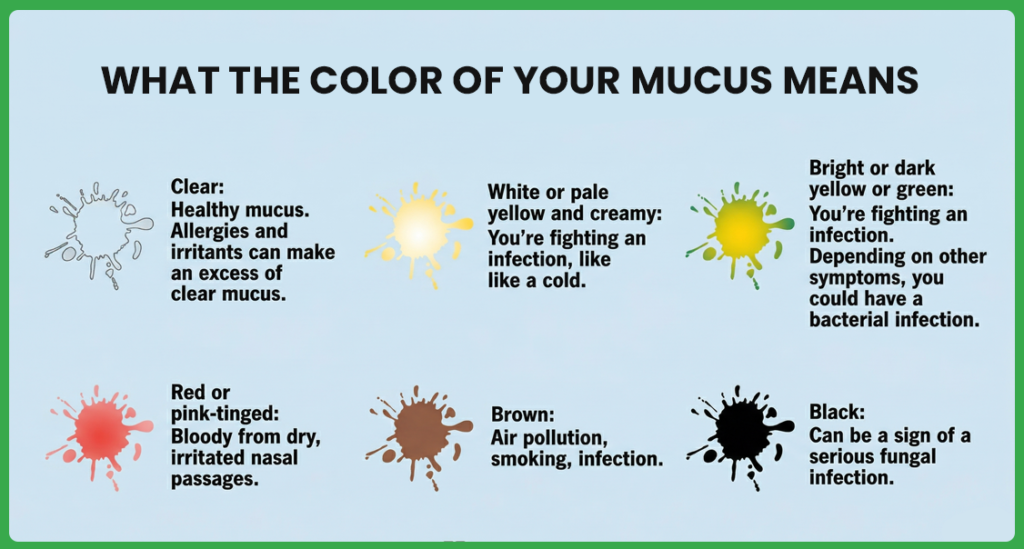
Mucus can reveal important information about your health, and its color is one of the clearest indicators of what’s happening in your body. Changes in mucus color may point to infections, irritation, or other underlying conditions that require attention.
- Clear Mucus: Usually normal and healthy, indicating proper hydration and functioning airways. It can also appear during allergies or mild irritation.
- White Mucus: Often linked to congestion or inflammation in the nasal passages. It may be an early sign of a cold or sinus blockage.
- Yellow Mucus: Yellow mucus indicates the immune system is actively fighting an infection. It is commonly seen during viral illnesses like colds or flu.
- Green Mucus: Green mucus suggests a stronger or prolonged infection, where white blood cells are actively combating bacteria. It may require medical evaluation if persistent.
- Brown Mucus: Brown mucus can result from inhaling dust, smoke, or dried blood. It may also be seen in people exposed to pollutants or after irritation in the airways.
- Red or Blood-Tinged Mucus: Indicates the presence of blood, often due to irritation, dryness, or minor injury. However, frequent or heavy bleeding may signal a serious condition and needs immediate medical attention.
- Black Mucus: Black mucus is rare but can be associated with heavy pollution exposure, smoking, or fungal infections. It should always be evaluated by a healthcare professional.
If you notice unusual mucus colors along with symptoms like fever, chest pain, difficulty breathing, or persistent coughing, seek medical attention immediately.
How to Get Rid of Mucus Naturally
Managing mucus naturally can relieve discomfort and prevent complications.
- Hydration: Drinking plenty of water helps thin mucus, making it easier to clear from the throat and airways.
- Steam or Humidifiers: Moist air prevents mucus from thickening and reduces irritation in the nose and throat.
- Saline Nasal Sprays: Flush out nasal passages to reduce congestion and support mucus clearance safely.
- Avoid Irritants: Smoke, dust, and chemicals can worsen mucus buildup; limiting exposure helps recovery.
- Warm Diet: Herbal teas, soups, and fruits can soothe mucous membranes while supporting immunity.
If symptoms persist or become severe, it’s important to get professional medical attention. Visiting STAT Specialty Hospital ensures you receive expert evaluation, accurate diagnosis, and proper treatment to address persistent mucus issues effectively.
Medications for Abnormal Mucus
If home remedies aren’t enough, medications can help manage symptoms effectively.
- Decongestants: Reduce nasal mucus and sinus pressure for easier breathing. Short-term use is recommended.
- Expectorants: Thin chest mucus to allow easier expulsion and improve lung clearance.
- Antihistamines: Control mucus caused by allergies and relieve nasal and throat irritation.
- Antibiotics or Antivirals: Used for bacterial or viral infections causing abnormal mucus. Medical supervision is essential.
- ER Guidance: Persistent symptoms, fever, difficulty breathing, or blood in mucus should prompt contacting a healthcare provider or visiting an ER immediately.
Chronic Conditions Leading to Mucus Buildup
Certain health issues can cause persistent mucus production, requiring ongoing management.
- Asthma: Thickened mucus in the airways contributes to wheezing and coughing; proper treatment reduces inflammation.
- Chronic Bronchitis: Long-term inflammation causes excess sputum and daily discomfort.
- Cystic Fibrosis: A genetic condition producing thick, sticky mucus in the lungs and digestive tract; continuous treatment prevents infections.
- GERD (Acid Reflux): Acid reflux irritates the throat, increasing mucus production; lifestyle adjustments and medications help manage symptoms.
Mucus vs Phlegm vs Saliva
Differentiating bodily fluids helps identify the source of symptoms and guides proper care.
- Mucus: Produced throughout the body, protects tissues, traps pathogens, and keeps membranes hydrated.
- Phlegm: A thicker mucus from the lungs or lower respiratory tract, often expelled through coughing. Indicates infection or inflammation.
- Saliva: Secreted in the mouth to aid digestion, maintain oral hygiene, and keep tissues moist.
- Importance: Knowing the differences helps determine whether symptoms originate from respiratory, digestive, or oral systems, ensuring proper evaluation and care.
When to Seek ER for Mucus
While most mucus changes are minor, certain signs require immediate medical attention.
- Chest Pain or Breathing Difficulty: Thick or bloody mucus with chest discomfort needs urgent evaluation.
- High Fever or Persistent Discoloration: Green or yellow mucus can indicate serious infection.
- Blood in Mucus or Stool: Vomiting blood or passing bloody stool is an emergency.
- Flare-ups of Chronic Conditions: Sudden worsening of asthma, bronchitis, or other long-term respiratory issues requires ER care.
For children experiencing severe or unusual mucus symptoms, it’s crucial to seek specialized care. Visiting an emergency room for pediatrics ensures that young patients receive prompt, child-focused evaluation and treatment to address any potentially serious issues safely.
Summary
Mucus is an essential protective fluid that traps germs, keeps tissues moist, and supports immune defense. Changes in color, consistency, or frequency may indicate infections, allergies, or chronic conditions. Persistent or severe symptoms, including blood in mucus or difficulty breathing, require prompt medical attention or a visit to the ER. Managing mild mucus buildup through hydration, home remedies, and medications can improve comfort, but professional evaluation ensures proper care and prevents complications.
Care for Mucus Concerns at STAT Specialty Hospital
Patients dealing with persistent or unusual mucus changes can access prompt treatment at Texas Emergency Care Center. Doctors evaluate the symptoms and determine whether they are caused by infections, allergies, or other medical conditions. On-site diagnostic equipment enables quick and precise identification of the root cause. Treatment plans are tailored to reduce congestion, irritation, coughing, or other discomforts associated with excessive mucus. The facility ensures high-quality care in a comfortable, efficient setting with minimal wait times. Medical staff provide guidance on symptom management and preventive measures for recurring issues. Severe cases requiring urgent attention, such as chest pain or difficulty breathing, are handled immediately. In cases where mucus buildup is linked to flu-related symptoms, visiting an ER for flu can help ensure timely treatment and prevent complications.
FAQs
What is snot?
Snot is the common term for nasal mucus, which lines the nose and traps germs, dust, and allergens. Its thickness, color, and consistency can vary depending on hydration, infections, or irritants. Snot plays a critical role in protecting the respiratory system by preventing harmful particles from entering the lungs.
What are boogers?
Boogers are dried or hardened nasal mucus that helps trap dirt, bacteria, pollen, and other airborne particles. They form naturally as the mucus in your nose dries. While they serve a protective function, picking or forcing them out can irritate the nasal lining or cause minor nosebleeds.
Does green snot mean infection?
Green snot usually reflects that your body is fighting an infection, often bacterial or viral. The color comes from immune cells and their enzymatic activity against germs. If green mucus persists with fever, facial pain, or other severe symptoms, it’s important to contact a healthcare provider for proper evaluation.