
It’s frightening how quickly a normal moment can turn into an emergency when someone suddenly collapses and needs urgent help. In those situations, every second feels overwhelming, and knowing where to turn matters more than anything else.
In cases like these, getting immediate care at an emergency room, Laredo or a fully equipped 24/7 emergency facility can make all the difference in ensuring the fastest possible response and lifesaving treatment.
What Is Cardiac Arrest?
Cardiac arrest is a sudden medical emergency where the heart stops pumping blood effectively, cutting off oxygen supply to the brain and vital organs. It requires immediate intervention because survival depends on restoring circulation within minutes.
According to an NIH-supported study published in JAMA, out-of-hospital cardiac arrest survival for 72 hours was 18.3% with advanced airway intervention and 15.4% with standard treatment. This highlights the low survival rates even with emergency care and the critical importance of rapid response. Immediate CPR and defibrillation are essential, as survival chances drop with every passing minute.
Cardiac Arrest Symptoms That May Be Dangerous
- Sudden collapse or loss of consciousness
- No pulse or heartbeat
- No breathing or only gasping (agonal breathing)
- Severe chest discomfort before collapse (in some cases)
- Extreme weakness or sudden dizziness
- Unresponsiveness to shaking or calling
What Causes Cardiac Arrest
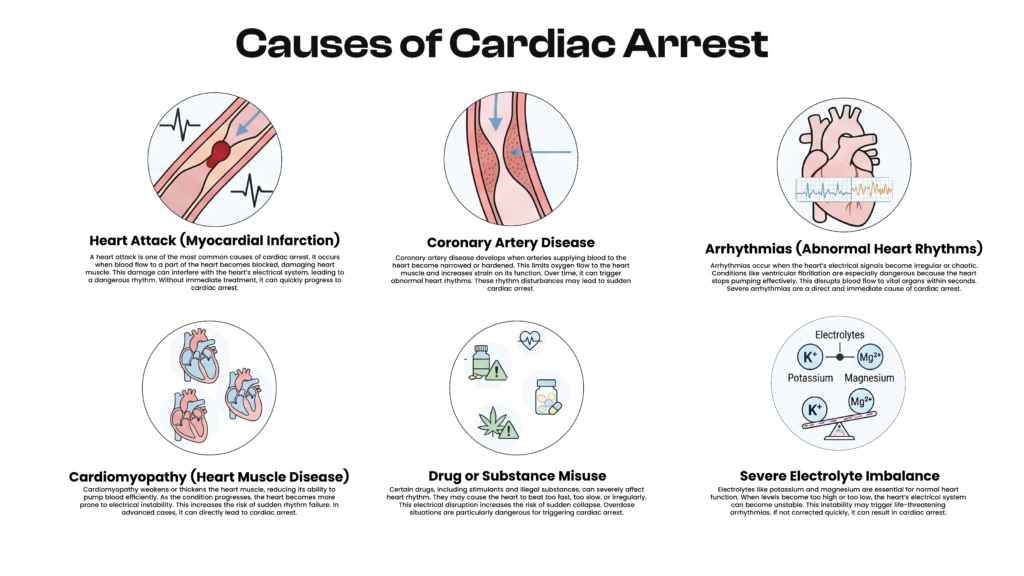
It can be overwhelming and frightening when someone suddenly experiences cardiac arrest without any clear warning. In many cases, it happens due to an underlying problem that affects the heart’s ability to maintain a normal rhythm. Understanding the common triggers can help in recognizing risk factors early and seeking timely medical care.
Heart Attack (Myocardial Infarction)
A heart attack is one of the most common causes of cardiac arrest. It occurs when blood flow to a part of the heart becomes blocked, damaging heart muscle. This damage can interfere with the heart’s electrical system, leading to a dangerous rhythm. Without immediate treatment, it can quickly progress to cardiac arrest.
Coronary Artery Disease
Coronary artery disease develops when arteries supplying blood to the heart become narrowed or hardened. This limits oxygen flow to the heart muscle and increases strain on its function. Over time, it can trigger abnormal heart rhythms. These rhythm disturbances may lead to sudden cardiac arrest.
Arrhythmias (Abnormal Heart Rhythms)
Arrhythmias occur when the heart’s electrical signals become irregular or chaotic. Conditions like ventricular fibrillation are especially dangerous because the heart stops pumping effectively. This disrupts blood flow to vital organs within seconds. Severe arrhythmias are a direct and immediate cause of cardiac arrest.
Cardiomyopathy (Heart Muscle Disease)
Cardiomyopathy weakens or thickens the heart muscle, reducing its ability to pump blood efficiently. As the condition progresses, the heart becomes more prone to electrical instability. This increases the risk of sudden rhythm failure. In advanced cases, it can directly lead to cardiac arrest.
Drug or Substance Misuse
Certain drugs, including stimulants and illegal substances, can severely affect heart rhythm. They may cause the heart to beat too fast, too slow, or irregularly. This electrical disruption increases the risk of sudden collapse. Overdose situations are particularly dangerous for triggering cardiac arrest.
Severe Electrolyte Imbalance
Electrolytes like potassium and magnesium are essential for normal heart function. When levels become too high or too low, the heart’s electrical system can become unstable. This instability may trigger life-threatening arrhythmias. If not corrected quickly, it can result in cardiac arrest.
When to Go to the ER
You should go to the emergency room immediately if you notice any sudden or severe symptoms that could indicate a life-threatening heart problem. Cardiac-related emergencies can worsen within minutes, so delaying care can significantly reduce survival chances. If someone collapses or shows signs of a serious heart issue, emergency medical attention is the only safe option.
- Sudden collapse or loss of consciousness
- No breathing or only gasping breaths
- Chest pain or pressure that is severe or ongoing
- Rapid, irregular, or very slow heartbeat
- Sudden dizziness, fainting, or extreme weakness
- Blue or pale lips, face, or skin
- Unresponsiveness or inability to wake the person
- Severe shortness of breath without relief
How To Treat Cardiac Arrest
It can be distressing and overwhelming when someone suddenly goes into cardiac arrest, as the situation requires immediate action and calm decision-making. Because every second counts, emergency care teams rely on fast, coordinated response to improve survival chances. Seeking urgent help at an emergency facility is critical for the best possible outcome.
- CPR (Cardiopulmonary Resuscitation): CPR helps manually circulate blood to the brain and vital organs when the heart stops. It is performed by pushing hard and fast on the chest until emergency help arrives.
- Defibrillation (AED use): An automated external defibrillator delivers an electric shock to restore normal heart rhythm, prescribed by the doctor when used in a clinical setting. Early defibrillation greatly increases survival chances.
- Emergency Medications: Drugs such as epinephrine (prescribed by the doctor) may be given during resuscitation to help stimulate heart function and improve blood flow.
- Advanced Airway Management: Medical professionals may use devices like intubation (prescribed by the doctor) to ensure oxygen reaches the lungs effectively. This supports breathing during emergency care.
- Post-Resuscitation Care: After the heart restarts, intensive monitoring and treatments (prescribed by the doctor) are used to stabilize heart function and prevent complications.
- Immediate Emergency Response: Calling emergency services right away ensures trained professionals can begin life-saving interventions without delay. Early action is the most important factor in survival.
How To Prevent Cardiac Arrest
- Maintain a heart-healthy diet: Eating fruits, vegetables, whole grains, and low-fat foods helps reduce cholesterol and blood pressure, lowering strain on the heart.
- Exercise regularly: Moderate physical activity strengthens the heart muscle and improves circulation, reducing the risk of heart disease and rhythm problems.
- Control blood pressure and cholesterol: Keeping these levels in a healthy range reduces damage to arteries and lowers the chance of heart complications.
- Avoid smoking and limit alcohol: Smoking and excessive alcohol intake can damage blood vessels and disrupt normal heart rhythm.
- Manage chronic conditions: Proper treatment of diabetes, hypertension, and other conditions helps prevent complications that may lead to cardiac arrest.
- Go for regular heart checkups: Early detection of heart problems allows timely treatment and reduces the risk of sudden cardiac events.
Cardiac Arrest Care at STAT Specialty Hospital
Experiencing a cardiac emergency can be frightening, especially when every second matters and immediate help is needed. At STAT Specialty Hospital, our team is prepared to respond quickly to life-threatening heart conditions with round-the-clock emergency support. If you or a loved one shows signs of cardiac arrest, seeking immediate medical attention can significantly improve survival chances. Fast evaluation and rapid intervention are critical in stabilizing the patient and restoring heart function.
Our emergency department is equipped to handle severe cardiac situations with advanced monitoring and critical care support. The medical team at STAT Specialty Hospital focuses on providing timely, life-saving treatment while ensuring continuous patient stabilization. From rapid response to post-emergency care, every step is managed with urgency and precision. Immediate action in a trusted emergency facility can make a crucial difference in outcomes.
Key Takeaway
- Cardiac arrest is a life-threatening emergency requiring immediate action as survival drops quickly without treatment.
- Early warning signs like collapse, no breathing, or loss of consciousness need urgent response.
- Common causes include heart attack, arrhythmias, and coronary artery disease.
- CPR and defibrillation can restore circulation and improve survival chances.
- Prevention focuses on heart health and managing risk factors.
- Go to the ER immediately if cardiac arrest or severe symptoms are suspected.
Frequently Asked Questions
Is cardiac arrest a heart attack?
No. A heart attack is a blood flow blockage, while cardiac arrest is when the heart suddenly stops pumping due to an electrical failure. A heart attack can sometimes lead to cardiac arrest.
How does cardiac arrest happen?
Cardiac arrest happens when the heart’s electrical system malfunctions, causing it to stop beating properly. This stops blood flow to the brain and body. It is often triggered by arrhythmias, heart attack, or other serious heart conditions.