

A dry cough is a type of cough that does not produce mucus or phlegm. Instead of clearing the airways, it creates a persistent irritation that often feels like a tickle or scratch in the throat. While it may start as a minor issue, a dry cough can quickly become frustrating, especially when it interferes with sleep, speech, or daily activities.
Unlike productive coughs that help remove congestion, a dry cough serves little physical purpose and is often linked to irritation, inflammation, or underlying conditions. It can be triggered by common factors like allergies, viral infections, or environmental irritants. If a dry cough is severe or persistent, visiting a Laredo emergency room can help rule out serious conditions and provide timely treatment. Understanding how a dry cough presents, what causes it, and when it becomes concerning is key to managing it effectively and preventing complications.
What Does a Dry Cough Sound Like?
A dry cough has a distinct sound that sets it apart from other types of coughs. It is usually sharp, short, and repetitive, often described as a hacking or barking noise. Because there is no mucus involved, the cough sounds hollow rather than congested or “wet.” People with a dry cough may notice that the sound becomes more frequent when talking, laughing, or breathing in cold air.
It can also worsen at night, creating a cycle of irritation that leads to repeated coughing fits. In some cases, the cough may come in bursts, making it difficult to control once it starts. The sound and pattern of a dry cough can provide clues about its cause, for example, a persistent nighttime cough may be linked to acid reflux, while one triggered by exercise or cold air may point to asthma.
Dry Cough Symptoms You Should Not Ignore
A dry cough rarely occurs in isolation and is often accompanied by additional symptoms that can help identify its severity and underlying cause. Recognizing these signs early can prevent the condition from worsening. Key symptoms include:
- Constant tickling sensation in the throat: Triggers frequent coughing spells without mucus.
- Irritation worsens with talking or deep breathing: Repeated strain can lead to discomfort.
- Throat soreness: Caused by repeated coughing and irritation of the throat lining.
- Mild chest discomfort: Results from the repeated muscle strain during coughing episodes.
- Sleep disruption: Coughs often intensify at night, leading to fatigue and reduced concentration during the day.
- Hoarseness or voice changes: Persistent coughing may affect the vocal cords over time.
- Wheezing or shortness of breath: Could indicate underlying respiratory conditions.
- Persistent cough that does not improve: May signal a chronic or serious medical issue requiring professional evaluation.
If these symptoms become severe or sudden, searching for an ER near me can ensure timely medical attention and prevent complications. Monitoring these warning signs is essential for determining whether home remedies are sufficient or if professional care is necessary.
Causes of Dry Cough
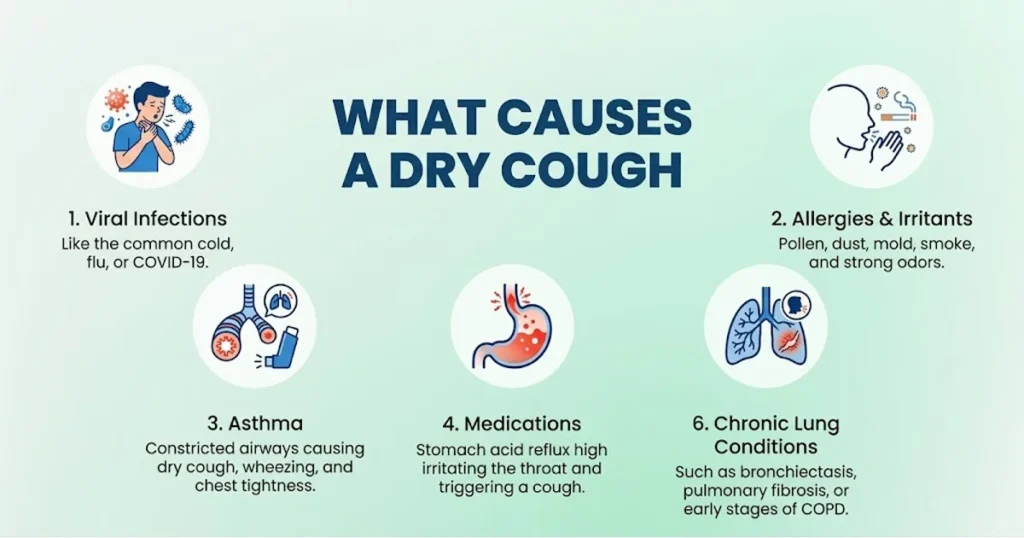
A dry cough can result from a wide range of triggers, from minor irritations to chronic health conditions. Identifying the root cause is crucial for effective treatment and long-term relief. Common causes include:
- Viral infections: Common colds, flu, and other viral illnesses can leave a lingering post-viral cough due to airway inflammation, even after other symptoms subside.
- Allergies: Exposure to dust, pollen, pet dander, or mold can irritate the throat and airways, causing persistent coughing. Environmental irritants like smoke, air pollution, and strong chemical odors can also contribute.
- Asthma: Cough-variant asthma often presents as a dry cough, which may worsen at night or during physical activity. Cold air or allergens can trigger episodes.
- Gastroesophageal reflux disease (GERD): Stomach acid traveling up into the esophagus irritates the throat, leading to a chronic cough, often worse when lying down or after meals.
- Medications: Certain drugs, particularly ACE inhibitors for high blood pressure, can cause a persistent dry cough. The cough usually resolves once the medication is adjusted or discontinued under medical supervision.
- Chronic lung conditions or infections: More serious underlying conditions, such as chronic bronchitis or interstitial lung disease, may also present with a dry cough and require professional evaluation.
Understanding these causes emphasizes why a persistent cough should not be ignored and highlights the importance of addressing the underlying trigger for effective relief.
How to Treat a Dry Cough?
Treating a dry cough effectively requires addressing both the symptoms and the underlying cause. For persistent or severe cases, visiting a STAT Specialty Hospital can provide specialized evaluation and care. A combination of home care, over-the-counter solutions, and medical treatments can then provide comprehensive relief. Key treatment approaches include:
Home Remedies
- Hydration: Drinking plenty of fluids, including water, herbal teas, or broths, helps soothe throat irritation and reduces the urge to cough.
- Honey: A teaspoon of honey can coat the throat, calm irritation, and reduce coughing frequency, especially before bedtime.
- Steam Inhalation: Inhaling steam from a bowl of hot water or a warm shower adds moisture to dry airways, helping relieve dryness and irritation.
- Humidifiers: Using a humidifier in your bedroom or living area maintains air moisture, preventing throat dryness that can trigger coughing.
Over-the-Counter (OTC) Medications
- Cough Suppressants: Medications containing dextromethorphan or similar agents reduce the cough reflex, particularly helpful for persistent or disruptive coughs.
- Throat Lozenges and Sprays: These provide temporary relief by soothing the throat lining, reducing irritation, and calming the urge to cough.
Medical Treatments
- Asthma-Related Cough: Inhalers or corticosteroids may be prescribed to reduce airway inflammation and control cough-variant asthma.
- Acid Reflux (GERD) Cough: Proton pump inhibitors, H2 blockers, or dietary and lifestyle changes can reduce acid exposure to the throat, alleviating coughing.
- Allergy-Induced Cough: Antihistamines or nasal sprays can help manage allergy symptoms that trigger a persistent dry cough.
- Medication-Induced Cough: If a prescription medication, such as an ACE inhibitor, is causing the cough, a doctor may adjust or switch the drug safely.
A treatment plan tailored to the specific cause not only relieves the cough but also prevents recurrence and addresses the root problem. Combining home remedies, OTC options, and professional medical care ensures a comprehensive, lasting solution for dry coughs.
When a Dry Cough Is Serious
Although many dry coughs are harmless and resolve on their own, some cases can indicate a more serious health issue. A cough that persists for several weeks without improvement should not be ignored, especially if it occurs alongside additional symptoms. Warning signs include severe chest pain, difficulty breathing, or coughing up blood, all of which may point to infections, lung conditions, or other medical concerns that require immediate attention.
Other indicators of a serious problem include unexplained weight loss, night sweats, or a high fever accompanying a persistent cough. In such cases, early diagnosis is critical, as delaying medical care can lead to complications and prolong recovery. Recognizing when a dry cough goes beyond a minor irritation is essential for protecting overall health and ensuring timely treatment.
When to Go to the ER?
Immediate medical care is necessary when a dry cough is accompanied by severe or life-threatening symptoms.
- Difficulty breathing or gasping for air: This may indicate a serious respiratory issue that requires urgent intervention.
- Chest pain spreading to the arm or jaw: A potential sign of a cardiac emergency that needs immediate attention.
- Severe, uncontrollable coughing fits: Especially if they interfere with breathing or daily functioning.
- High fever, confusion, or bluish lips: These signs may indicate infection or low oxygen levels.
- Sudden worsening in individuals with chronic conditions: Those with asthma, heart disease, or lung disorders should seek urgent care if symptoms escalate quickly.
Prompt evaluation in an emergency setting ensures timely diagnosis and treatment, reducing the risk of serious complications.
FAQs
1. How long can a dry cough last?
The duration of a dry cough depends on its underlying cause. Acute coughs from viral infections usually resolve within 1–3 weeks, while chronic conditions like asthma, GERD, or allergies may cause a cough that persists for months. If a cough lasts longer than three weeks, it’s important to consult a doctor.
2. Why do I have a dry cough when I lay down?
Dry coughing when lying down is often linked to post-nasal drip, acid reflux, or airway irritation. Gravity allows mucus or stomach acid to move toward the throat, triggering the cough reflex. Elevating the head during sleep or managing reflux can help reduce nighttime coughing.
3. Why do I have a dry cough after I eat?
A dry cough after eating is frequently caused by acid reflux (GERD) or swallowing irritants too quickly. Stomach acid may reach the esophagus and irritate the throat, leading to a persistent tickling sensation. Adjusting diet, eating smaller meals, and avoiding trigger foods can help prevent this type of cough.
Summary
A dry cough is a common but often frustrating condition that can range from mild irritation to a sign of an underlying health issue. Recognizing how it sounds, identifying symptoms, and understanding potential causes are key to managing it effectively. While many cases improve with simple remedies, persistent or severe symptoms should never be overlooked. Timely treatment and awareness of warning signs can help prevent complications and ensure better respiratory health.