

Many people experience middle back pain during everyday activities like sitting for long hours, lifting objects, or even resting. It can appear suddenly or develop gradually, often causing discomfort that affects daily movement and sleep. For some individuals, the pain may feel mild and temporary, while for others it can become persistent and limiting.
If you are dealing with middle back pain, it may naturally cause concern, especially when it interferes with posture, breathing comfort, or physical activity. Some people also notice stiffness, muscle tightness, or pain that worsens with movement. If your symptoms are severe, worsening, or accompanied by other concerning signs, visiting our Del Rio emergency room can help ensure you receive prompt assessment and treatment.
What Is Middle Back Pain?
Middle back pain refers to discomfort in the thoracic spine, located between the neck and lower back. This region includes ribs, vertebrae, muscles, ligaments, and nerves that support posture and upper body movement. Pain in this area may feel dull, sharp, burning, or stiff depending on the cause.
According to the National Institute of Neurological Disorders and Stroke (NINDS), back pain is one of the most common medical conditions affecting adults and is a leading cause of disability worldwide.
Dangerous Signs Of Middle Back Pain
- Sudden, severe pain that does not improve with rest.
- Pain spreads to the chest, arms, or abdomen.
- Difficulty breathing or shortness of breath.
- Numbness, tingling, or weakness in the legs.
- Loss of bladder or bowel control.
Also Read: Lower Back Pain: Causes & Treatments
Middle Back Pain Causes
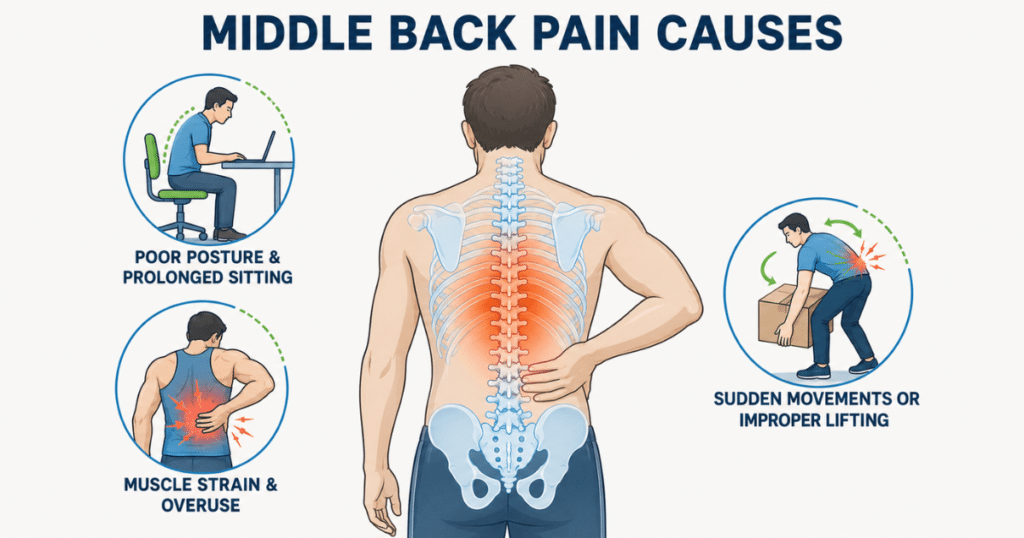
Middle back pain can develop due to mechanical stress, lifestyle habits, or repetitive strain. It may start mildly, but can worsen if the underlying trigger continues. Understanding these common contributors helps in early prevention and management.
Poor Posture And Prolonged Sitting
Poor posture is one of the most common reasons behind middle back pain, especially in people who spend long hours sitting at desks or using screens. Slouching or leaning forward places extra stress on the thoracic spine and surrounding muscles. Over time, this can lead to stiffness, muscle fatigue, and aching discomfort. If not corrected, posture-related strain may gradually worsen pain during daily activities.
Muscle Strain And Overuse
Muscle strain can occur when the back muscles are stretched or overworked during physical activity, heavy lifting, or sudden awkward movements. This type of strain often causes localized soreness or tightness in the middle back area. The pain may increase with movement or certain positions and improve with rest. Repetitive strain without proper recovery can make the discomfort more persistent.
Sudden Movements Or Improper Lifting
Lifting heavy objects incorrectly or making sudden twisting motions can put excess pressure on the middle back muscles. This can lead to immediate discomfort or delayed soreness that develops hours later. The affected area may feel tight, stiff, or tender to touch. Repeated improper movement patterns can increase the risk of recurring pain episodes.
Medical Conditions That Cause Middle Back Pain
Some cases of middle back pain are linked to underlying medical conditions affecting the spine or surrounding structures. These conditions often cause persistent or worsening pain that does not improve with rest and may require medical evaluation.
- Herniated Or Bulging Disc: A spinal disc may shift or bulge, pressing on nearby nerves and causing pain. This can lead to stiffness, sharp discomfort, or pain that worsens with movement or bending.
- Spinal Arthritis (Spondylosis): Wear and tear of spinal joints can lead to inflammation and stiffness. Over time, this may cause chronic aching pain and reduced flexibility in the middle back.
- Osteoporosis: Osteoporosis weakens bones, making the spine more prone to small fractures. These fractures can cause sudden or persistent middle back pain, especially in older adults.
- Scoliosis: An abnormal curvature of the spine can create uneven pressure on the middle back. This imbalance may lead to muscle fatigue, posture changes, and ongoing discomfort.
- Spinal Infections: Spinal infections can cause deep, persistent pain along with fever and fatigue. This condition is rare but serious and requires urgent medical treatment.
Persistent middle back pain with fever, weakness, or numbness should be evaluated promptly. If you are searching for urgent care for back pain near me, seek medical attention to identify the cause and prevent complications.
Who Is At Risk Of Middle Back Pain?
Certain individuals are more likely to develop middle back pain due to daily habits, occupation, or health conditions. Recognizing these risk factors helps reduce long-term spinal strain and prevent chronic discomfort.
- Office Workers And Desk-Based Employees: Long sitting hours and poor ergonomics increase spinal stress and muscle fatigue.
- Older Adults: Natural spinal degeneration and reduced bone strength increase vulnerability to pain.
- Physically Active Workers: Heavy lifting or repetitive motion can strain back muscles and joints.
- People With Poor Posture: Slouching or improper sitting habits place continuous pressure on the spine.
- Sedentary Individuals: Weak core muscles reduce spinal support and increase pain risk.
People in these risk groups should monitor symptoms closely, especially if pain becomes persistent or severe. If symptoms worsen or do not improve, searching for the closest emergency room near me can help ensure timely medical evaluation and appropriate care.
Diagnosis Of Middle Back Pain
Diagnosis focuses on identifying the root cause through clinical evaluation and imaging when needed. Early diagnosis helps prevent complications and ensures effective treatment planning.
- Medical History Review: The doctor asks about the onset of pain, lifestyle habits, injuries, and associated symptoms. This helps identify possible triggers or risk factors contributing to the discomfort.
- Physical Examination: A hands-on exam checks posture, spinal alignment, muscle tenderness, and range of motion. It also helps detect areas of stiffness, weakness, or nerve involvement.
- Imaging Tests (X-ray, MRI, CT Scan): These tests provide detailed images of the spine and surrounding structures. They help identify issues such as disc problems, fractures, or structural abnormalities.
- Neurological Assessment: This evaluation checks reflexes, muscle strength, and sensation in the limbs. It helps determine if nerves are affected by the underlying condition.
When To Go To The ER
Middle back pain is often mild, but some symptoms indicate a medical emergency. Immediate evaluation is necessary if warning signs appear, as they may indicate serious spinal, neurological, or cardiopulmonary issues.
- Sudden, severe middle back pain that does not improve with rest.
- Pain spreads to the chest, abdomen, or arms.
- Difficulty breathing or shortness of breath.
- Numbness, weakness, or loss of sensation in the legs.
- Loss of bladder or bowel control.
- High fever with chills or unexplained fatigue.
- Middle back pain after a fall, accident, or injury.
Middle back pain is usually mild, but warning signs may indicate a medical emergency requiring immediate evaluation for serious spinal, neurological, or cardiopulmonary issues. Our 24/7 emergency room is available for prompt care.
Middle Back Pain Treatment
Treatment for middle back pain depends on the underlying cause and severity of symptoms. In many cases, a combination of self-care, medication, and medical interventions can help relieve pain and improve mobility. Early management often focuses on reducing inflammation, restoring movement, and preventing recurrence.
- Over-The-Counter Pain Relievers: Ibuprofen or acetaminophen may reduce pain and inflammation. Most doctors recommend short-term use for mild to moderate symptoms.
- Hot And Cold Therapy: Ice reduces inflammation in early stages, while heat relaxes tight muscles and improves blood flow.
- Physical Therapy: Strengthens core and back muscles while improving posture and mobility. Commonly recommended for long-term recovery.
- Prescription Medications: Muscle relaxants or stronger pain relief may be prescribed in severe cases under medical supervision.
- Minimally Invasive Procedures: Steroid injections may reduce inflammation when conservative treatment fails.
- Lifestyle Modifications: Better posture, ergonomic adjustments, and regular exercise help prevent recurrence.
Middle Back Pain Care at STAT Specialty Hospital
Understanding middle back pain early is important to prevent it from becoming persistent or affecting daily movement. Many cases are linked to posture or muscle strain, but worsening or ongoing symptoms should be properly evaluated to avoid complications.
At STAT Specialty Hospital, patients with middle back pain receive a thorough evaluation to identify the cause and guide effective treatment. Our specialists provide personalized care focused on pain relief, recovery, and long-term spinal health.
Key Takeaways
- Middle back pain may be mild, but should not be ignored if persistent or worsening.
- Poor posture, muscle strain, and lifting injuries are the most common causes.
- Some cases are linked to serious medical conditions needing timely diagnosis.
- Warning signs like chest pain, breath issues, or weakness require emergency care.
- Early evaluation and proper treatment improve recovery and prevent recurrence.