

Have you ever wondered, “What Does The Color Of Your Mucus Mean?” Mucus is a natural substance that protects your airways and tissues, but changes in its color can signal different conditions in your body. From clear to green or even red, each hue provides clues about your immune response, allergies, infections, or irritation. Understanding these changes can help you decide when to monitor at home and when to seek medical attention.
Unusual mucus color can feel alarming, especially if it comes with congestion, coughing, or discomfort. While most color changes are harmless, some may require professional care, which is why visiting providers like our Del Rio emergency room ensures timely evaluation and proper treatment.
What Is Mucus?
Mucus is a thick, gel-like fluid produced by the mucous membranes lining your nose, throat, lungs, and other parts of the body. Its primary roles are to trap germs, dust, and allergens, keep tissues moist, and support your immune system. During respiratory infections, mucus production increases as part of the body’s defense mechanism. Immune cells and proteins accumulate in the mucus, changing its color and consistency.
A study from NIH found that yellow or green sputum color was significantly associated with bacterial presence in about 12% of cases, though color alone does not confirm infection type.
Mucus Symptoms
- Runny or blocked nose.
- Thick or stringy discharge.
- Post-nasal drip down the throat.
- Frequent coughing.
- Sore throat or hoarseness.
What Different Mucus Colors Mean
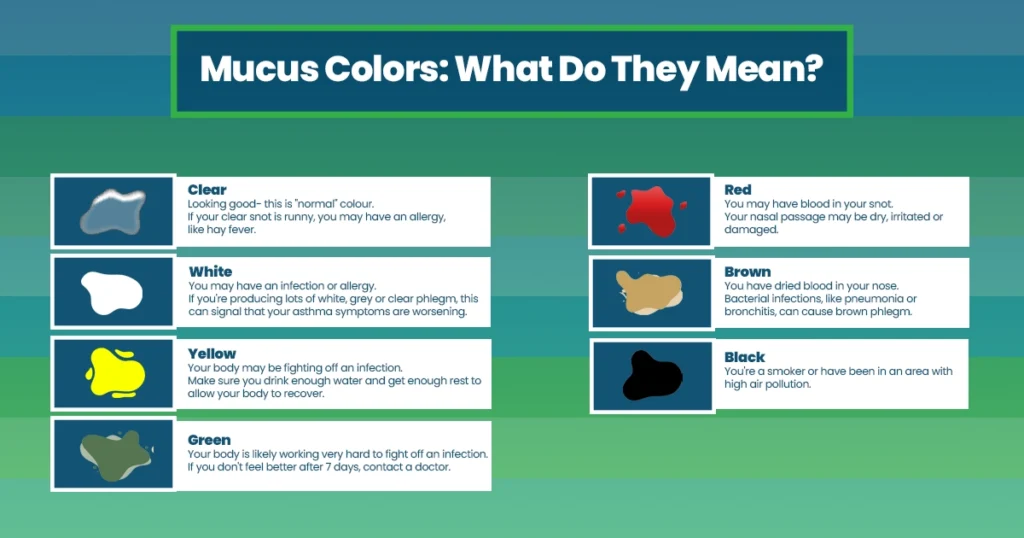
Mucus can appear in various colors, each reflecting different processes in your body. Immune response, hydration, environmental irritants, viral or bacterial activity, and even minor nose trauma can influence mucus color. Understanding what these colors may suggest helps you decide whether symptoms are mild or require further evaluation.
What Does Clear Mucus Mean
Clear mucus is generally normal and indicates healthy functioning of your mucous membranes. It’s primarily water, salts, antibodies, and proteins that help trap dust and microbes. Thin and watery clear mucus can also occur with allergies or environmental irritants. It is usually harmless unless accompanied by high fever or difficulty breathing.
What Does White Mucus Mean
White mucus often indicates swollen or inflamed nasal tissues, usually from congestion or early viral infections such as a cold. As mucus flow slows, water is absorbed, making it thicker and cloudier. While white mucus is not typically harmful, it may signal a mild viral infection.
What Does Yellow Mucus Mean
Yellow mucus often reflects an immune response, as white blood cells arrive to fight germs or irritants. The color itself is not dangerous, but it indicates your body is actively dealing with inflammation or infection.
What Does Yellow Mucus Indicate:
- Immune System Engagement: Yellow coloration arises when white blood cells collect and break down in your mucus during an infection.
- Infection Progression: It commonly occurs in colds and sinus infections, but doesn’t automatically mean it’s bacterial—viral infections can also produce yellow mucus.
- Irritation or Allergic Reaction: Environmental irritation or allergy flares can thicken and tint mucus yellow.
What Does Green Mucus Mean
Green mucus typically means your immune system is continuing to fight irritants or microbes. Green color comes from enzymes in white blood cells. Both viral and bacterial infections can produce green mucus, which is usually thicker and more opaque than clear or white mucus.
Does Green Mucus Mean Infection?
Green mucus may indicate an infection, but not always. It often reflects an active immune response rather than a bacterial infection specifically. Viral infections, sinus inflammation, and prolonged irritation can all cause green mucus. If it persists beyond 10 days or comes with fever, facial pressure, or fatigue, professional evaluation is recommended.
What Does Red Mucus Mean
Red or pink-tinged mucus indicates the presence of blood. This can occur if tiny blood vessels break due to irritation from frequent blowing, dryness, or minor trauma. Occasional blood-tinged mucus is usually not serious, but persistent or heavy bleeding should be evaluated by a healthcare professional.
What Does Brown Mucus Mean
Brown mucus often comes from old blood or environmental particles like dust, smoke, or pollutants. It may appear in smokers or those exposed to heavy air irritants. While usually harmless, persistent brown mucus with other symptoms should be checked.
What Does Brown Mucus Indicate:
- Old Blood Presence: Brown often signifies dried or older blood mixed into the mucus.
- Environmental Pollutants: It may reflect inhaled particles such as pollution or smoke.
- Chronic Irritation: Long‑term exposure to irritants or tobacco smoke can contribute.
What Does Black Mucus Mean
Black mucus is rare and may occur when soot, heavy pollution, or smoke particles are trapped in nasal secretions. In rare cases, it can indicate a serious fungal infection, especially in people with compromised immunity. Persistent black mucus requires medical evaluation.
When To Seek Emergency Care For Mucus?
While most mucus changes are benign, urgent medical care may be needed if you experience symptoms that suggest a serious condition or complications. Watch for these emergency signs:
- Sudden or severe shortness of breath.
- High fever (>103°F/39.4°C) with stiff neck or severe headache.
- Large amounts of blood in mucus or persistent bleeding.
- Severe facial pain or swelling with green or foul-smelling mucus.
- Confusion, chest pain, or persistent vomiting.
If you have any of these symptoms or are unsure about your mucus changes and how they relate to your overall health, contact the STAT Specialty Hospital right away for prompt evaluation.
Care For Mucus Concerns At STAT Specialty Hospital
If you notice unusual changes in your mucus color, seeking timely evaluation is important to prevent complications. At STAT Specialty Hospital, our experienced team provides accurate diagnosis and personalized outpatient care. Understanding What Does The Color Of Your Mucus Mean helps guide the right treatment safely.
Ongoing monitoring may be needed for chronic or recurring symptoms. Our outpatient care includes symptom tracking, medication guidance, and specialist consultations. STAT Specialty Hospital is dedicated to helping patients relieve discomfort and maintain long-term respiratory health.