

Waking up with a burning, swollen throat instantly raises concerns about whether you might pass the sickness to your family or coworkers. Because the underlying microbes that trigger tonsil inflammation are inherently infectious, this condition can easily move from person to person. Pathogens travel swiftly through the air when an infected individual sneezes or coughs, as well as through shared surfaces and utensils.
Learning the mechanisms of transmission, the duration of your infectious period, and the primary causes can help you protect the people around you. Finding an emergency room laredo, TX, guarantees that you alleviate the pain promptly while ruling out dangerous respiratory blockages.
What Is Tonsillitis?
If you are wondering exactly what tonsillitis is, it is the acute inflammation of the two oval-shaped tissue masses resting at the back of your throat. These glands act as your body’s initial security checkpoint, trapping hazardous germs that enter through your airway. When symptoms become severe or unmanageable at home, visiting an ER for Sore Throat in Laredo ensures prompt evaluation and the right treatment plan from the start.
Also Read: What causes tonsil stones?
Severe Tonsillitis Symptoms That Mustn’t Be Ignored
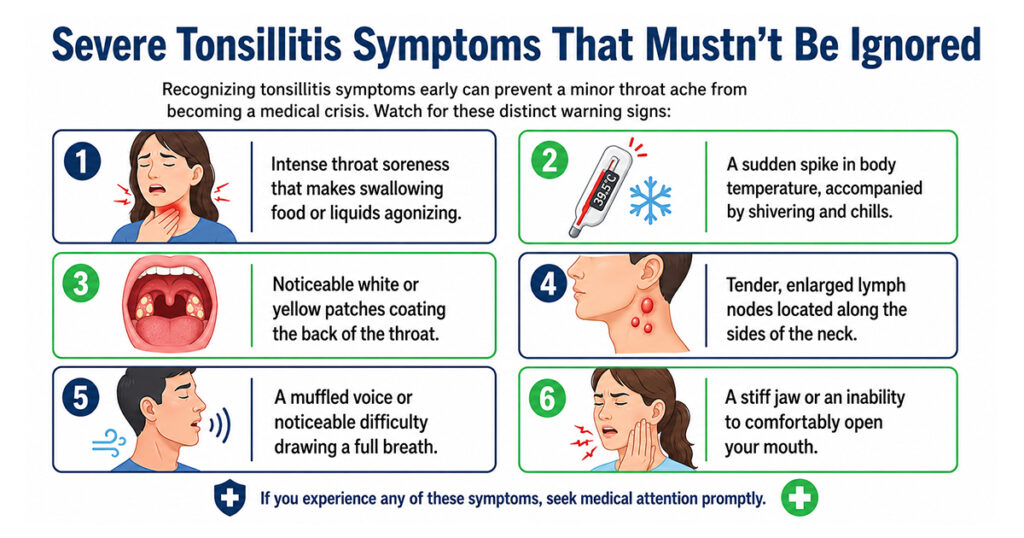
Recognizing tonsillitis symptoms early can prevent a minor throat ache from becoming a medical crisis. Watch for these distinct warning signs:
- Intense throat soreness that makes swallowing food or liquids agonizing.
- A sudden spike in body temperature, accompanied by shivering and chills.
- Noticeable white or yellow patches coating the back of the throat.
- Tender, enlarged lymph nodes located along the sides of the neck.
- A muffled voice or noticeable difficulty drawing a full breath.
- A stiff jaw or an inability to comfortably open your mouth.
What Causes Tonsillitis?
To effectively cure the inflammation, doctors must first identify what causes tonsillitis in your specific case. How do we get tonsillitis? We get it by coming into direct contact with specific pathogens, which generally fall into two distinct categories.
1. Viral Infections
Viruses are the most widespread instigators of tonsil swelling. The same viruses responsible for the common cold, influenza, or mononucleosis frequently invade the throat tissues. A viral bout usually presents with a gradual onset of throat discomfort, nasal congestion, a slight fever, and a persistent cough.
2. Bacterial Infections
While less frequent, bacterial attacks usually result in more aggressive and painful symptoms. Streptococcus pyogenes (the bacteria that cause strep throat) is the most common offender. Because untreated bacterial infections can trigger severe bodily reactions, the Texas Department of State Health Services (DSHS) emphasizes the importance of clinical testing for strep to avoid long-term complications like rheumatic fever.
Is Tonsillitis Spreadable and How Long Does It Last?
Patients frequently ask, is tonsillitis spreadable? Yes, the germs responsible for the condition are highly transmissible. The timeline for how long tonsillitis lasts and how long you remain a risk to others depends on the pathogen.
If a virus is the root cause, you are contagious a few days before showing symptoms until your fever subsides, which generally takes about 7 to 10 days. If a bacterium is responsible, you can remain infectious for up to two weeks without visiting an emergency room near me. However, once a physician starts you on a prescription antibiotic regimen, you typically stop being contagious within 24 to 48 hours. Sharing drinks or standing close to someone who is coughing drastically elevates transmission risks.
Diagnosis of Tonsillitis
Because viral and bacterial throat infections look identical to the naked eye, self-diagnosis is practically impossible. A medical professional must conduct a formal evaluation to confirm the exact source of your discomfort.
- Physical Examination: A provider will look into your airway to check for extreme redness, swelling, and white exudate, while palpating your neck for swollen glands.
- Rapid Swab Test: A quick swab of the tonsils detects strep bacteria in just a few minutes, allowing for immediate treatment decisions.
- Throat Culture: If the rapid test is negative but symptoms are severe, a sample is sent to an on-site laboratory for a deeper microscopic analysis.
- Blood Panels: In complex cases, drawing blood helps emergency doctors analyze your white blood cell count to determine if your body is fighting off a virus or a bacterial threat.
When to Go to the ER?
A sore throat might seem like a minor inconvenience, but extreme swelling can quickly compromise your airway. Knowing when to go to the ER is critical for preventing life-threatening scenarios. Seek urgent Texas emergency medical services if you experience:
- Immediate respiratory distress or a sensation that your airway is being pinched closed.
- Extreme dehydration caused by an absolute inability to swallow water or your own saliva.
- Severe pain isolated to one side of your throat, which frequently points to a peritonsillar abscess.
- Dangerously high fevers that do not break with standard over-the-counter medications.
- Profound lethargy, extreme confusion, or neck rigidity.
How to Treat Tonsillitis
Understanding how to treat tonsillitis depends entirely on the clinical diagnosis. A targeted medical strategy ensures you recover swiftly while mitigating the risk of community transmission.
- Antibiotic Regimens: Bacterial infections require prescription antibiotics. Completing the entire prescribed dose is mandatory to completely eradicate the bacteria, even if your throat feels fine after a day or two.
- Steroid Interventions: For critical airway swelling, emergency room doctors may utilize rapid-acting steroids to shrink the inflamed tissue immediately.
- Surgical Options (Tonsillectomy): For individuals who suffer from chronic, non-stop throat infections, surgically extracting the tonsils is a proven, long-term solution.
- Intravenous (IV) Hydration: A 24/7 emergency room utilizes IV fluids for patients with severe dehydration due to painful swallowing.
Managing Symptoms at Home
Because antibiotics are useless against viruses, viral tonsillitis treatment focuses on supportive care. Maximize your sleep, drink warm broths or cold liquids, use a humidifier, and take over-the-counter pain relievers to manage the aches. Staying isolated until you are completely fever-free aligns with general public school health protocols to prevent localized outbreaks.
Emergency Tonsillitis Care at STAT Specialty Hospital
When your throat swells to the point of restricting your breathing or preventing you from drinking water, waiting days for a standard clinic visit is dangerous. You require immediate, highly capable medical attention.
At STAT Specialty Hospital, our advanced emergency facility is prepared 24/7 to manage severe respiratory and throat complications. Featuring top-tier, board-certified emergency physicians and fully functioning on-site laboratories, we deliver precise diagnostics and rapid relief. Whether your condition requires potent IV antibiotics, urgent hydration, or emergency airway management, our dedicated medical staff will ensure you receive the highest standard of fast, compassionate care.
Key Takeaways
- Tonsillitis is highly infectious, spreading rapidly through airborne droplets and shared personal items.
- Core symptoms include severe throat pain, high fevers, swollen neck glands, and white patches in the airway.
- Determining the exact cause, viral or bacterial, is necessary to dictate the correct medical treatment.
- Bacterial cases become non-contagious roughly 24 to 48 hours after initiating antibiotic therapy.
- Go directly to the emergency room if you struggle to breathe, cannot swallow fluids, or develop an abscess.
- STAT Specialty Hospital provides 24/7 emergency evaluation and rapid treatment for dangerous tonsillitis complications.