

It can feel worrying and overwhelming when you start feeling sick and don’t know what to expect next, especially when you’re thinking about your family and whether you might still be contagious. Many people naturally ask how long does COVID last because the uncertainty around symptoms and recovery can be stressful.
COVID-19 is a respiratory illness caused by the SARS-CoV-2 virus that can range from mild symptoms to more severe breathing complications, and the duration of illness can vary depending on overall health and individual response to the infection. If symptoms become severe or breathing becomes difficult, seek immediate care at STAT Specialty Hospital or our emergency room in Laredo, TX.
What Is COVID?
COVID-19 is a contagious viral infection that primarily affects the respiratory system, including the nose, throat, and lungs. It spreads mainly through respiratory droplets and airborne particles when an infected person talks, coughs, or breathes.
A study supported by the U.S. National Institutes of Health (NIH) and published in NIH research summaries based on a China outbreak analysis found that about 53% of transmission occurred during the presymptomatic phase.
COVID Symptoms That You Shouldn’t Ignore
- Fever or chills: Persistent fever may indicate active infection. It often appears early and can worsen as the virus progresses.
- Shortness of breath: Difficulty breathing or feeling air hunger may signal lung involvement and requires urgent evaluation.
- Chest pain or pressure: Tightness or heaviness in the chest may indicate respiratory or cardiac strain and should never be ignored.
- Severe fatigue: Extreme tiredness that affects daily activity may indicate the body is under viral stress.
- Loss of taste or smell: A sudden change in sensory function is a common early COVID symptom and should be monitored closely.
How Long Do COVID Symptoms Last?
It can be stressful not knowing how long COVID symptoms will stay with you, especially when you’re trying to manage daily life while feeling unwell. Many people search for how long do COVID symptoms last because the duration can vary widely from person to person. In most cases, mild illness improves within a few days to a couple of weeks, but fatigue and cough can sometimes linger longer.
- Alpha Variant: Early Symptom Phase: Symptoms usually begin 2–4 days after exposure, including fever, cough, and fatigue. Most mild cases improve within 7–14 days, but some patients may experience lingering tiredness.
- Delta Variant: Rapid Onset Phase: Symptoms tend to appear quickly and may feel more intense early on. Illness often lasts around 10–14 days, with higher chances of breathing difficulty in severe cases.
- Omicron Variant: Upper Respiratory Phase: Symptoms are often milder and include sore throat, runny nose, and cough. Many people recover within 5–10 days, though mild fatigue can persist longer.
- Post-COVID Recovery Phase (All Variants): Even after the infection clears, some people experience “long COVID” symptoms like tiredness or brain fog. This phase can last weeks to months, depending on the individual.
How Long Does COVID Last on Surfaces?
It can be concerning to think about infection from everyday objects, but the virus does not remain highly active on surfaces for long. Its survival depends on the material, temperature, humidity, and exposure to sunlight, and it loses strength significantly outside the human body. In most real-world settings, the risk of catching the virus from surfaces is considered low compared to airborne transmission.
- Plastic & metal: The virus may last up to 1–3 days, but it loses strength much faster within hours.
- Cardboard: It generally survives for about 24 hours or less under normal conditions.
- Fabric: It usually remains for only a few hours up to a day, depending on the environment.
- Overall risk: Surface transmission is rare, with most infections happening through respiratory droplets and aerosols.
How Long Are You Contagious With COVID?
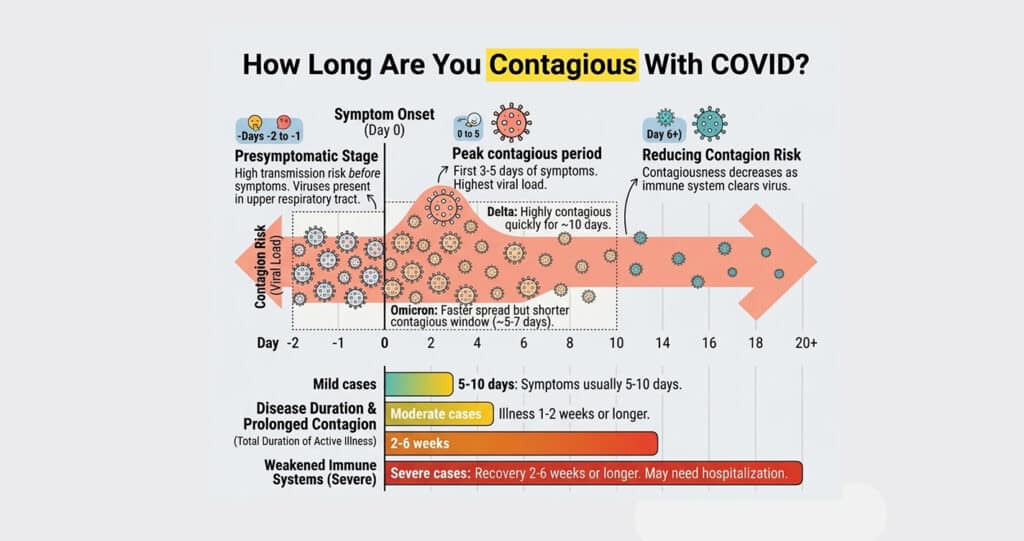
COVID-19 contagiousness depends on the immune response, variant type, and severity of infection. Most people are highly infectious during the early phase of illness, even before symptoms fully develop.
- Original Strain (2020): Most people were contagious from about 1–2 days before symptoms and up to 8–10 days after. Heavier symptoms often meant a longer infectious period.
- Delta Variant: This variant showed higher viral loads, making people highly contagious quickly and for a slightly longer period, often around 10 days from symptom onset.
- Omicron Variant: Omicron spread faster but generally had a shorter contagious window, typically around 5–7 days, though early transmission before symptoms was common.
How COVID Spreads
COVID-19 spreads mainly when an infected person releases respiratory droplets or tiny aerosol particles through coughing, sneezing, talking, or even breathing. These particles can be inhaled by others nearby, especially in enclosed or poorly ventilated spaces.
- Airborne transmission: Small aerosol particles can remain suspended in the air and travel beyond short distances, particularly indoors. Poor ventilation increases the chance of infection even without direct contact.
- Respiratory droplets: Larger droplets can land in the eyes, nose, or mouth of nearby people, especially during close conversations, coughing, or sneezing.
- Surface contact (less common): Touching contaminated surfaces and then touching the face may spread the virus, although this is not the primary mode of transmission.
COVID Test & Diagnostics
Getting tested is an important step in confirming COVID-19 infection and guiding timely treatment. Early diagnosis helps reduce transmission and ensures patients receive appropriate care based on symptom severity.
- PCR test: A highly accurate laboratory test that detects active COVID-19 infection by identifying viral genetic material. It is often considered the gold standard for diagnosis.
- Rapid antigen test: A quick test that provides results within minutes by detecting specific viral proteins. It is commonly used for fast screening in symptomatic patients.
- Chest X-ray: Used in moderate to severe cases to check for lung involvement or complications such as pneumonia. It helps assess the extent of respiratory impact.
- Oxygen level monitoring (SpO2): Measures blood oxygen saturation to identify breathing difficulties early. Low oxygen levels may indicate the need for urgent medical care.
At STAT Specialty Hospital, we provide emergency care for COVID-19 with rapid evaluation and diagnostic support for patients who need immediate attention.
When to Go to the ER
COVID-19 can worsen quickly in some people, so it’s important to recognize when symptoms need urgent medical attention. Delaying care in severe cases can lead to serious complications affecting breathing and vital organs. If symptoms feel extreme or unusual, emergency evaluation is necessary.
- Trouble breathing or shortness of breath: Difficulty breathing, gasping for air, or feeling unable to get enough oxygen is a major warning sign. This may indicate lung involvement and requires immediate ER care.
- Chest pain or pressure: Persistent pain, tightness, or heaviness in the chest should never be ignored. It can signal worsening respiratory distress or heart strain.
- Confusion or difficulty staying awake: Sudden confusion, drowsiness, or inability to stay alert may indicate low oxygen levels or severe infection.
- Bluish lips or face: A bluish tint on lips, skin, or nail beds suggests dangerously low oxygen levels in the blood. This is a medical emergency.
How to Treat COVID
Treatment for COVID-19 depends on symptom severity, overall health, and risk factors. Most mild cases can be managed at home with supportive care, while moderate to severe cases may require medical supervision or hospitalization. Early management helps reduce complications and supports faster recovery.
- Rest and hydration: Getting plenty of rest and drinking fluids helps the body fight infection and prevents dehydration. This is especially important during fever or fatigue.
- Symptom relief medications: Over-the-counter medicines like fever reducers and pain relievers may help manage symptoms such as fever, body aches, and headache. Always follow dosing instructions.
- Monitoring symptoms: Keep track of breathing, oxygen levels, and symptom progression. Worsening symptoms should not be ignored and may require medical evaluation.
- Medical treatment for severe cases: High-risk patients or those with severe symptoms may need antiviral medications, oxygen therapy, or hospital care. Early intervention improves outcomes.
COVID Care at STAT Specialty Hospital
COVID-19 spreads most easily in the early stages of infection, especially before and just after symptoms appear. Understanding this window helps prevent accidental transmission to others.
At STAT Specialty Hospital, we guide patients who ask, “How long do COVID symptoms last?” so they can safely manage isolation and recovery. If symptoms worsen, our emergency team provides immediate evaluation and critical care support.
Key Takeaways
- Typical duration: Mild COVID symptoms usually last 5–10 days, with most people improving within a week.
- Early phase: Symptoms often start 2–4 days after exposure and peak early in the illness.
- Extended illness: Moderate to severe cases may last 2–3 weeks or longer.
- Long COVID: Some people experience lingering symptoms like fatigue for weeks or months.
FAQs
How bad is COVID right now?
COVID-19 is generally less severe today due to immunity from vaccines and prior infections, but it can still cause serious illness in high-risk individuals.
Is diarrhea a symptom of COVID?
Yes, gastrointestinal symptoms like diarrhea can occur, though respiratory symptoms are more common.
How long does COVID vaccine last?
Protection from COVID vaccines generally lasts about 6–12 months, mainly against severe illness, with boosters helping maintain immunity.
How long does COVID cough last?
A COVID cough usually lasts 1–3 weeks, but it may linger longer in some cases after other symptoms improve.
How long does a COVID fever last?
COVID fever typically lasts 2–5 days and usually improves as the infection starts to resolve.