

Ear infections don’t just cause mild ear discomfort; they can trigger sharp, radiating jaw pain, intense pressure around the ear, swelling along the jawline, difficulty chewing, stiffness, fever, and even sudden changes in hearing. These symptoms occur because the infection inflames nerves and tissues connecting the ear to the jaw.
Jaw pain from an ear infection isn’t just uncomfortable; it can signal a serious or spreading infection. Rapidly worsening pain, high fever, facial swelling, or neurological changes like dizziness and confusion are red flags that demand immediate medical attention. Recognizing these warning signs and knowing when to seek care at an emergency room Laredo, TX is critical for preventing complications such as mastoiditis, abscesses, or TMJ infections.
What Is an Ear Infection?
An ear infection (medically called otitis) occurs when bacteria, viruses, or, less commonly, fungi invade parts of the ear. There are three main types:
- Outer ear infection (otitis externa): Affects the ear canal, often due to water exposure, allergies, or skin irritation.
- Middle ear infection (otitis media): Involves fluid buildup behind the eardrum, typically following a cold, sinus infection, or allergy flare‑up.
- Inner ear infection (labyrinthitis): Less common but may affect balance and hearing.
Ear infections trigger inflammation and fluid accumulation, causing pain, pressure, and a feeling of fullness. Because the ear and jaw share nerves and anatomical proximity, pain can extend beyond the ear itself. Severe or persistent symptoms should prompt evaluation at an emergency room near me.
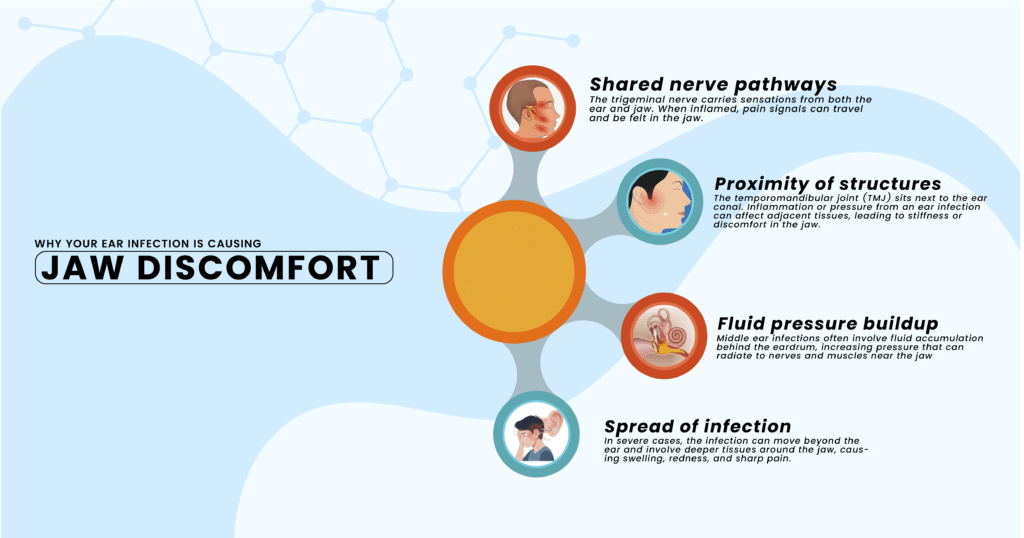
Why Your Ear Infection Is Causing Jaw Discomfort
Infection or inflammation in the ear can easily cause jaw pain, and this happens for several key reasons:
- Shared nerve pathways: The trigeminal nerve carries sensations from both the ear and jaw. When inflamed, pain signals can travel and be felt in the jaw.
- Proximity of structures: The temporomandibular joint (TMJ) sits next to the ear canal. Inflammation or pressure from an ear infection can affect adjacent tissues, leading to stiffness or discomfort in the jaw.
- Fluid pressure buildup: Middle ear infections often involve fluid accumulation behind the eardrum, increasing pressure that can radiate to nerves and muscles near the jaw.
- Spread of infection: In severe cases, the infection can move beyond the ear and involve deeper tissues around the jaw, causing swelling, redness, and sharp pain.
Jaw pain associated with an ear infection is often accompanied by additional symptoms such as persistent earache, drainage, muffled hearing, or fever, all of which help distinguish it from other causes like dental issues or TMJ disorder. Severe or persistent cases should be evaluated promptly at STAT Specialty Hospital for proper care and treatment.
Why Ear Infections Trigger Jaw Pain
Although the ear and jaw are separate body structures, they’re closely connected in ways that explain why an ear infection often leads to jaw discomfort:
1. Shared Nerve Pathways
The trigeminal nerve is a primary sensory nerve for both the ear and jaw. When this nerve becomes irritated due to inflammation from an ear infection, pain can radiate outward, causing referred jaw pain.
2. TMJ Proximity
The temporomandibular joint (TMJ), where your jaw connects to the skull, sits right next to the ear canal. Inflammation from an ear infection can reach tissues near the TMJ, leading to stiffness, soreness, and pain, especially when chewing or talking.
3. Ear Pressure and Fluid Buildup
Fluid trapped behind the eardrum exerts pressure on surrounding nerves and muscles. Because the jaw and ear share anatomical space, this pressure can create sensations that feel like jaw pain or discomfort.
4. Infection Spread
In more severe or untreated cases, bacteria can move to nearby structures such as the jaw muscles and soft tissues, causing swelling, redness, and increasingly sharp pain. Persistent or worsening symptoms in children should prompt a visit to a Pediatric emergency department for immediate evaluation.
Common Symptoms of Ear Infection With Jaw Pain
When jaw pain is related to an ear infection, it’s typically not isolated; other symptoms usually occur at the same time. These may include:
- Pain on the same side as the infected ear
- Pressure or fullness in the ear or jaw area
- Jaw pain that worsens with chewing, talking, or yawning
- Swelling or tenderness along the jawline
- Ear symptoms such as drainage, muffled hearing, or ringing
- Fever, chills, or general malaise
- Difficulty opening the mouth fully or stiffness in the jaw
If you have multiple symptoms on this list, it’s more likely that your jaw discomfort is directly related to an ear infection rather than a separate dental or muscular problem. Individuals experiencing severe or persistent symptoms should seek care at an ER for earache for proper evaluation and treatment.
How to Tell If Jaw Pain Is From an Ear Infection
Jaw pain can stem from many causes tooth decay, TMJ disorders, sinus infections, or even heart issues. However, ear infection‑related jaw pain usually has a distinct pattern.
Consider the following:
- Did the jaw pain start after ear pressure or infection symptoms?
- Is the pain on the same side as an ongoing earache?
- Does the pain increase with jaw movement or chewing?
- Are there additional ear symptoms (drainage, hearing changes, fever)?
If most of these are true, your jaw pain is likely linked to an ear infection, and recognizing this connection is crucial for accurate diagnosis and treatment.
Home Care for Ear Infection Jaw Pain
For mild jaw pain associated with an ear infection, certain self‑care measures can help reduce discomfort while your body fights the infection:
- Pain Relief: Over‑the‑counter medications like acetaminophen or ibuprofen can help manage pain and inflammation.
- Warm Compresses: Applying warmth over the jaw or ear area may soothe discomfort.
- Rest: Supporting your immune system with proper rest may speed recovery.
- Hydration: Drinking fluids helps thin mucus and may reduce pressure behind the eardrum.
- Jaw Relaxation: Avoid chewing tough or sticky foods and gently massage the jaw muscles.
- Steam or Humidifier: Warm, moist air can help relieve ear pressure and irritation.
Important: These approaches are supportive and may help mild symptoms. However, persistent, worsening, or severe pain requires medical evaluation.
When There’s an Ear Infection Jaw Pain Becomes Dangerous
While many ear infections improve on their own, some symptoms suggest complications that need urgent medical attention. Seek care if you notice:
- Rapidly worsening jaw pain
- High fever (above 103°F / 39.4°C)
- Inability to open your mouth fully
- Sudden or significant hearing loss
- Ear drainage with a foul odor
- Severe headache or stiff neck
- Facial swelling, redness, or warmth
- Facial weakness, drooping, or numbness
These symptoms may indicate serious complications, such as:
- Mastoiditis: Infection of the bone behind the ear
- Abscess Formation: Pockets of pus that require drainage
- TMJ Involvement: Inflammation of the jaw joint
- Spread of Infection to Facial Tissues
Prompt medical evaluation prevents long‑term damage and ensures you receive the appropriate treatment.
When to Go to the ER
Go to the Emergency Room immediately if you experience:
- Jaw and ear pain that worsens quickly
- High, persistent fever or chills
- Trouble chewing or opening your mouth
- Sudden hearing loss
- Confusion, dizziness, or fainting
- Rapidly spreading swelling or facial redness
- Inability to eat or drink due to pain
These signs suggest a complicated or spreading infection that may require hospital‑level intervention, IV fluids, antibiotics, imaging, or possible surgical procedures.
Expert Emergency Care at STAT Specialty Hospital
At STAT Specialty Hospital, patients with severe ear infection symptoms, including jaw pain, receive immediate, expert evaluation and treatment. Our 24/7 emergency care teams are trained to recognize dangerous patterns that signal complications requiring rapid action.
What You Can Expect
- Urgent Diagnostic Evaluation: Comprehensive ear and neurological exams, blood tests, and imaging to identify the extent of infection.
- Rapid Treatment: Prompt initiation of antibiotics, pain management, and procedures such as abscess drainage when necessary.
- Specialist Coordination: Collaboration with ENT, infectious disease, and maxillofacial specialists for complex cases.
- Close Monitoring: Careful observation to prevent progression and support recovery.
Timely care at STAT Specialty Hospital can prevent serious outcomes such as bone infection, permanent nerve damage, or deep facial infections, ensuring you receive the right intervention as soon as possible.
Key Takeaways
- Ear infections can cause jaw pain due to nerve irritation, pressure buildup, and anatomical proximity.
- Pain may worsen with chewing, speaking, or jaw movement and is often accompanied by ear symptoms.
- Home care may help mild discomfort, but persistent or severe symptoms require evaluation.
- Urgent signs like high fever, facial swelling, worsening pain, or hearing loss warrant immediate ER care.
- Early intervention at STAT Specialty Hospital helps prevent complications and supports safe, effective treatment.
FAQs
Can an ear infection cause jaw pain?
Yes, inflammation and shared nerve pathways between the ear and jaw can cause referred pain. This discomfort may worsen with chewing, talking, or jaw movement. In some cases, pressure buildup in the ear can further intensify the pain.
How long does jaw pain from an ear infection last?
Mild jaw pain often improves as the ear infection resolves, usually within a few days. If pain persists or worsens, it may require medical evaluation. Severe or prolonged symptoms could indicate complications that need treatment.
When should I seek emergency care for an ear infection and jaw pain?
Seek ER care if you have a high fever, rapidly worsening pain, sudden hearing loss, or foul-smelling drainage. Facial swelling or neurological symptoms also require immediate attention.