

When allergy symptoms strike, they can feel overwhelming and frightening, especially when something as simple as dust, pollen, or certain foods suddenly triggers discomfort in your daily life. Many people are left wondering why their body reacts this way and what is really happening inside the immune system.
Allergies occur when the immune system overreacts to harmless substances like pollen, dust, pet dander, or certain foods, treating them as threats. This can cause sneezing, itching, congestion, swelling, or breathing difficulty in severe cases. If symptoms become severe or breathing is affected, seek immediate care or visit our Laredo emergency room without delay.
What Are Allergies?
Allergies are a common immune system disorder where the body reacts abnormally to harmless substances known as allergens. These may include pollen, dust mites, pet dander, mold, or certain foods. When exposed, the immune system releases chemicals like histamine that trigger allergic symptoms.
According to the NIH/NIAID, food allergies affect about 8% of children and nearly 11% of adults in the United States, showing how widespread allergic conditions are across different age groups.
Allergy Symptoms That May Be Dangerous
Some allergy symptoms can become serious quickly and may require emergency medical attention. It is important to recognize warning signs early to prevent complications.
- Difficulty breathing or shortness of breath.
- Swelling of the lips, tongue, face, or throat.
- Tightness in the chest or wheezing.
- Rapid or weak pulse.
- Dizziness or fainting.
- Severe hives or widespread skin rash.
- Nausea, vomiting, or abdominal pain after exposure to an allergen.
Causes of Allergies
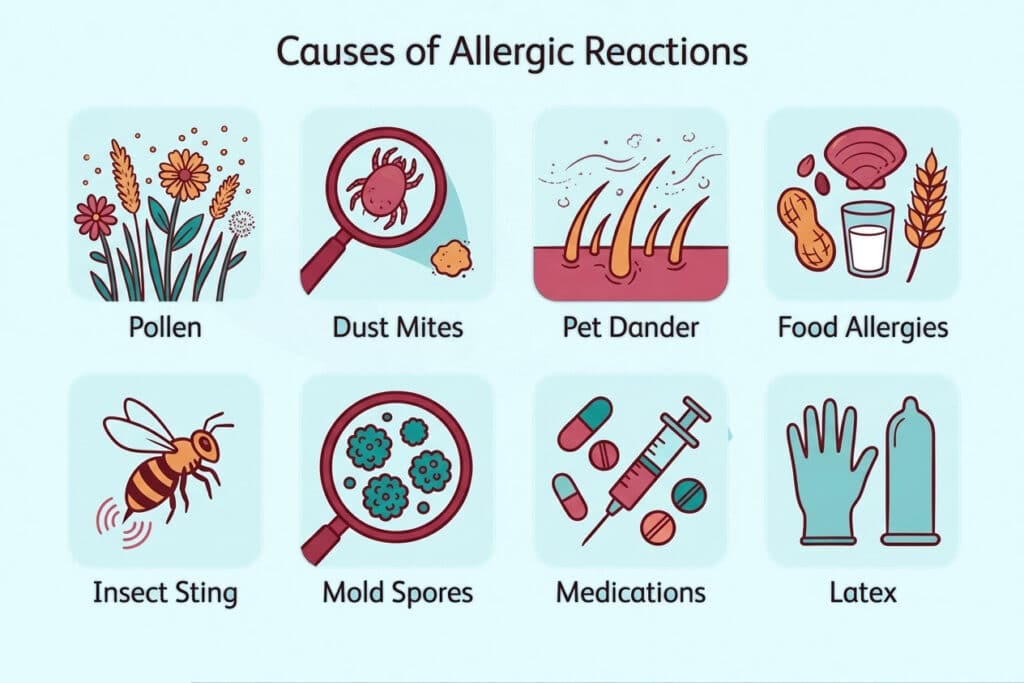
Allergies develop when the immune system becomes overly sensitive to normally harmless substances and reacts as if they are threats. This can happen due to genetic factors, environmental exposure, or repeated contact with allergens over time. Many people are exposed to the same triggers, but only some develop allergic reactions depending on immune sensitivity.
1. Pollen (Seasonal Allergies)
Pollen is one of the most common causes of seasonal allergies and is released by trees, grasses, and weeds during certain times of the year. When inhaled, it can trigger an immune response in sensitive individuals. This type of allergy often changes with seasons and weather conditions. People living in highly vegetated or windy areas may experience stronger symptoms.
Symptoms
- Sneezing.
- Runny or stuffy nose.
- Itchy eyes, nose, or throat.
- Watery eyes.
2. Dust Mites
Dust mites are microscopic organisms found in household dust, bedding, and upholstery. They thrive in warm and humid environments and are difficult to eliminate completely. Their waste particles are what usually trigger allergic reactions. Continuous exposure indoors can make symptoms persistent year-round.
Symptoms
- Sneezing, especially in the morning.
- Nasal congestion.
- Itchy or watery eyes.
- Worsening asthma symptoms.
3. Pet Dander
Pet dander consists of tiny skin flakes shed by animals such as cats, dogs, and other furry pets. These particles can stay in the air and on surfaces for long periods. Even small exposure can trigger allergic reactions in sensitive individuals. Reactions may continue even after the pet is no longer present in the environment.
Symptoms
- Sneezing and nasal irritation.
- Itchy, red, or watery eyes.
- Skin rashes or hives.
- Coughing or wheezing.
4. Food Allergies
Food allergies occur when the immune system reacts to certain proteins in foods such as nuts, milk, eggs, shellfish, or wheat. Reactions can happen within minutes to hours after eating the trigger food. Even small amounts can sometimes cause strong reactions. Some food allergies can be severe and require emergency care.
Symptoms
- Swelling of lips, face, or throat.
- Hives or skin rash.
- Nausea or vomiting.
- Abdominal pain or diarrhea.
5. Insect Stings
Stings from bees, wasps, or ants can cause allergic reactions in some individuals due to venom sensitivity. While many people experience only mild pain or swelling, allergic individuals may react more severely. Reactions can escalate quickly and become life-threatening. Immediate care may be required in severe cases.
Symptoms
- Swelling at sting site or beyond.
- Hives over the body.
- Difficulty breathing.
- Dizziness or rapid heartbeat.
6. Mold Spores
Mold grows in damp areas such as bathrooms, basements, and areas with water damage. It releases spores into the air that can be inhaled and trigger allergies. People living in humid environments are more likely to be affected. Mold exposure can also worsen asthma symptoms.
Symptoms
- Sneezing and nasal congestion.
- Itchy eyes and throat.
- Coughing or wheezing.
- Skin irritation.
7. Medications
Some people may develop allergic reactions to certain medications, such as antibiotics or pain relievers. The immune system may mistakenly identify the drug as harmful. Reactions can vary from mild skin irritation to severe systemic responses. It is important to inform healthcare providers about known drug allergies.
Symptoms
- Skin rash or hives.
- Swelling of face or lips.
- Shortness of breath.
- Fever or dizziness.
8. Latex
Latex is found in gloves, balloons, and medical supplies, and can cause allergic reactions in sensitive individuals. Exposure happens through skin contact or inhalation of latex particles. Healthcare workers are often at higher risk due to frequent exposure. Reactions can worsen with repeated contact.
Symptoms
- Skin redness or itching.
- Hives at contact site.
- Runny nose or sneezing.
- In severe cases, breathing difficulty.
Allergies in Kids
Allergies in children are increasingly common and can affect their daily comfort, sleep, and overall quality of life. A child’s immune system may overreact to common triggers such as pollen, dust, certain foods, or pet dander, leading to symptoms like sneezing, rashes, or stomach discomfort. Because children may not always be able to clearly describe what they feel, allergy symptoms can sometimes go unnoticed or be mistaken for a mild cold.
Allergy Medicine for Kids
Allergy treatment in children depends on the type and severity of symptoms, and medication should always be used under medical supervision. A doctor may recommend the following options:
- Cetirizine (Zyrtec) — prescribed by the doctor for relief from sneezing, itching, and runny nose.
- Loratadine (Claritin) — prescribed by the doctor for mild to moderate seasonal allergy symptoms.
- Fexofenadine (Allegra) — prescribed by the doctor for long-lasting control of allergy symptoms
- Diphenhydramine (Benadryl) — prescribed by the doctor for quick relief of acute allergic reactions.
- Fluticasone (nasal corticosteroid spray) — prescribed by the doctor to reduce nasal inflammation and congestion.
When To Go To The ER
Allergic reactions can become serious very quickly, even if they start mild. In some cases, they may affect breathing, circulation, or multiple body systems, which can indicate a life-threatening condition like anaphylaxis. Do not wait for symptoms to worsen. Seek immediate ER for allergy care.
- Difficulty breathing or shortness of breath.
- Swelling of the lips, tongue, face, or throat.
- Tightness in the chest or wheezing.
- Dizziness, fainting, or loss of consciousness.
- Rapid or weak pulse.
- Severe hives or widespread skin rash.
- Persistent vomiting or abdominal pain after exposure to an allergen.
- Symptoms that worsen quickly after allergen exposure.
How To Treat Allergies
Treating allergies involves a combination of avoiding triggers, using medications when needed, and supporting the body with simple home remedies to reduce symptoms. The goal is to control the immune system’s overreaction while improving daily comfort and preventing flare-ups.
- Antihistamines (Cetirizine, Loratadine, Fexofenadine) — prescribed by the doctor to reduce sneezing, itching, and runny nose.
- Nasal corticosteroids (Fluticasone) — prescribed by the doctor to reduce nasal inflammation and congestion.
- Epinephrine auto-injector (EpiPen) — prescribed by the doctor for emergency treatment of severe allergic reactions.
- Allergen avoidance — staying away from known triggers such as dust, pollen, pets, or certain foods.
- Saline nasal rinses — help clear allergens from the nasal passages and ease congestion
- Steam inhalation — helps loosen mucus and relieve nasal blockage.
- Cold compress — reduces itching, swelling, and eye irritation.
- Hydration (drinking fluids) — helps thin mucus and supports overall immune function.
- Honey (for children over 1 year) — may help soothe throat irritation and mild cough symptoms.
Allergy Care Insights from STAT Specialty Hospital
Allergies occur when the immune system reacts strongly to harmless substances, leading to symptoms that vary from mild irritation to severe breathing difficulty. These reactions depend on individual sensitivity and exposure levels.
At STAT Specialty Hospital, patients often ask what causes allergies and how to manage recurring symptoms safely. Common triggers include pollen, dust mites, pet dander, mold, foods, medications, and insect stings. Early diagnosis and treatment can significantly reduce complications and improve long-term control.
Key Takeaways
- Allergies are caused by immune system overreaction.
- Common triggers include pollen, dust, food, pets, mold, and insect stings.
- Symptoms range from mild irritation to severe emergencies.
- Early detection improves prevention and management.
- Severe reactions require immediate emergency care.
FAQs
Can allergies cause fever?
Allergies typically do not cause fever. If a fever is present, it may suggest an underlying infection rather than an allergic reaction and should be evaluated by a healthcare provider.
Can allergies cause a sore throat?
Yes, allergies can lead to a sore throat, most commonly due to postnasal drip and ongoing irritation from mucus drainage or frequent coughing.
Are allergies genetic?
Yes, allergies can run in families. A family history of allergies, asthma, or eczema can increase the likelihood of developing similar allergic sensitivities.
Can allergies cause headaches?
Yes, allergies can contribute to headaches by causing sinus inflammation and pressure, especially during seasonal allergy flare-ups or prolonged exposure to triggers.