

Your appendix is a small organ that most people never think about until something goes wrong with it, and when it does, the pain is unmistakable. Appendicitis is the medical term for an inflamed appendix, and it is one of the most common reasons people of all ages end up in the emergency room with sudden and severe abdominal pain. What makes appendicitis particularly serious is not just the pain itself but how quickly the condition can escalate into a life-threatening emergency if the appendix ruptures before treatment begins.
The appendix is a finger-shaped pouch attached to the large intestine in the lower right abdomen, and while its exact role in the body remains unclear, what is very clear is the danger that can occur when it becomes blocked, infected, and inflamed without prompt medical care. Seeking timely evaluation at our emergency room in Del Rio can help diagnose appendicitis early and prevent serious complications.
Common Causes Of Appendicitis
Several different types of blockages can trigger the chain of events that leads to appendicitis, and identifying the most common ones helps explain why this condition can develop in otherwise healthy people of any age.
- Hardened stool or fecaliths: The most frequent cause, where stool calcifies and lodges inside the narrow opening of the appendix, trapping bacteria and blocking drainage entirely.
- Lymphoid tissue swelling: Gastrointestinal viral infections and respiratory illnesses can cause the lymphatic tissue lining the appendix wall to swell and obstruct the opening.
- Mucus buildup: Inflammatory conditions can cause excess mucus to accumulate inside the appendix, gradually blocking the passage and creating conditions for bacterial growth.
- Intestinal parasites: In some cases, parasites migrate into the appendix and create a physical obstruction that triggers the inflammatory response.
- Inflammatory bowel disease: Conditions like Crohn’s disease produce intestinal inflammation that can spread to the appendix and initiate appendicitis.
- Abdominal tumors: Rarely, growths near or within the appendix create pressure or blockage that leads to inflammation.
What Are The Symptoms Of Appendicitis?
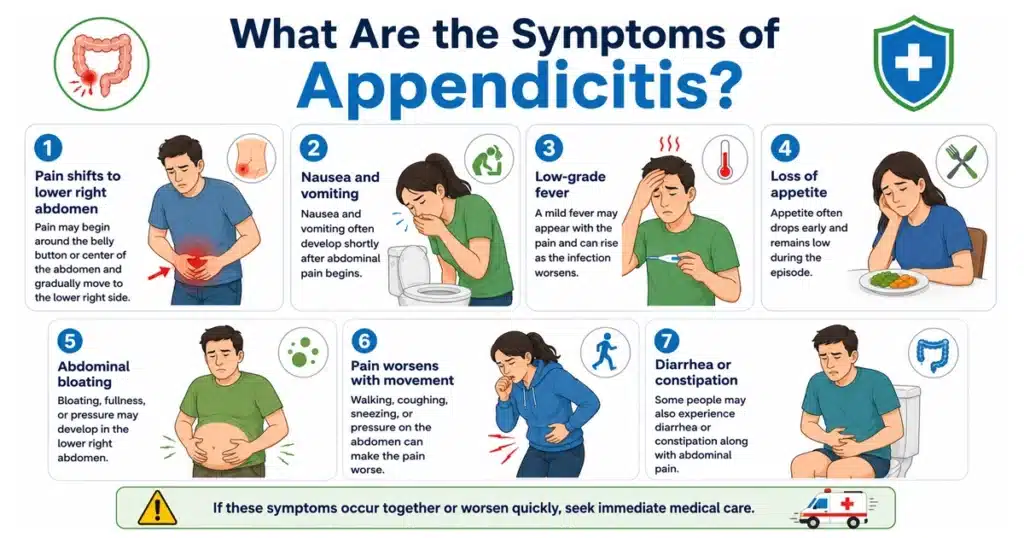
Knowing the symptoms of appendicitis and how they differ from ordinary stomach pain is one of the most important things you can do to protect yourself and the people around you from delayed treatment. What causes nausea can overlap with early appendicitis symptoms, making it easy to dismiss the warning signs in the first few hours.
- Pain that begins around the belly button or center of the abdomen and progressively shifts to the lower right side as hours pass.
- Nausea and vomiting typically follow the onset of abdominal pain rather than starting before it.
- Low-grade fever that develops alongside the pain and may climb as the infection worsens.
- Significant loss of appetite that appears early and continues throughout the episode.
- Abdominal bloating or a feeling of unusual fullness and pressure in the lower right area.
- Pain that worsens noticeably with movement, coughing, sneezing, or any direct pressure applied to the lower right abdomen.
- Diarrhea or constipation accompanies the abdominal pain in some cases.
If you or a loved one is experiencing severe or worsening abdominal pain, do not wait for symptoms to become more serious. Visit an ER for stomach pain for prompt evaluation and treatment to identify the cause and prevent complications.
Appendicitis vs Stomach Pain: What Is The Difference?
Many people initially treat appendicitis pain like an ordinary stomach ache, and this delay is one of the most dangerous mistakes someone can make when their appendix is involved. Stomach pain at night is common and often harmless, but appendicitis pain has very specific characteristics that set it apart from routine digestive discomfort.
- Location: Appendicitis pain consistently migrates and settles in the lower right abdomen, while general stomach pain moves around or stays central.
- Progression: Appendicitis pain worsens steadily and consistently over hours without any period of relief, while most digestive pain fluctuates or improves.
- Fever: Ordinary stomach pain does not produce fever, while appendicitis almost always causes a low-grade fever that rises alongside other symptoms.
- Response to movement: Appendicitis pain intensifies significantly with any movement, coughing, or pressure on the abdomen, while general stomach pain is usually not affected this way.
Who Is Most At Risk For Appendicitis?
Appendicitis does not discriminate by age, but it does follow predictable patterns that make certain groups more likely to develop it than others.
Age and Sex
The condition most frequently affects people between the ages of 10 and 30, with teenagers and young adults in their twenties representing the peak risk group. Males develop appendicitis slightly more often than females overall, though women in their reproductive years sometimes present with symptoms that are harder to distinguish from gynecological conditions. Children under five and adults over 65 are at lower overall risk but tend to have more atypical symptoms that make diagnosis more challenging.
Diet and Digestive Health
Diets consistently low in fiber and high in processed foods may contribute to the constipation and fecal hardening that increases the risk of appendiceal blockage over time. People with a history of chronic digestive conditions like inflammatory bowel disease or irritable bowel syndrome may also face a slightly elevated risk compared to those with healthy bowel habits. Lower abdominal pain in females from digestive causes can sometimes mask the early signs of appendicitis, making awareness of the symptom pattern especially important for women.
How Is Appendicitis Treated?
Appendicitis is treated as a medical emergency because the condition has a fixed timeline: the appendix can rupture within 48 to 72 hours of symptom onset, after which bacteria spill into the abdominal cavity and cause a life-threatening infection called peritonitis.
- Appendectomy: Surgical removal of the appendix is the standard and most reliable treatment, performed laparoscopically in most uncomplicated cases, with a recovery time of one to two weeks.
- Intravenous antibiotics: Given before and after surgery to control infection and prevent bacteria from spreading further into surrounding tissue.
- Antibiotic-only treatment: In carefully selected cases of early, uncomplicated appendicitis, some patients may be treated with antibiotics alone without immediate surgery, though recurrence rates are higher.
- Emergency surgery: Ruptured appendicitis requires immediate open or laparoscopic surgery to remove the appendix, drain any abscesses, and clean the abdominal cavity thoroughly.
Appendicitis Warning Signs That Should Never Be Ignored
Certain symptoms signal that appendicitis has progressed or ruptured and require emergency care immediately, without any waiting or monitoring at home.
- Sudden dramatic relief of abdominal pain followed by a return of widespread pain across the entire abdomen, which can signal rupture.
- A board-like rigidity or hardness of the entire abdomen that develops rapidly alongside high fever in adults.
- Fever climbing above 101°F combined with severe abdominal pain spreading beyond the lower right side.
- Continuous vomiting alongside severe and worsening abdominal pain that does not settle.
- Rapid heart rate, pale or clammy skin, or dizziness developing alongside abdominal symptoms.
If you or a loved one experiences these severe warning signs, immediate medical evaluation is essential. Visit the closest emergency room near me for urgent assessment and treatment to reduce the risk of serious appendicitis complications.
When To Go To The ER
Appendicitis does not improve without medical treatment and can become fatal if the appendix ruptures and goes untreated. Do not eat, drink, or take pain medication before emergency evaluation since this can mask symptoms and delay accurate diagnosis. Visit the ER near me immediately if your abdominal pain has been worsening for more than a few hours, is settling in the lower right side, or is accompanied by fever, nausea, or vomiting. STAT Specialty Hospital provides 24/7 emergency evaluation with rapid blood testing, imaging, and surgical consultation for suspected appendicitis cases.
Appendicitis Care At STAT Specialty Hospital
Appendicitis is one of those conditions where time genuinely determines the outcome, and delays in treatment can increase the risk of rupture and serious complications. Our 24/7 emergency room at STAT Specialty Hospital provides immediate evaluation, rapid imaging, and expert surgical consultation for patients with abdominal pain and suspected appendicitis. Whether your symptoms are classic or atypical, our team is available around the clock to diagnose and treat appendicitis before it becomes more dangerous.
Key Takeaways
- Appendicitis is most commonly caused by a blockage in the appendix from hardened stool, swollen lymph tissue, or infection.
- Pain that starts near the belly button and moves to the lower right side, combined with fever and nausea, is the classic warning pattern.
- Appendicitis pain worsens consistently and does not resolve on its own, the way regular stomach pain often does.
- The appendix can rupture within 48 to 72 hours of symptom onset, making prompt emergency evaluation essential.
- Treatment is surgical removal of the appendix in most cases, with antibiotics used to control the surrounding infection.
- Sudden widespread abdominal pain after initial localized pain, board-like rigidity, or high fever requires immediate emergency care.