

It can be worrying when discomfort in your lower back, fever, or urinary changes appear suddenly and begin affecting your daily routine. Many people feel anxious and confused when these symptoms don’t have an immediate explanation. What Causes Kidney Infections? becomes a common and important question at this stage, especially when trying to understand what is happening in the body.
Kidney infections can become serious very quickly if they are not addressed in time. What may start as mild symptoms can progress and affect overall health, sometimes requiring urgent medical attention. If symptoms feel severe or are getting worse, seeking immediate care at our emergency room in Eagle Pass is important to avoid complications and receive timely treatment.
What Is A Kidney Infection
A kidney infection, also known as pyelonephritis, is a serious type of urinary tract infection that occurs when bacteria travel from the lower urinary tract, such as the bladder, up into one or both kidneys. It causes inflammation in the kidney tissues and can affect their ability to filter waste properly if not treated early. Common symptoms include fever, flank pain, nausea, and painful urination, and the condition can progress quickly if ignored.
According to the National Center for Biotechnology Information (NCBI), kidney infections most commonly begin as bladder infections and about 20%–30% of untreated lower urinary tract infections may ascend and involve the kidneys, leading to pyelonephritis.
Signs Of Kidney Infection That Are Dangerous
- High fever with chills.
- Severe pain in the lower back or side.
- Nausea or repeated vomiting.
- Blood in urine or very cloudy urine.
- Burning sensation while urinating.
- Frequent and urgent need to urinate.
- Confusion or weakness, especially in older adults.
- Rapid heartbeat or feeling very unwell.
If these symptoms are severe or worsening, they may signal a urological emergency that requires immediate medical evaluation to prevent serious complications.
Causes Of Kidney Infections
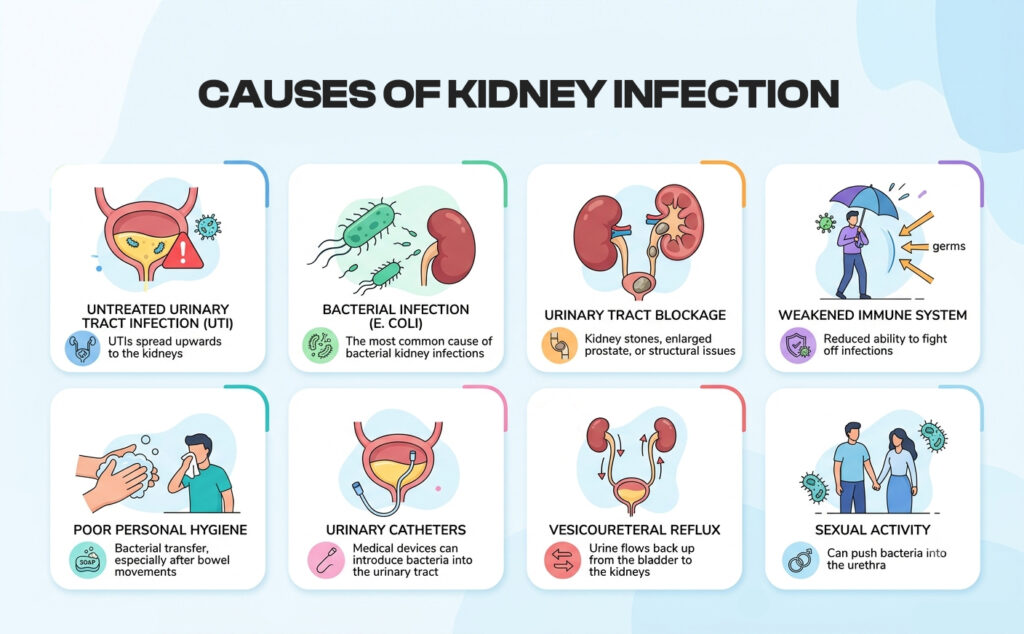
It can feel unsettling when symptoms of a kidney infection appear without a clear reason, especially when discomfort, fever, or urinary changes start affecting daily life. Many people are surprised to learn that kidney infections often develop silently from earlier issues in the urinary tract. Understanding the underlying reasons is important because early recognition can help prevent complications. Below are the most common causes that contribute to kidney infections.
Untreated Urinary Tract Infection (UTI)
An untreated UTI is the most common cause of a kidney infection. When bacteria in the bladder are not eliminated with proper treatment, they can travel upward to the kidneys. This upward spread is known as an ascending infection. Delaying treatment increases the risk of severe kidney involvement and complications.
Bacterial Infection (E. Coli)
Most kidney infections are caused by bacteria, especially Escherichia coli (E. coli), which normally lives in the intestines. These bacteria can enter the urinary tract through poor hygiene or other routes. Once inside, they can multiply quickly and spread to the kidneys. This makes E. coli the leading infectious cause of pyelonephritis.
Urinary Tract Blockage
Any blockage that prevents normal urine flow can increase the risk of infection. This may include kidney stones, enlarged prostate, or structural abnormalities. When urine stays trapped, bacteria have more time to grow and multiply. This stagnant environment creates a higher chance of kidney infection.
Weakened Immune System
A weakened immune system reduces the body’s ability to fight off bacterial infections. Conditions like diabetes, HIV, or cancer treatment can increase vulnerability. When immunity is low, even mild urinary infections can progress more easily. This raises the risk of bacteria reaching the kidneys.
Poor Personal Hygiene
Poor hygiene practices can allow bacteria to enter the urinary tract more easily. Not cleaning properly after using the toilet can transfer bacteria from the rectal area to the urethra. This is especially a concern in females due to their anatomy. Over time, it can increase the likelihood of recurring infections.
Urinary Catheters
Using a urinary catheter can introduce bacteria directly into the bladder. Long-term catheter use increases infection risk significantly. Bacteria can travel along the catheter into the urinary system. This makes hospital or long-term care patients more vulnerable to kidney infections.
Vesicoureteral Reflux
Vesicoureteral reflux is a condition where urine flows backward from the bladder toward the kidneys. This backward flow can carry bacteria directly into the kidneys. It is more commonly seen in children but can occur in adults as well. This condition significantly increases the risk of repeated kidney infections.
Sexual Activity
Sexual activity can sometimes introduce bacteria into the urinary tract, increasing infection risk. This is more common in women due to the shorter urethra. Bacteria can travel more easily to the bladder and beyond if not cleared. Urinating after intercourse may help reduce this risk.
Kidney Infection Symptoms In Women
Kidney infections in women can develop quickly and often affect both urinary and overall body health. Because the female urinary tract is shorter, bacteria can spread more easily from the bladder to the kidneys. Recognizing symptoms early is important to avoid complications and prevent the infection from worsening.
- Pelvic Pain Or Discomfort: Women may feel pressure or pain in the lower abdomen or pelvic area. It can feel similar to cramps but often appears with urinary symptoms.
- Increased Urination Urgency: A frequent, urgent need to urinate is common even after emptying the bladder. This happens due to irritation in the urinary tract.
- Burning During Urination: Pain or burning while urinating is a key sign of infection. It may indicate that the infection has moved beyond the bladder.
- Unusual Vaginal Discomfort: Some women may notice discomfort or irritation in the vaginal area. It can sometimes be confused with other infections.
- Lower Back Or Side Pain: Persistent pain in the flank or lower back may occur. It often worsens with fever or nausea and should not be ignored.
If these symptoms appear or worsen, seeking prompt medical care is important, especially when searching for an ER near me.
How To Test For Kidney Infection
Testing for a kidney infection is important when symptoms like fever, back pain, or burning urination appear. Doctors use simple lab tests and scans to confirm the infection and find its cause. Early testing helps prevent complications and ensures the right treatment is started quickly.
- Urine Test (Urinalysis): Checks urine for bacteria, white blood cells, and signs of infection. It is usually the first test done.
- Urine Culture: Identifies the exact bacteria causing the infection. It helps choose the correct antibiotic.
- Blood Test: Detects signs of infection in the body. High white blood cells may indicate a severe infection.
- Imaging Tests (Ultrasound/CT): Used to view kidneys and check for blockages or complications.
- Physical Exam: Doctor checks fever, pain, and tenderness in the back or side. This helps assess infection severity.
When To Go To The ER
A kidney infection can become serious if it spreads or is not treated quickly. Some symptoms indicate the infection is worsening and needs emergency care. Visiting the ER early can help prevent complications like sepsis or kidney damage.
- Persistent Fever: A high fever that doesn’t improve may signal worsening infection.
- Severe Chills: Intense shaking chills can indicate the infection is spreading.
- Intense Flank Pain: Sharp pain in the side or back may suggest kidney involvement.
- Painful Urination: Severe burning or pain while urinating can indicate active infection.
- Reduced Urine Output: Passing less urine may signal kidney stress or dehydration.
- Foul-Smelling Urine: Strong odor can indicate a significant bacterial infection.
If these symptoms occur, seek immediate care at our ER, where the average ER wait time is just 16 minutes.
Kidney Infection Treatment
A kidney infection needs prompt medical care to stop the infection from spreading and causing complications. Treatment usually depends on how severe the infection is and the patient’s overall condition. Most cases improve with early antibiotics, rest, and supportive care.
- Antibiotics: Antibiotics treat the bacterial infection causing kidney infection. Most doctors recommend ciprofloxacin or amoxicillin-clavulanate based on severity. Completing the full course is essential.
- Pain Relief (OTC): Medicines like acetaminophen help reduce fever and pain. Most doctors recommend acetaminophen as it is safer for kidneys than NSAIDs. It supports comfort during recovery.
- Hospital Care: Severe cases may need IV antibiotics and fluids. This is used when symptoms like vomiting or high fever occur. It helps stabilize the patient quickly.
- Fluids: Drinking water helps flush bacteria from the urinary tract. It supports healing and reduces discomfort.
- Rest: Rest helps the body fight infection more effectively. Avoiding physical strain supports faster recovery.
Kidney Infection Care at STAT Specialty Hospital
Understanding what causes kidney infections is important for early detection and preventing serious complications. These infections can worsen quickly if symptoms like fever, back pain, or urinary issues are ignored. At STAT Specialty Hospital, patients are carefully evaluated to identify the cause and start timely treatment.
At STAT Specialty Hospital, our specialists provide complete care for kidney infections, from diagnosis to treatment. If you are concerned about what causes kidney infections or have ongoing symptoms, our team offers personalized care for faster recovery and better kidney health.
Key Takeaways
- Kidney infections are serious UTIs that can spread if untreated.
- Common signs include fever, back pain, and burning urination.
- Most cases start from untreated bladder infections (often E. coli).
- Women are at higher risk due to a shorter urethra.
- Diagnosis includes urine, blood tests, and imaging.
- Antibiotics are key for treatment and preventing complications.
- Severe symptoms need urgent ER care.
FAQs
How Fast Can A Kidney Infection Become Life-Threatening?
It can become dangerous within 24–72 hours if it spreads to the blood (sepsis). This is a medical emergency. Early treatment reduces risk.
What Does A Kidney Infection Feel Like?
It may cause fever, back or side pain, chills, and burning urination. Some people also feel nausea or fatigue. Symptoms can worsen quickly.
How Do I Know If I Have A Kidney Infection?
Common signs include fever, back pain, frequent urination, and cloudy or painful urination. Diagnosis is confirmed with urine and blood tests.
Can Kidney Stones Cause A Bladder Infection?
Yes, kidney stones can block urine flow and trap bacteria. This may lead to bladder infection and sometimes kidney infection.