

When a runny nose, constant sneezing, sore throat, or stubborn cough suddenly takes over your day, it can leave you feeling drained and frustrated. In many cases, these familiar cold symptoms are caused by rhinovirus, the most common cause of the common cold.
Rhinovirus is a highly contagious virus that primarily affects the upper respiratory tract and spreads through respiratory droplets, close contact, and contaminated surfaces. Most infections are mild, but symptoms can sometimes become more severe or trigger complications, making it important to recognize warning signs and seek medical care when symptoms worsen at our emergency room in Del Rio.
Rhinovirus In Adults
Rhinovirus is one of the most common causes of respiratory infections in adults and is best known for causing the common cold. It can cause a runny or stuffy nose, sneezing, sore throat, cough, headache, and fatigue, although symptoms can vary between people. Most infections remain mild, but rhinovirus can worsen asthma or contribute to lower respiratory infections in some adults.
A study of adults with acute cough or lower respiratory tract infections across 11 European countries detected rhinovirus in 19% of 3,016 symptomatic adults. Another NIH resource estimates that rhinoviruses cause about 30%–35% of adult common colds, highlighting how frequently this virus affects adults.
Dangerous Rhinovirus In Adults
- Difficulty Breathing: Trouble breathing or shortness of breath.
- Severe Wheezing: Worsening wheezing or asthma symptoms.
- Chest Pain: Persistent pain or pressure in the chest.
- Bluish Lips Or Skin: May indicate low oxygen levels.
- Severe Weakness: Extreme weakness or unusual fatigue.
- High Fever: Persistent or worsening fever.
- Severe Cough: Cough that worsens or affects breathing.
- Confusion Or Dizziness: Severe dizziness, confusion, or fainting.
If you experience any of these warning signs, seek prompt medical attention at an ER near me, especially if breathing problems or chest pain are severe.
What Causes Rhinovirus In Adults?
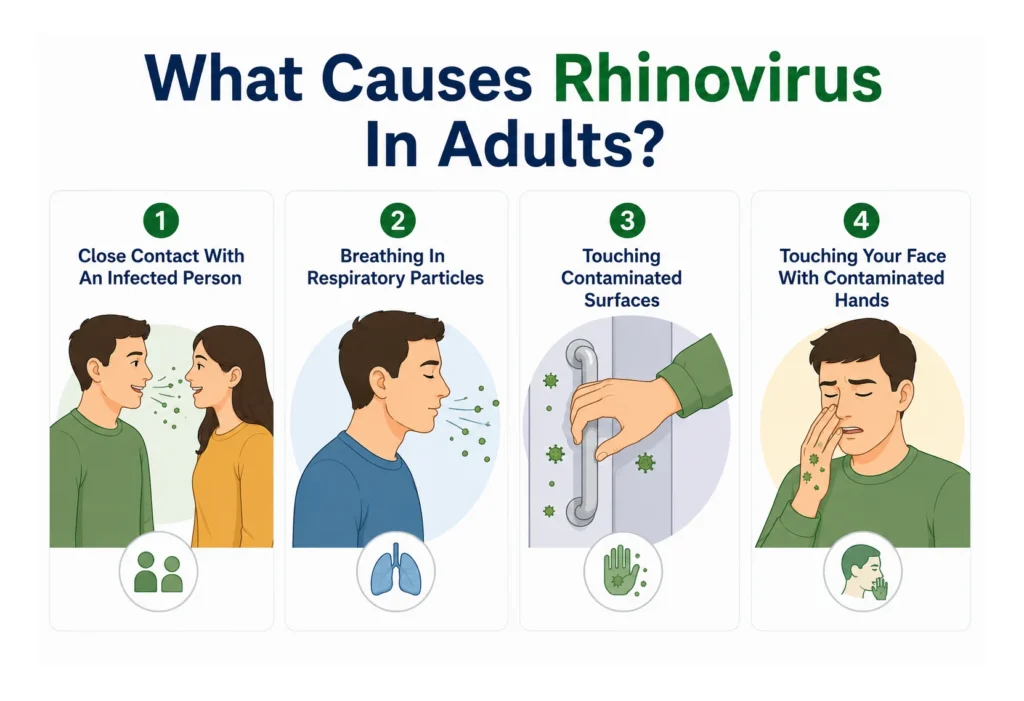
Rhinovirus in adults occurs when a person becomes infected with one of the many rhinovirus types that circulate throughout the year. It spreads easily through respiratory secretions and contaminated surfaces that come into contact with the nose, mouth, or eyes. Most infections are mild, but symptoms can be more serious in adults with asthma or weakened immune systems.
Close Contact With An Infected Person
Spending time near someone with rhinovirus increases your risk of infection. The virus can spread through respiratory particles released when an infected person breathes, coughs, or sneezes. Crowded homes, workplaces, and other indoor settings can make transmission easier.
Breathing In Respiratory Particles
Rhinovirus can spread through respiratory droplets and smaller airborne particles. You may become infected when these particles reach your nose or respiratory tract. Indoor environments with close contact can increase the chance of exposure.
Touching Contaminated Surfaces
Rhinovirus can reach surfaces through infected respiratory secretions. Touching contaminated objects and then touching your nose, mouth, or eyes can transfer the virus. Regularly cleaning frequently touched surfaces can help reduce transmission.
Touching Your Face With Contaminated Hands
After contacting an infected person or contaminated surface, touching your nose or eyes can allow the virus to enter your body. This can contribute to rhinovirus transmission. Washing your hands regularly can reduce the chance of transferring the virus to your face.
Rhinovirus In Infants
Rhinovirus is a common cause of respiratory infections in infants and can lead to a runny or stuffy nose, cough, sneezing, fever, and wheezing. Because infants have smaller airways, breathing symptoms can sometimes become serious. In one prospective study of 923 children followed through their first two years, rhinovirus was detected in 59% of acute respiratory infections analyzed for viruses.
What Causes Rhinovirus In Infants?
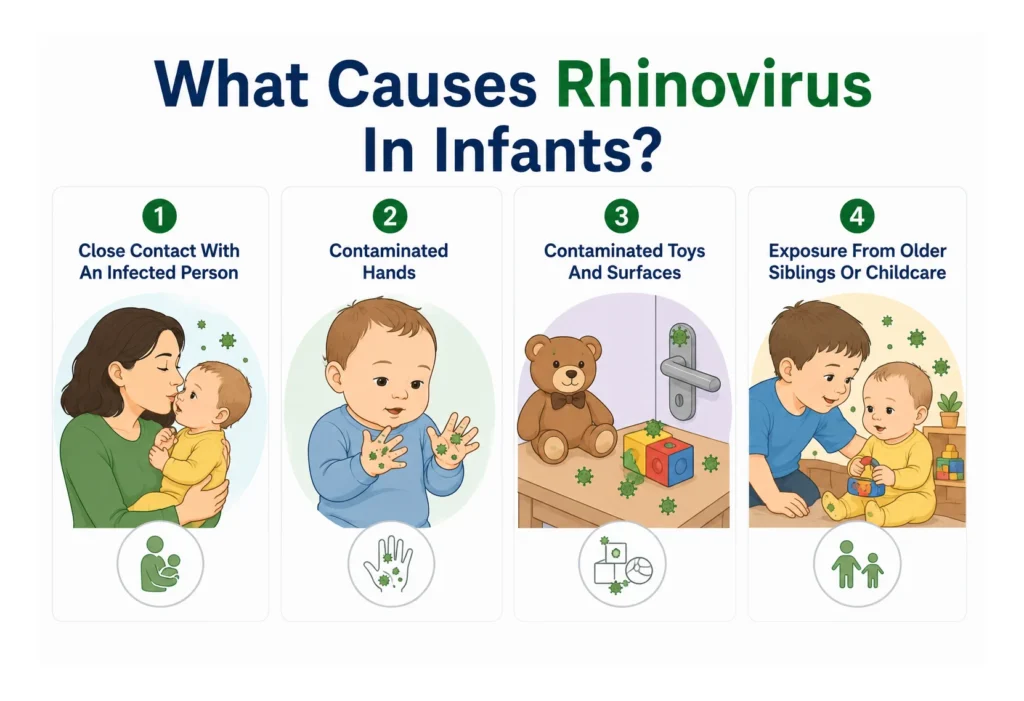
Rhinovirus infections in infants occur when a baby is exposed to the virus through respiratory secretions, infected people, or contaminated hands and objects. Infants have frequent close contact with caregivers and siblings, which can increase opportunities for exposure. Most infections are mild, but breathing problems can become more concerning in very young or vulnerable infants.
Close Contact With An Infected Person
Rhinovirus can spread when an infant is near someone who has a respiratory infection. Coughing, sneezing, and close physical contact can expose a baby to infectious respiratory particles or secretions. Frequent contact with caregivers and siblings can increase exposure.
Contaminated Hands
An infected person can transfer rhinovirus to their hands after coughing, sneezing, or wiping their nose. If those hands then touch an infant’s face, hands, or belongings, the virus may spread. Washing hands before caring for an infant can help reduce transmission.
Contaminated Toys And Surfaces
Rhinovirus can contaminate frequently touched objects and surfaces through respiratory secretions. Infants may touch toys, furniture, or other objects and then touch their nose or eyes. Regular cleaning of frequently handled items can help reduce exposure.
Exposure From Older Siblings Or Childcare
Older siblings can bring respiratory viruses home after contact with other children at school or childcare. Infants in childcare may also have more opportunities to encounter infected children. Close contact in these settings can increase the likelihood of rhinovirus exposure.
Dangerous Rhinovirus In Infants
- Difficulty Breathing: Fast breathing, struggling to breathe, or ribs pulling inward.
- Severe Wheezing: Persistent wheezing or worsening breathing sounds.
- Bluish Lips Or Face: May indicate dangerously low oxygen levels.
- Poor Feeding: Refusing breast milk or formula can quickly lead to dehydration.
- Fewer Wet Diapers: Reduced urination can signal dehydration.
- Extreme Sleepiness: Difficulty waking or unusual unresponsiveness needs urgent care.
- Breathing Pauses: Pauses in breathing can be especially dangerous in young infants.
- Fever In Young Infants: A temperature of 100.4°F (38°C) or higher in babies under 3 months requires prompt medical evaluation.
When To Go To The ER
Most rhinovirus infections improve with home care, but severe respiratory symptoms should never be ignored. Rhinovirus can trigger wheezing and worsen asthma or other respiratory conditions, sometimes requiring emergency treatment.
- Severe Trouble Breathing: Seek emergency care for significant shortness of breath or struggling to breathe.
- Severe Wheezing: Worsening wheezing may indicate a serious asthma flare.
- Chest Pain: Persistent or severe chest pain needs urgent evaluation.
- Bluish Lips Or Skin: Blue or gray discoloration can indicate low oxygen.
- Confusion Or Fainting: These symptoms can signal a serious complication.
- Infant Breathing Problems: Fast, difficult, or paused breathing in an infant requires immediate medical attention.
- Severe Dehydration: Very few wet diapers, inability to drink, or extreme weakness needs urgent care in infants.
If rhinovirus symptoms become severe or rapidly worsen, seek prompt medical attention at our 24/7 emergency room for immediate evaluation and treatment.
STAT Specialty Hospital For Rhinovirus Care
Rhinovirus can cause uncomfortable respiratory symptoms such as congestion, runny nose, sneezing, sore throat, coughing, and fever. If symptoms become severe, worsen unexpectedly, or begin affecting your breathing, timely medical evaluation can help prevent serious complications.
At STAT Specialty Hospital, our experienced emergency physicians can evaluate what is the rhinovirus, assess your symptoms, and provide appropriate care based on your condition. Seek emergency attention for severe breathing difficulty, chest pain, bluish lips, confusion, or rapidly worsening symptoms.
Key Takeaways
- Rhinovirus is a common respiratory virus that often causes cold-like symptoms in adults and infants.
- Common symptoms include runny nose, congestion, sneezing, sore throat, coughing, and fever.
- Rhinovirus spreads through respiratory particles, infected people, contaminated hands, and surfaces.
- Most infections are mild, but infants and people with asthma may develop more serious respiratory symptoms.
- Severe breathing difficulty, bluish skin, chest pain, or confusion requires prompt emergency medical care.