

When your nose is constantly blocked, your face feels painfully pressured, or thick mucus just won’t go away, it can leave you feeling drained and frustrated. You may wonder if it’s simply a cold or something more serious.
A sinus infection, or sinusitis, occurs when the sinuses become inflamed and swollen, interfering with normal mucus drainage. While many cases improve on their own, severe, worsening, or persistent symptoms may require prompt medical attention. If your symptoms become severe or concerning, our Laredo emergency room is available to provide prompt evaluation and care.
Dangerous Sinus Infection Symptoms
The sinus infection symptoms you experience can vary depending on whether the condition is acute or chronic. Common symptoms include nasal blockage, mucus drainage, facial pressure, and changes in your sense of smell.
A study published in The BMJ found that among patients with acute rhinosinusitis, 98% experienced nasal congestion or blockage, 95% had nasal discharge, 77% reported facial pressure or pain, and 60% experienced reduced or lost sense of smell.
- Stuffy or blocked nose.
- Thick nasal mucus or nasal discharge.
- Postnasal drip.
- Facial pressure or pain.
- Pain around the forehead, cheeks, nose, or eyes.
- Sinus headache.
- Reduced or lost sense of smell.
- Upper tooth pain.
- Cough.
- Sore throat.
- Bad breath.
- Ear pressure or discomfort.
- Fever.
- Fatigue.
- Difficulty breathing through the nose.
What Causes Sinus Infections?
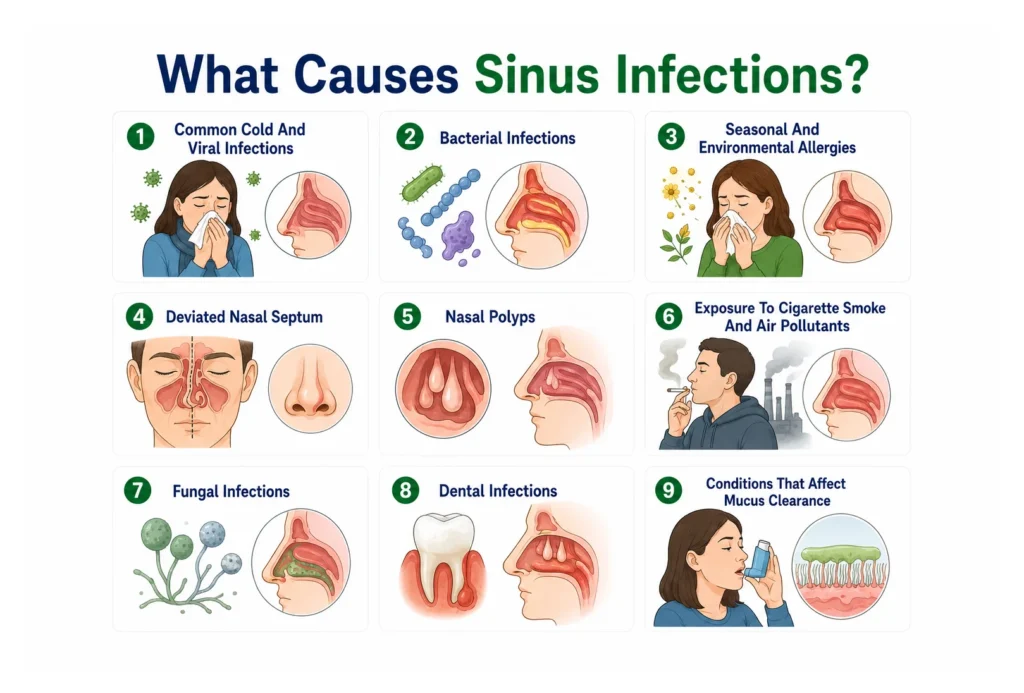
If you keep dealing with congestion, facial pressure, or thick mucus, it is understandable to wonder what is causing your sinus problems. The underlying trigger can vary from a temporary respiratory infection to ongoing inflammation or problems that block the normal drainage pathways.
Common Cold And Viral Infections
The common cold is the most common cause of acute sinusitis. Respiratory viruses can inflame and swell the nasal and sinus lining, making it difficult for mucus to drain properly. Most viral sinus infections improve as the underlying infection clears. However, symptoms that persist or worsen after initially improving may need medical evaluation.
Bacterial Infections
A bacterial sinus infection can develop when mucus and fluid become trapped in swollen sinuses, creating an environment where bacteria can grow. Bacterial sinusitis is less common than viral sinusitis and may occur after a respiratory infection. Symptoms that become worse after improving or remain persistent can increase concern for a bacterial infection.
Seasonal And Environmental Allergies
Allergies can cause inflammation and swelling inside the nasal passages, which can interfere with normal sinus drainage. Pollen, dust mites, pet dander, and other allergens may trigger congestion and excess mucus. When this inflammation continues, it can increase the risk of ongoing sinus problems and recurrent symptoms.
Deviated Nasal Septum
A deviated septum occurs when the wall separating the two nasal passages is shifted to one side. This can narrow a nasal passage and make normal airflow and mucus drainage more difficult. When congestion from a cold or allergies occurs on top of this narrowing, the blockage can become more noticeable and may contribute to recurring sinus problems.
Nasal Polyps
Nasal polyps are soft, noncancerous growths that develop in the lining of the nose or sinuses. Larger or multiple polyps can obstruct the openings through which mucus normally drains from the sinuses. This blockage can contribute to persistent congestion, inflammation, and recurrent sinus infections.
Exposure To Cigarette Smoke And Air Pollutants
Tobacco smoke, secondhand smoke, smog, and other airborne irritants can inflame the nasal and sinus tissues. Ongoing exposure may increase congestion and interfere with normal mucus clearance. Avoiding these irritants can help reduce inflammation and lower the risk of recurrent sinus problems.
Fungal Infections
Fungi can sometimes contribute to sinus inflammation or infection, although fungal sinus infections are much less common than viral or bacterial infections. They are more likely to cause serious disease in people with certain immune system problems. Persistent or unusual sinus symptoms may require medical assessment to determine whether a fungal infection is involved.
Dental Infections
An infection in an upper tooth can sometimes spread to a nearby sinus because the roots of the upper teeth are close to the maxillary sinuses. This can cause inflammation and infection in the affected sinus, sometimes producing one-sided facial pressure or upper tooth pain. Treating the underlying dental infection may be necessary to resolve the sinus problem.
Conditions That Affect Mucus Clearance
Certain medical conditions can make it harder for mucus to move normally through the respiratory tract and sinuses. Cystic fibrosis, for example, can cause unusually thick mucus that contributes to sinus congestion and recurrent infections. Some immune system disorders can also increase the risk of sinus infections or make them more difficult to clear.
When To Go To The ER
Most sinus infections improve without emergency treatment, but rarely, an infection can spread to nearby tissues or cause serious complications. Go to the ER immediately if you develop severe or rapidly worsening symptoms, especially changes involving your vision, mental alertness, or neck.
- Severe swelling, redness, or pain around the eyes.
- Double vision or other sudden vision changes.
- Severe or worsening headache.
- High or persistent fever.
- Confusion or unusual changes in alertness.
- Stiff neck.
- Forehead swelling.
- Severe vomiting or weakness along with other serious symptoms.
- Rapidly worsening facial swelling or pain.
If you experience any of these symptoms, seek immediate medical attention at our emergency room near me for prompt evaluation and treatment.
Sinus Infection Treatment
Dealing with congestion, facial pressure, and sinus pain can be frustrating. Treatment depends on the cause and severity, and many sinus infections improve without antibiotics. Most doctors recommend symptom relief and monitoring unless symptoms persist or worsen.
- Saline Nasal Rinse: Helps clear mucus and improve sinus drainage. Use distilled, sterile, or previously boiled and cooled water.
- Pain Relievers: Most doctors recommend acetaminophen or ibuprofen when appropriate to ease pain, headaches, and fever.
- Nasal Steroid Sprays: Most doctors recommend these when appropriate to reduce nasal inflammation and congestion.
- Decongestants: Most doctors recommend using these cautiously and only when appropriate, as they may not be suitable for everyone.
- Warm Compresses: Applying warmth to the face may help relieve sinus pressure and facial discomfort.
- Rest And Fluids: Getting enough rest and staying hydrated can support recovery and help keep mucus thinner.
- Steam Or Warm Showers: Moist air may temporarily ease congestion and help loosen thick mucus.
- Antibiotics: Most doctors recommend antibiotics only when bacterial sinusitis is suspected or confirmed. They do not treat viral infections.
- Nasal Endoscopy: A healthcare professional may use this procedure for persistent or recurrent symptoms to check for polyps, inflammation, or structural problems.
- Sinus Surgery: Surgery may be considered for chronic or recurrent sinus problems that do not respond adequately to medical treatment.
STAT Specialty Hospital For Sinus Infection Care
If severe facial pain, swelling around the eyes, high fever, confusion, or vision changes develop with a sinus infection, seek emergency care promptly. Our ER wait time is just 13 minutes, and STAT Specialty Hospital provides 24/7 emergency evaluation, on-site diagnostic testing, and timely treatment to help identify serious sinus complications and provide appropriate care.
Whether symptoms involve severe congestion, worsening sinus pressure, or signs of a more serious infection, our experienced emergency physicians provide compassionate care for children and adults. If your symptoms are severe or rapidly worsening, STAT Specialty Hospital is ready to provide prompt medical attention when you need it most.
Key Takeaways
- A sinus infection, or sinusitis, occurs when the sinuses become inflamed and swollen, affecting normal mucus drainage.
- Most acute sinus infections are caused by viruses and improve without antibiotics.
- Common symptoms include nasal congestion, thick mucus, facial pressure, headache, postnasal drip, and reduced sense of smell.
- Bacterial infections, allergies, nasal polyps, and structural problems can also contribute to sinusitis.
- Saline rinses, fluids, rest, warm compresses, and appropriate over-the-counter medicines may help relieve symptoms.
- Seek medical care if symptoms persist, worsen, or become severe.
- Go to the ER for warning signs such as vision changes, severe swelling around the eyes, confusion, stiff neck, or a severe worsening headache.
Frequently Asked Questions
Are Sinus Infections Contagious?
A sinus infection itself is not usually contagious. However, if sinusitis develops from a contagious virus such as a common cold, the underlying virus can spread to other people through respiratory droplets and close contact.
How To Tell If A Sinus Infection Has Spread To The Brain?
Brain-related complications from sinus infections are rare but serious. Warning signs can include a severe or worsening headache, high fever, confusion, seizures, vomiting, stiff neck, or changes in alertness. Seek emergency medical care immediately if these symptoms occur.
Can A Sinus Infection Go Away On Its Own?
Yes. Many sinus infections are caused by viruses and improve without antibiotics. Rest, fluids, saline nasal rinses, and appropriate symptom-relief measures can help while your body clears the infection. Seek medical care if symptoms persist or worsen.
Can A Sinus Infection Make You Dizzy?
A sinus infection may sometimes make you feel dizzy or off-balance, particularly when congestion creates pressure around the ears. However, severe, persistent, or sudden dizziness can have other causes and should be medically evaluated, especially when accompanied by weakness, fainting, vision changes, or severe headache.