

When a cold leaves you exhausted, congested, achy, and struggling with a constant cough, even getting through the day can feel difficult. You may want relief as quickly as possible, especially when symptoms are disrupting your sleep, work, or routine.
Although most colds improve on their own, worsening symptoms should not be brushed aside. Trouble breathing, chest pain, a persistent high fever, or symptoms that keep getting worse can signal something more serious and require prompt medical attention. If you develop concerning symptoms, our emergency room Laredo TX is available 24/7 for prompt evaluation and care.
What Is A Cold?
A cold is a contagious viral infection of the upper respiratory tract that mainly affects the nose and throat. More than 200 viruses can cause colds, with rhinoviruses being the most common. Symptoms may include a runny or stuffy nose, sneezing, sore throat, cough, headache, and fatigue.
A review published in Clinical Evidence found that rhinoviruses cause about 30%–50% of common cold cases, making them the leading cause of this infection.
Cold Symptoms You Should Never Ignore
Most cold symptoms are mild and improve with time, but certain signs can indicate a complication or a more serious respiratory infection. Seek medical attention if you experience:
- Difficulty breathing or shortness of breath.
- Chest pain or persistent pressure in the chest.
- Severe weakness, dizziness, confusion, or unusual difficulty staying awake.
- Dehydration, such as very little or no urination.
- A fever lasting longer than 4 days.
- Symptoms that last more than 10 days without improving.
- A fever or cough that improves but suddenly returns or becomes worse.
- Wheezing or worsening symptoms related to an existing chronic condition.
If you develop a high or persistent fever with a cold, seek prompt medical evaluation for high fever treatment to help identify the cause and prevent complications
Top Ways To Get Over A Cold Fast
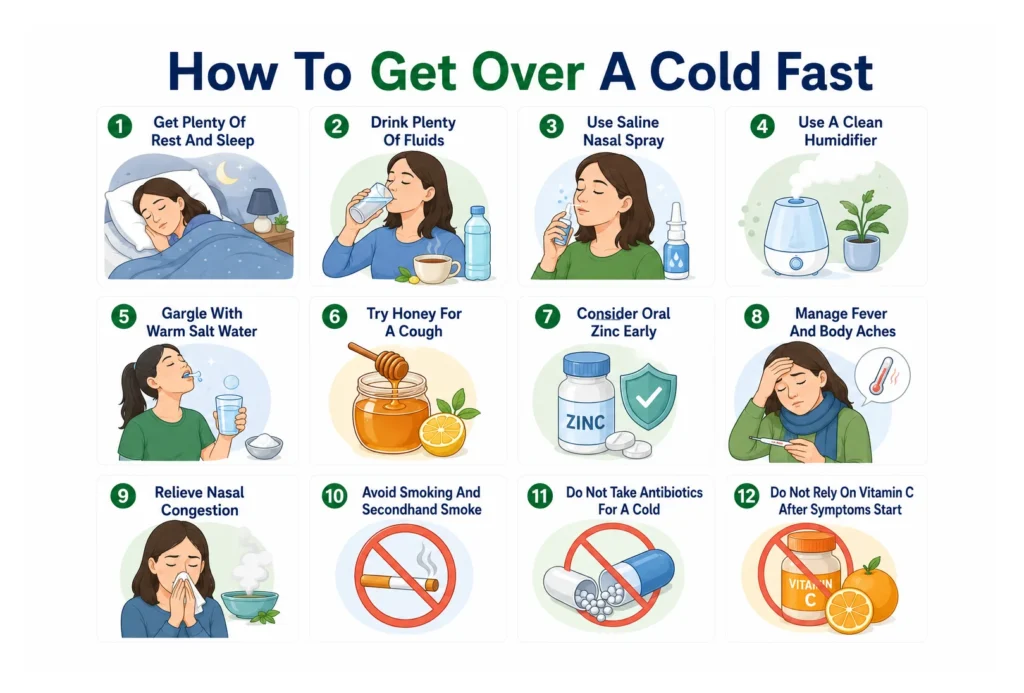
When a cold leaves you congested, exhausted, achy, or dealing with a persistent cough, you naturally want to recover as quickly as possible. While there is no instant cure for the common cold, supportive care can ease symptoms and help you stay comfortable while your body fights the infection. Most colds improve with time, but worsening or severe symptoms should never be ignored.
Get Plenty Of Rest And Sleep
Getting enough sleep gives your body time to recover while your immune system responds to the viral infection. Avoid strenuous activities if you feel weak, tired, or achy, and give yourself extra time to rest. Poor sleep can make fatigue and other cold symptoms harder to manage. If symptoms are keeping you awake night after night, speak with a healthcare professional.
Drink Plenty Of Fluids
Staying hydrated can help replace fluids lost through fever, sweating, or reduced food and drink intake during illness. Water, clear broths, and warm caffeine-free beverages can help you maintain fluid intake and soothe an irritated throat. Drink regularly throughout the day rather than waiting until you feel very thirsty.
Use Saline Nasal Spray
Saline nasal sprays can moisturize irritated nasal passages and help loosen thick mucus. This may make a blocked or stuffy nose easier to manage, particularly when congestion is interfering with sleep. Saline nasal irrigation may also help relieve some cold symptoms, but only use distilled, sterile, or appropriately treated water in a nasal-rinse device.
Use A Clean Humidifier
A clean cool-mist humidifier can add moisture to dry air and make irritated nasal passages and a dry throat feel more comfortable. It may be especially useful when congestion or coughing is making it difficult to sleep. Keep the humidifier clean and follow the manufacturer’s instructions to reduce the risk of microorganism growth. Remember that humidified air can ease discomfort but does not eliminate the virus.
Gargle With Warm Salt Water
Gargling with warm salt water can temporarily soothe a sore, scratchy, or irritated throat during a cold. It is a simple comfort measure that may make swallowing and speaking more comfortable. Do not swallow the mixture, and young children should not gargle if they cannot do so safely. Severe throat pain, difficulty swallowing, or inability to drink fluids requires medical evaluation.
Try Honey For A Cough
Honey can help soothe a bothersome cough and may be particularly useful when coughing is disrupting sleep. Adults and children over 1 year can generally use honey as a cough-soothing option. Never give honey to a child younger than 1 year because of the risk of infant botulism. A severe, persistent, or worsening cough should be evaluated rather than continually treated at home.
Consider Oral Zinc Early
Oral zinc lozenges may shorten a cold when started within about 24 hours after symptoms begin, although the benefit varies depending on the formulation and dose. A systematic review of randomized trials found that zinc supplementation reduced cold duration by about 2.25 days in healthy adults. Zinc can cause nausea and other side effects, while intranasal zinc should be avoided because it has been linked to potentially permanent loss of smell.
Manage Fever And Body Aches
Over-the-counter pain relievers and fever reducers can help manage headaches, fever, muscle aches, and general discomfort associated with a cold. Always follow the package directions and check active ingredients to avoid accidentally taking duplicate medications. Some medicines may not be appropriate for people with certain health conditions or those taking specific medications.
Relieve Nasal Congestion
A blocked nose can make breathing, eating, and sleeping difficult when you have a cold. Saline spray, humidified air, and a warm shower may help loosen mucus and temporarily improve comfort. Certain OTC decongestants can also relieve nasal symptoms, but they are not appropriate for everyone and should be used exactly as directed. If congestion is accompanied by significant breathing difficulty, seek prompt medical attention.
Avoid Smoking And Secondhand Smoke
Cigarette smoke and other airway irritants can make an already irritated nose, throat, and respiratory tract feel worse. Avoid smoking and secondhand smoke while recovering to reduce additional irritation and coughing. Vaping aerosols can also irritate the respiratory system and should not be used as a cold remedy. Seek medical care if you develop wheezing, chest tightness, or shortness of breath.
Do Not Take Antibiotics For A Cold
Antibiotics cannot kill the viruses that cause ordinary colds and do not make a viral cold resolve faster. Taking them unnecessarily can cause side effects and contributes to antibiotic resistance. A bacterial infection can sometimes develop after a viral illness, but antibiotics should only be used when a healthcare professional determines they are appropriate. If your symptoms worsen after initially improving, get evaluated for a possible complication.
Do Not Rely On Vitamin C After Symptoms Start
Vitamin C is commonly promoted as a way to get over a cold quickly, but taking it only after symptoms begin has not been shown to shorten or reduce the severity of a cold. Regular vitamin C use may provide a small reduction in cold duration for some people, but it is not an immediate treatment. High doses can cause diarrhea, nausea, and stomach cramps. A balanced diet is generally the best way to obtain vitamin C unless supplementation is medically recommended.
When To Go To The ER
Most colds can be managed at home, but certain symptoms may signal a serious respiratory complication that needs immediate attention. Go to the ER if you develop:
- Difficulty breathing or shortness of breath.
- Persistent chest pain or pressure.
- Severe dizziness, confusion, or difficulty staying awake.
- Severe weakness, unsteadiness, or a seizure.
- Signs of severe dehydration, such as very little or no urination.
- Blue, gray, or pale lips, face, or skin.
- A fever or cough that improves but suddenly returns or becomes significantly worse.
- Severe symptoms that are rapidly worsening or causing significant difficulty functioning.
- Worsening of an existing chronic medical condition.
- Severe symptoms in an infant or young child, particularly trouble breathing, dehydration, or lack of alertness.
If you experience any of these symptoms, seek immediate medical attention at our emergency room near me for prompt evaluation and treatment.
STAT Specialty Hospital For Cold Care
If your cold symptoms become severe, such as difficulty breathing, chest pain, confusion, severe dehydration, or a worsening high fever, seek emergency care immediately. Our ER wait time is just 4 minutes, and STAT Specialty Hospital provides prompt evaluation and emergency treatment to help identify serious complications and protect your health when symptoms go beyond a typical cold.
When you need help understanding how to get over a cold fast, our experienced emergency physicians can assess concerning symptoms and provide appropriate treatment. From diagnostic testing and IV fluids to oxygen therapy when medically necessary, STAT Specialty Hospital is equipped to provide timely, compassionate emergency care for children and adults 24/7.
Key Takeaways
- Most colds improve on their own, but supportive care can help ease symptoms and improve comfort.
- Getting enough rest, staying hydrated, and managing congestion can support recovery while your immune system fights the virus.
- Honey may soothe a cough, while saline spray can help relieve a stuffy or congested nose.
- Antibiotics do not treat viral colds and should not be used unless a healthcare professional identifies a bacterial infection.
- Seek urgent medical care for difficulty breathing, chest pain, severe dehydration, confusion, or symptoms that rapidly worsen.
Frequently Asked Questions
How Long Does A Cold Last?
Most colds improve within 7 to 10 days, although symptoms such as coughing, congestion, or fatigue can sometimes last longer. If your symptoms are not improving after about 10 days or become worse after initially improving, contact a healthcare professional.
Are Colds Contagious?
Yes, colds are contagious and can spread through respiratory droplets, contaminated hands, and touching surfaces before touching your eyes, nose, or mouth. You are generally most contagious during the first few days of illness, so limiting close contact and practicing good hand hygiene can reduce transmission.
How Long Is A Cold Contagious?
A person with a cold can spread the virus from a few days before symptoms begin and usually remains contagious while symptoms are present. Contagiousness is generally highest during the first 2–3 days, although some people may continue spreading the virus for longer.