

If sudden, intensely itchy welts have appeared on your skin, you may feel frustrated and worried about what is happening. The discomfort can be difficult to ignore, especially when the rash appears without warning.
While many cases are mild, hives can sometimes occur alongside facial or throat swelling, breathing problems, or other signs of a serious allergic reaction. If these symptoms develop, seek emergency medical care immediately at our Laredo emergency room.
What Is Urticaria?
Urticaria, commonly called hives, is a skin reaction that causes raised, itchy welts that can appear suddenly and change location. Individual welts usually fade within 24 hours, although new ones may continue to develop. Some people also experience angioedema, which causes deeper swelling around the eyes, lips, hands, or other areas.
A PubMed systematic review found that chronic urticaria prevalence varies by region, reaching 1.4% in combined Asian studies.
Dangerous Urticaria Symptoms
- Swelling of the lips, tongue, mouth, or throat.
- Difficulty breathing, wheezing, or a feeling of throat tightness.
- Trouble swallowing or speaking because of swelling.
- Dizziness, light-headedness, fainting, or unusual weakness.
- A rapid or weak heartbeat, especially with other allergic symptoms.
- Severe abdominal cramps, repeated vomiting, or diarrhea alongside hives.
- Widespread hives accompanied by breathing problems or sudden swelling, which may indicate anaphylaxis and require immediate emergency care.
If you experience any of these dangerous symptoms, seek immediate medical attention at an emergency room near me.
Causes Of Urticaria Rash
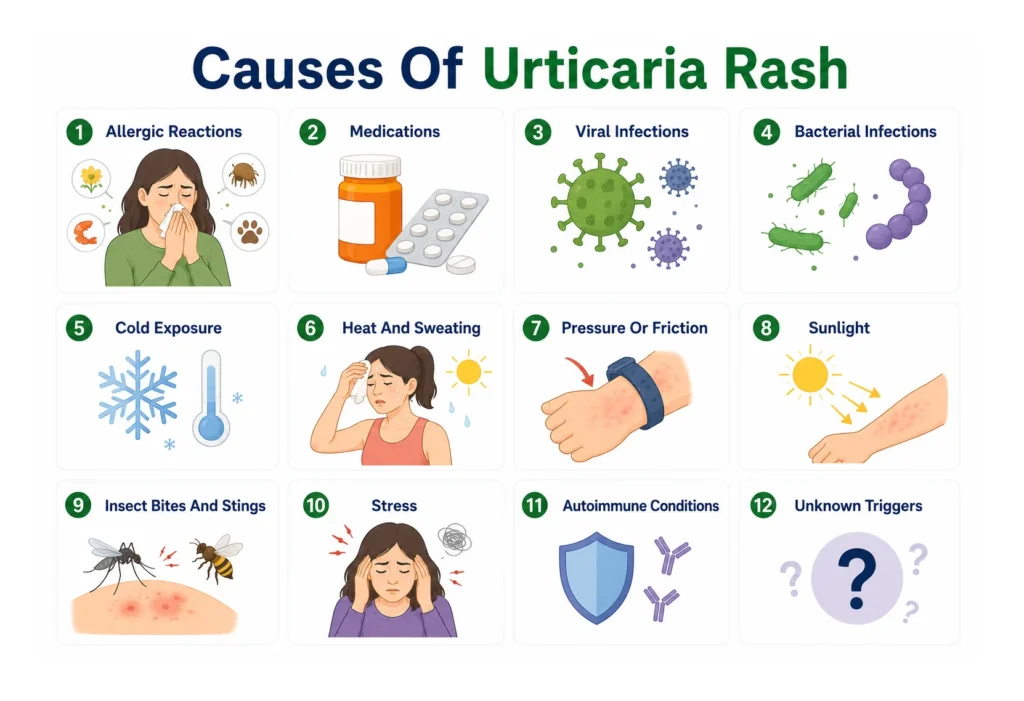
A sudden urticaria rash can be uncomfortable, frustrating, and concerning, especially when itchy welts appear repeatedly without an obvious explanation. The reaction occurs when immune cells in the skin release chemicals that cause itching and swelling. Some triggers are temporary and identifiable, while others remain unclear, making it important to track recurring symptoms and seek medical guidance when hives persist or worsen.
Allergic Reactions
Allergic reactions are a common reason for sudden hives, especially when the immune system reacts to a specific substance. Foods such as eggs, peanuts, tree nuts, milk, fish, shellfish, and sesame can trigger an allergic response. Hives may appear shortly after exposure and can occur with swelling or other allergy symptoms.
Medications
Certain medications can trigger urticaria through an allergic reaction or by directly causing mast cells to release histamine. Common examples include antibiotics, aspirin, ibuprofen, opioids, and some other medicines. If hives develop soon after starting a medication, contact a healthcare professional before taking another dose unless it has been prescribed as essential.
Viral Infections
Viral infections can stimulate an immune response that leads to hives, particularly during acute illness. Respiratory infections, including COVID-19, have been associated with the onset or worsening of urticaria. Hives may sometimes appear before other noticeable infection symptoms, making the timing of the rash important to report to a healthcare professional.
Bacterial Infections
Certain bacterial infections have also been associated with urticaria, although the relationship is not always straightforward. Infections involving organisms such as Streptococcus and Mycoplasma pneumoniae have been reported alongside hives. Treating an underlying infection may be important when symptoms, examination, or testing point to an infectious trigger.
Cold Exposure
Cold temperatures can trigger a form of physical urticaria called cold urticaria. Hives may develop after exposure to cold air, cold water, or chilled objects and usually occur where the skin is exposed. In severe cases, extensive cold exposure can cause a widespread reaction, so sudden symptoms after swimming in cold water should be taken seriously.
Heat And Sweating
Heat, increased body temperature, and sweating can trigger hives in some people, particularly a form known as cholinergic urticaria. Flare-ups may occur after exercise, hot showers, emotional stress, or exposure to hot environments. The rash often consists of numerous small, itchy bumps that develop as body temperature rises.
Also Read: How Long Does Heat Rash Last
Pressure Or Friction
Physical pressure, rubbing, scratching, or tight clothing can provoke hives in susceptible people. This includes pressure from backpack straps, belts, or prolonged contact with a firm surface. Dermatographism, a type of inducible urticaria, can cause raised itchy lines where the skin has been scratched or stroked.
Sunlight
Sun exposure can trigger a less common form of physical urticaria called solar urticaria. Affected skin can develop itchy, raised welts after exposure to sunlight, sometimes within minutes. Limiting exposure and discussing recurring sun-triggered reactions with a healthcare professional can help identify the condition and prevent repeated flare-ups.
Insect Bites And Stings
Insect bites and stings can cause hives when the immune system reacts to proteins or venom introduced into the body. Mosquitoes, bees, wasps, hornets, and other insects can trigger skin reactions in susceptible people. Widespread hives accompanied by throat swelling, breathing difficulty, dizziness, or fainting can indicate anaphylaxis and require emergency care.
Stress
Emotional stress can worsen or trigger hives in some people by contributing to activation of mast cells and other inflammatory pathways. Stress does not mean that the rash is imaginary or simply psychological; the skin reaction is real. If flare-ups repeatedly occur during periods of significant stress, tracking symptoms and possible triggers can help with management.
Autoimmune Conditions
Chronic urticaria can sometimes be associated with autoimmune activity, in which the immune system mistakenly targets the body’s own proteins or cellular receptors. Autoimmune thyroid disease and other autoimmune conditions have been linked with chronic hives. However, most people with chronic urticaria do not have an identifiable external cause.
Unknown Triggers
Sometimes, hives continue to appear even after common triggers have been considered, and no specific cause can be identified. This is particularly common with chronic spontaneous urticaria, which lasts for six weeks or longer without an identifiable external trigger. Not knowing the cause does not mean the symptoms are not treatable, and persistent or recurrent hives should be evaluated by a healthcare professional.
When To Go To The ER
Most cases of urticaria can be managed with appropriate medical care, but some reactions can become life-threatening and require immediate emergency treatment. If your hives suddenly become severe, rapidly worsen, or occur after a known allergen exposure, do not delay seeking emergency care. When in doubt about a potentially serious allergic reaction, it is safer to get urgent medical evaluation.
- Difficulty breathing, wheezing, or severe shortness of breath.
- Swelling of the tongue, lips, mouth, or throat.
- Trouble swallowing or a feeling that your throat is closing.
- Dizziness, confusion, fainting, or loss of consciousness.
- A rapid, weak pulse or signs of a sudden drop in blood pressure.
- Widespread hives accompanied by breathing or circulation problems.
- Repeated vomiting, severe abdominal cramps, or diarrhea occurring with hives.
- Sudden facial or whole-body swelling after eating a food, taking a medication, or being stung by an insect.
- Hives and severe symptoms develop rapidly after exposure to a known allergen.
- Symptoms of anaphylaxis that improve after using an epinephrine auto-injector, but emergency evaluation is still necessary.
If you experience severe hives or signs of a serious allergic reaction, seek immediate care at our emergency room, with an average ER wait time of just 4 minutes.
STAT Specialty Hospital For Urticaria Care
A sudden or persistent rash can be uncomfortable and concerning, especially when hives keep returning or become more severe. If your symptoms are worsening or you are unsure what is triggering them, prompt medical evaluation can help identify potential triggers and determine the appropriate care.
At STAT Specialty Hospital, our experienced emergency physicians can evaluate your symptoms, assess what causes urticaria in your case, and provide appropriate treatment based on your condition. If your reaction appears serious or requires urgent attention, our team can provide timely emergency care to help protect your health.
Key Takeaways
- Urticaria, commonly known as hives, causes raised, itchy welts that can appear suddenly and move to different areas of the skin.
- Common triggers include allergic reactions, medications, infections, temperature changes, pressure, insect bites, stress, and autoimmune conditions.
- Some cases of urticaria occur without an identifiable trigger, particularly when hives persist for six weeks or longer.
- Swelling of the throat or tongue, difficulty breathing, dizziness, or fainting with hives can indicate a life-threatening allergic reaction.
- Seek immediate emergency medical care when urticaria is accompanied by signs of anaphylaxis or other severe symptoms.
Frequently Asked Questions
What Are The Best Urticaria Treatments?
The best urticaria treatments depend on the cause, severity, and whether the condition is acute or chronic. Antihistamines are commonly used to relieve itching and hives, while persistent cases may require prescription treatments from a healthcare professional.
How Long Does Urticaria Last?
Individual hives usually disappear within 24 hours, although new welts can continue appearing. Acute urticaria generally lasts less than six weeks, while hives occurring repeatedly for six weeks or longer are considered chronic urticaria.
Is Urticaria Communicable?
No, urticaria is not contagious or communicable because hives are an immune-related skin reaction rather than an infection that spreads between people. However, an infection may sometimes trigger urticaria without making the hives themselves contagious.
Can Cold Urticaria Kill You?
Cold urticaria can rarely cause a severe, potentially life-threatening allergic reaction, particularly after extensive cold-water exposure. If cold exposure causes widespread hives along with breathing problems, throat swelling, dizziness, or fainting, seek emergency medical care immediately.