

A runny nose can quickly turn a normal day into a frustrating one. Constant dripping, frequent sneezing, and irritated skin around the nose can make it difficult to work, sleep, or enjoy everyday activities. If you’re searching for how to stop a runny nose, you’re likely looking for fast and reliable relief.
While many cases improve with simple care, a persistent or severe runny nose should never be ignored. If it is accompanied by high fever, difficulty breathing, severe facial pain, confusion, or symptoms that last longer than expected, it could signal a more serious condition requiring prompt medical evaluation. Our emergency room in Del Rio provides timely evaluation and treatment concerning respiratory symptoms.
Runny Nose You Should Never Ignore
Although a runny nose is often caused by viral infections or allergies, certain symptoms may indicate a more serious illness that needs urgent medical attention. Recognizing these warning signs early can help prevent complications and ensure you receive the right treatment without delay.
- High fever that persists or worsens.
- Difficulty breathing or shortness of breath.
- Thick yellow, green, or bloody nasal discharge lasting more than 10 days.
- Severe facial pain, swelling, or tenderness.
- Severe headache with neck stiffness.
- Confusion, extreme drowsiness, or difficulty staying awake.
- Persistent symptoms that do not improve after 10–14 days.
- Runny nose after a head injury with clear, watery drainage.
- Chest pain or persistent wheezing.
- Signs of dehydration, such as dizziness or reduced urination.
Because allergies are a common cause of persistent runny nose symptoms, proper allergy care can help identify triggers and provide effective symptom management.
How To Stop A Runny Nose Effectively
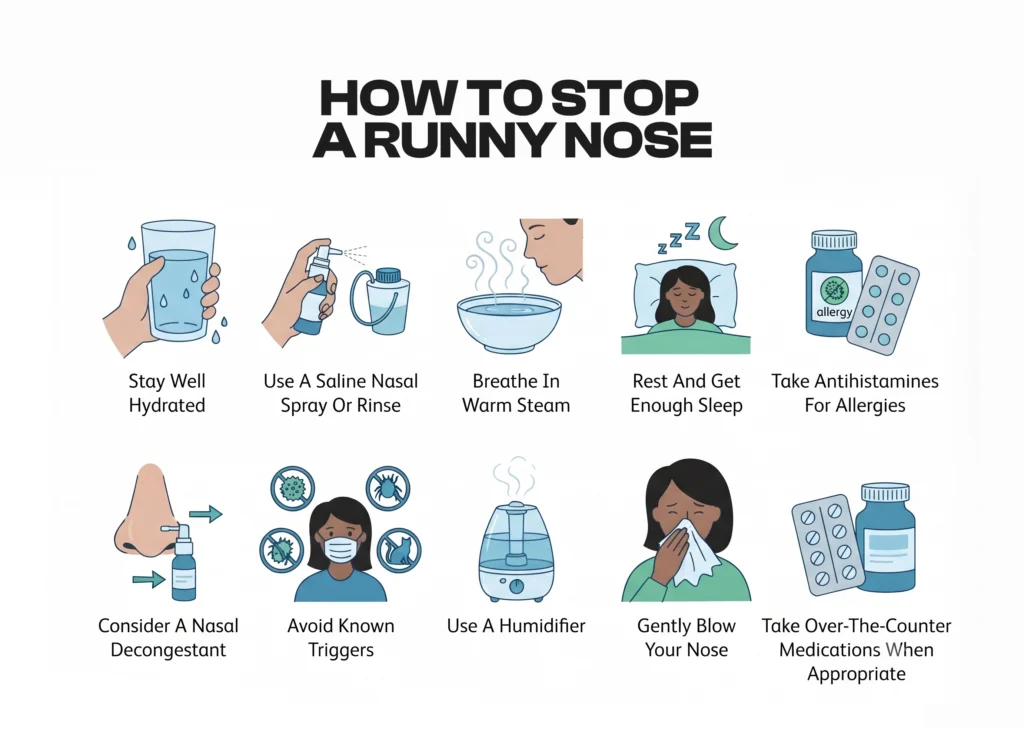
Finding the right way to stop a runny nose starts with identifying what is triggering your symptoms. The best approach depends on whether your runny nose is caused by a cold, allergies, irritants, or another medical condition. Early symptom management can improve comfort, reduce nasal irritation, and help prevent complications while supporting your body’s natural recovery.
Stay Well Hydrated
Drinking plenty of water, herbal tea, or clear broths helps thin nasal mucus, making it easier for your body to clear congestion. Proper hydration also keeps the nasal lining moist, reducing irritation caused by constant drainage. Avoid excessive alcohol and caffeinated drinks if they contribute to dehydration.
Use A Saline Nasal Spray Or Rinse
Saline sprays and nasal irrigation with sterile or distilled water help flush out mucus, allergens, and irritants from the nasal passages. They also moisturize dry nasal tissues without medication, making them safe for frequent use in both adults and children when used correctly.
Breathe In Warm Steam
Warm steam from a shower or a bowl of hot water can temporarily loosen mucus and soothe irritated nasal passages. Although steam does not cure the underlying cause, it may reduce nasal discomfort and make breathing easier for a short period. Always avoid very hot steam to prevent burns.
Rest And Get Enough Sleep
Adequate rest allows your immune system to fight infections more effectively. Sleeping with your head slightly elevated may also reduce nasal drainage and congestion, helping you breathe more comfortably during the night and improving overall recovery.
Take Antihistamines For Allergies
If allergies are causing your runny nose, antihistamines can help reduce sneezing, itching, and excessive nasal drainage. Many newer antihistamines cause less drowsiness than older medications, but they should be used according to the product instructions or a healthcare provider’s advice.
Consider A Nasal Decongestant
Short-term use of decongestant nasal sprays or oral decongestants may relieve nasal congestion associated with colds. However, nasal sprays should generally not be used for more than three consecutive days because they can cause rebound congestion and worsen symptoms.
Avoid Known Triggers
Smoke, strong perfumes, dust, pet dander, pollen, and chemical fumes can all worsen a runny nose. Limiting exposure to known triggers and improving indoor air quality can significantly reduce symptoms, especially for people with allergic or non-allergic rhinitis.
Use A Humidifier
Dry indoor air can irritate the nasal passages and increase discomfort. Running a clean humidifier adds moisture to the air, helping soothe irritated tissues and reducing excessive nasal dryness. Regular cleaning is important to prevent mold and bacteria from growing inside the device.
Gently Blow Your Nose
Blowing your nose gently removes excess mucus without putting excessive pressure on the nasal passages or sinuses. Forceful blowing may worsen irritation or push mucus deeper into the sinuses, increasing discomfort.
Take Over-The-Counter Medications When Appropriate
Depending on the cause of your symptoms, over-the-counter medications such as antihistamines, pain relievers, or decongestants may provide relief. Always follow dosing instructions and consult a healthcare provider if you have chronic medical conditions, are pregnant, or are treating a young child.
When To Go To The ER
Most cases of a runny nose improve with home care, but some symptoms require immediate medical attention. Visit the emergency room if you experience:
- Difficulty breathing or severe shortness of breath.
- High fever with confusion or severe weakness.
- Severe facial swelling or intense facial pain.
- Clear watery nasal drainage after a head injury.
- Chest pain, persistent wheezing, or bluish lips.
- Severe dehydration with dizziness or fainting.
- Symptoms that rapidly worsen or do not improve despite treatment.
- A runny nose in an infant younger than 3 months accompanied by fever or feeding difficulties.
If you are experiencing these warning signs and searching for an ER near me, seek immediate medical evaluation to receive appropriate care.
Runny Nose Care At STAT Specialty Hospital
A persistent runny nose can interfere with your breathing, sleep, and daily routine, especially when caused by an infection, allergies, or an underlying condition. With an average ER wait time of just 6 minutes, STAT Specialty Hospital provides prompt evaluation to identify the cause and recommend the most appropriate treatment. If you’re wondering how to stop a runny nose, our team offers personalized care based on your symptoms and overall health.
If your runny nose is accompanied by difficulty breathing, high fever, severe facial pain or swelling, confusion, symptoms lasting longer than 10 days, or clear nasal drainage after a head injury, seek immediate medical attention. STAT Specialty Hospital delivers fast, compassionate emergency care to relieve symptoms, treat serious conditions, and help prevent complications.
Key Takeaways
- A runny nose is commonly caused by viral infections, allergies, irritants, or changes in weather.
- The best way to stop a runny nose depends on identifying and treating the underlying cause.
- Staying hydrated, using saline nasal sprays, resting, and avoiding triggers can help relieve symptoms.
- Antihistamines may help allergy-related runny noses, while decongestants should only be used for short periods.
- Seek emergency medical care if your runny nose is accompanied by difficulty breathing, high fever, severe facial pain, confusion, or clear drainage after a head injury.
- Symptoms that persist for more than 10 days or continue to worsen should be evaluated by a healthcare provider.
- Early medical evaluation can help prevent complications and ensure you receive the right treatment.
- STAT Specialty Hospital provides fast emergency evaluation and treatment for severe or persistent runny nose symptoms.
Frequently Asked Questions
Can Teething Cause A Runny Nose?
There is no strong scientific evidence that teething directly causes a runny nose. While some babies may have extra drooling during teething, a persistent runny nose is more likely due to a viral infection, allergies, or another illness. If your baby has a fever, cough, or thick nasal discharge, contact a healthcare provider.
How Long Does A Runny Nose Last?
A runny nose caused by the common cold usually lasts 7 to 10 days, while allergy-related symptoms may continue as long as you’re exposed to the trigger. If your runny nose lasts longer than 10 days, worsens, or is accompanied by severe symptoms such as high fever or difficulty breathing, seek medical evaluation promptly.