

Food poisoning lasts anywhere from a few hours to several weeks, depending on the type of contaminant, how much was consumed, and the overall health of the person affected. In most healthy adults, symptoms resolve within 12 to 48 hours as the body works to flush out the harmful bacteria, virus, or toxin that triggered the illness. However, certain bacterial infections, such as E. coli, Listeria, and Campylobacter, can produce symptoms that persist for a week or longer without any signs of early improvement.
Understanding how long food poisoning typically lasts, which factors affect recovery time, and what warning signs indicate that the illness requires more than home care is essential for protecting your health. This guide covers the recovery timeline, home care steps, and when to seek emergency medical attention. Our emergency room in Eagle Pass provides prompt evaluation and treatment when food poisoning symptoms become severe.
What Is Food Poisoning?
Food poisoning is an illness caused by consuming food or beverages contaminated with harmful bacteria, viruses, parasites, or toxins that disrupt normal digestive function and trigger an immune response. According to the Texas Department of State Health Services, common sources include undercooked meat and poultry, raw shellfish, unpasteurized dairy products, unwashed produce, and food that has been left at unsafe temperatures for too long. Symptoms typically begin anywhere from 30 minutes to several days after eating the contaminated food, which makes identifying the exact source difficult without laboratory testing in many cases.
How Long Does Food Poisoning Last by Type?
The duration of food poisoning varies significantly depending on which organism caused the illness. Knowing the typical timeline for each type helps set realistic expectations for recovery and clarifies when symptoms are lasting longer than they should.
- Norovirus is the most common cause of food poisoning and typically produces symptoms that last between 12 and 48 hours, with most people recovering fully within one to two days of onset
- Staphylococcus aureus toxin causes rapid-onset illness within one to six hours of consuming contaminated food, and symptoms generally clear within 24 hours as the toxin moves through the system
- Salmonella produces symptoms that begin within 12 to 72 hours and can last anywhere from four to seven days, with diarrhea and cramping often persisting longer than vomiting does
- E. coli infections typically begin within three to four days and can last up to a week or more, with certain strains, such as O157:H7, carrying a higher risk of serious complications and extended illness
- Listeria has the longest incubation and recovery period of any common foodborne pathogen, with symptoms sometimes taking up to 30 days to appear and lasting for weeks without treatment
- Campylobacter generally causes symptoms within two to five days of exposure, and full recovery may take a week or longer, particularly in older adults or those with existing digestive conditions
What Are the Symptoms of Food Poisoning?
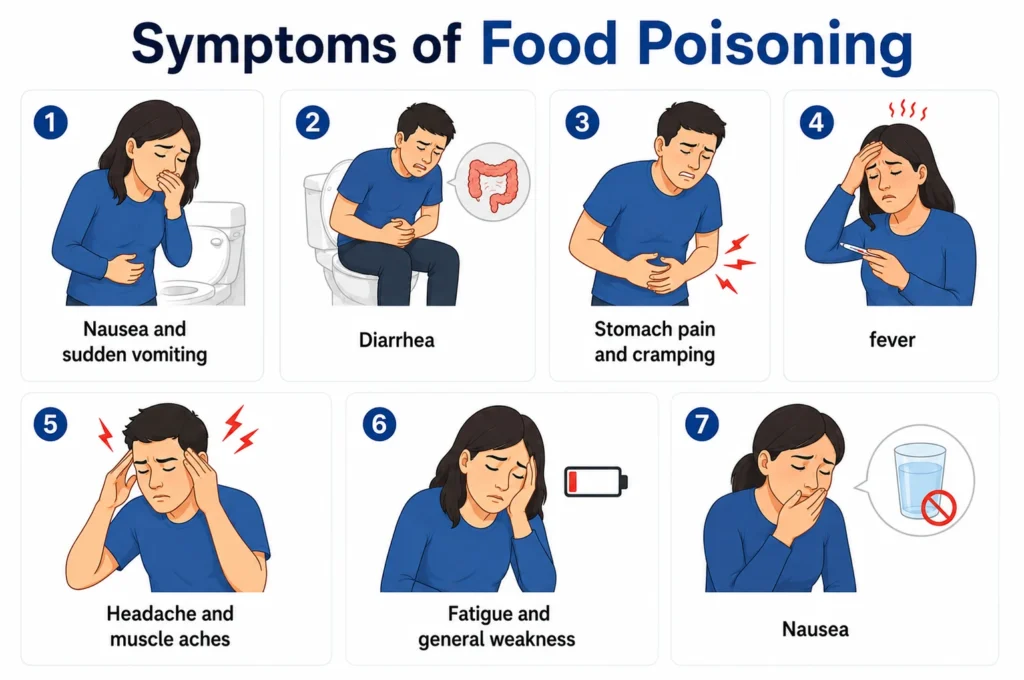
Food poisoning symptoms can range from mild to severe, depending on the organism involved and the individual affected. Most cases share a recognizable pattern of digestive and systemic symptoms that appear in the first hours after exposure.
- Nausea and sudden vomiting that begin anywhere from one hour to several days after eating contaminated food
- Diarrhea that may be watery, frequent, and persistent, sometimes containing blood in more serious bacterial infections
- Stomach pain and cramping that range from dull discomfort to intense pain requiring immediate evaluation
- A fever that may accompany bacterial infections, signaling active immune engagement with the pathogen in the digestive tract
- Headache and muscle aches that develop as the body directs energy toward fighting the infection and managing the associated inflammation
- Fatigue and general weakness that worsen progressively as fluid loss from vomiting and diarrhea continues without adequate replacement
- Nausea that makes it difficult to keep any fluids down, accelerating the risk of dehydration developing alongside the primary illness
If severe nausea or vomiting prevents you from staying hydrated, visit our ER for nausea in Eagle Pass for prompt evaluation and treatment.
Who Is Most at Risk for a Longer Recovery?
While food poisoning can affect anyone, certain groups are significantly more likely to experience a prolonged recovery period and a higher risk of serious complications developing during the illness.
- Infants and young children lose fluids more rapidly through vomiting and diarrhea than adults and may show signs of serious dehydration within hours of symptom onset
- Elderly adults have weaker immune responses and slower digestive recovery times, meaning symptoms tend to persist longer and complications develop more quickly than in younger patients
- Pregnant women face elevated vulnerability, particularly to Listeria, which can cause illness lasting weeks and carries serious risks to the developing fetus throughout the pregnancy
- People with underlying conditions such as diabetes, kidney disease, cancer, or suppressed immune function are less equipped to contain bacterial infections and may require medical support earlier in the illness
- Individuals who consumed a large amount of contaminated food experience a higher initial bacterial or toxin load, which typically results in more severe symptoms and a longer overall recovery time
How to Treat Food Poisoning at Home?
Mild to moderate food poisoning can usually be managed safely at home as long as fluid intake stays ahead of what is being lost through vomiting and diarrhea. The primary goal is hydration and gut rest while allowing the body to clear the infection naturally.
- Sip oral rehydration solutions in small, frequent amounts rather than drinking large quantities of water at once, which can trigger further vomiting in an already irritated digestive system
- Avoid solid foods until vomiting has eased, then gradually reintroduce bland options such as toast, bananas, boiled rice, and broth that are easy on the gut
- Avoid caffeine, alcohol, dairy products, and high-fat or spicy foods throughout recovery, as all of these can slow healing and worsen diarrhea during the acute phase
- Use over-the-counter fever reducers such as acetaminophen or ibuprofen to manage discomfort if a fever develops, but avoid antidiarrheal medications if blood is present in the stool
- Monitor hydration closely throughout the recovery period and check for warning signs of fluid depletion using our guide on how to tell if you are dehydrated
If diarrhea is severe and persistent, our guide on how to stop diarrhea fast covers the most effective steps for reducing fluid loss during active illness.
How to Prevent Food Poisoning?
The majority of food poisoning cases are entirely preventable with consistent food safety habits that reduce the risk of contamination before food is ever consumed.
- Wash hands thoroughly with soap and water before and after handling raw meat, poultry, eggs, seafood, and unwashed produce to prevent cross-contamination during preparation
- Cook all meat, poultry, and eggs to their recommended safe internal temperatures rather than relying on appearance or color as a guide
- Refrigerate leftovers promptly within two hours of cooking and avoid consuming any perishable food that has been left at room temperature for an extended period of time
- Keep raw meats separate from ready-to-eat foods during grocery shopping, food storage, and meal preparation to eliminate the risk of cross-contamination at every stage
- Be extra cautious with high-risk foods during Texas summer heat, including raw shellfish, unpasteurized juices, undercooked eggs, and buffet-style foods that may sit at unsafe temperatures
When to Go to the ER for Food Poisoning?
Most cases of food poisoning resolve within a few days of home treatment, but certain symptoms indicate that the illness has progressed to a level that requires immediate professional medical care. Visit Stat Specialty Hospital right away if you or someone in your care is experiencing any of the following.
- Symptoms that have lasted longer than 48 to 72 hours with no meaningful improvement despite consistent rest and fluid intake at home
- High fever in adults above 102 degrees Fahrenheit, occurring alongside vomiting, diarrhea, or severe abdominal pain
- Blood in the stool or vomit, which may indicate a more serious bacterial infection requiring diagnostic testing and targeted treatment
- Complete inability to keep any fluids down due to persistent vomiting that makes meaningful rehydration at home impossible
- Signs of severe dehydration, including no urination for 8 or more hours, extreme dizziness, sunken eyes, and profound weakness that worsen rather than stabilize
- Neurological symptoms such as blurred vision, muscle weakness, slurred speech, or difficulty swallowing, which may indicate a serious infection requiring urgent intervention
- Rapidly worsening symptoms in infants, young children, elderly adults, pregnant women, or anyone with a compromised immune system that raises the risk of serious complications
If you are experiencing severe food poisoning symptoms and searching for the nearest emergency room, seek immediate medical care to receive timely evaluation and treatment.
Food Poisoning Care at Stat Specialty Hospital
When food poisoning symptoms persist beyond what home care can manage, the 24/7 emergency room at STAT Specialty Hospital provides fast, expert treatment at our Texas locations. Our team delivers IV fluid therapy, electrolyte replacement, and diagnostic testing to identify the cause and provide targeted care to help you recover safely and efficiently.
If your fever is not breaking or your symptoms are worsening rather than improving, do not wait for the illness to run its course on its own. If you are also noticing signs of dehydration alongside digestive symptoms, our guide on how dehydration can cause diarrhea explains how the two conditions interact. Visit Stat Specialty Hospital today for the prompt, professional care that food poisoning demands.