

Every allergy season, millions of people find themselves sneezing, congested, and exhausted, and at some point during that misery, they check their temperature and find a fever staring back at them. The immediate assumption is that the allergies caused it, which makes sense on the surface. But the reality of how allergies interact with the immune system tells a more nuanced story, one that every allergy sufferer should understand before deciding whether what they are experiencing is simply a bad allergy day or something that actually needs medical attention.
Allergies and fever involve two entirely different branches of the immune system, and understanding the difference can help you make faster, smarter decisions during an allergy flare. Our emergency room in Del Rio is available to provide prompt evaluation when allergy symptoms become severe or are accompanied by concerning signs.
Why Does Hay Fever Not Actually Cause a Fever?
The term hay fever is responsible for a great deal of confusion because it implies that seasonal allergies produce an elevated body temperature when they categorically do not. True fever is produced when the immune system detects a pathogen, such as a bacterium or virus, and releases pyrogens to signal the brain to raise body temperature as a defense mechanism. Allergic reactions instead operate through the release of histamine and IgE antibodies in response to harmless substances like pollen, dust, and pet dander, a process that creates congestion, sneezing, and itching but never activates the fever response.
What Are the Symptoms of Allergies vs Fever?
Knowing the difference between purely allergic symptoms and symptoms that signal something more serious is one of the most practically useful skills an allergy sufferer can develop. The two can overlap significantly in feel but diverge clearly in their specific details.
- Classic allergy symptoms: Clear watery nasal discharge, itchy and watery eyes, sneezing fits, nasal congestion, and postnasal drip that worsen with allergen exposure and improve with antihistamines
- Signs of infection with fever: Thick yellow or green nasal discharge, facial pressure and pain, body aches, significant fatigue, chills, and a temperature reading above 100.4°F
- The most important distinction: Allergies never cause body aches, chills, or a genuine fever. If those three symptoms appear together, an infection has almost certainly developed
- Eye involvement: Allergy eyes are itchy and watery; infected or inflamed eyes produce thicker discharge, more significant redness, and swelling that does not respond to antihistamines
- Response to medication: Allergy symptoms improve with antihistamines and nasal steroids, while infection symptoms do not respond to these medications and require a different treatment approach entirely
For ongoing or severe symptoms, allergy care can help identify triggers, manage symptoms, and determine whether further medical evaluation is needed.
Can Allergies Lead to a Secondary Infection That Causes Fever?
Yes, and this is the critical connection that explains why allergy sufferers so often end up with fevers during allergy season. Sustained allergic inflammation creates the exact kind of blocked, inflamed environment where bacteria and viruses find it easiest to establish an infection.
Sinus Infections
Prolonged nasal inflammation blocks sinus drainage and allows bacteria to accumulate, leading to bacterial sinusitis with facial pressure, thick, discolored discharge, and fever. Sinus infections are one of the most common complications of uncontrolled seasonal allergies. Severe symptoms or a high fever that does not respond to over-the-counter medication require emergency evaluation.
Upper Respiratory Infections
Allergy-driven inflammation weakens the immune defenses lining the respiratory tract, making it easier for viruses and bacteria to cause a full upper respiratory infection. These secondary infections are especially common during peak pollen seasons when nasal inflammation is already ongoing. The combination of an allergic response and a developing infection can produce symptoms far more severe than either condition alone.
Ear Infections
Allergy-related congestion can block the eustachian tubes, creating fluid buildup that bacteria can colonize and infect inside the middle ear. These infections are especially common in children and produce ear pain, muffled hearing, and sometimes significant fever. Any fever with ear pain during an allergy flare should be medically evaluated rather than assumed to be allergic in nature.
Allergies vs Cold vs Flu: How to Tell the Difference?
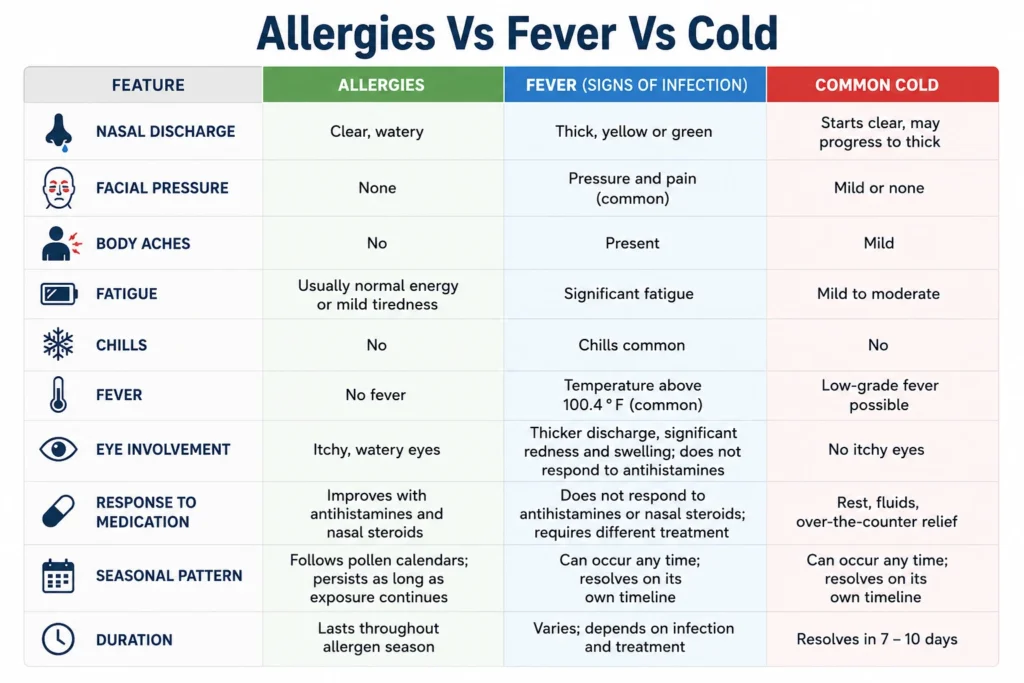
Separating these three conditions from one another is genuinely important because each requires a completely different management approach and has very different implications for how sick you actually are.
- Allergies: No fever, no body aches, itchy eyes are common, symptoms are triggered by specific environments or exposures, and improve with antihistamines
- Common cold: Low-grade fever possible, mild body aches, symptoms develop gradually, nasal discharge progresses from clear to thick, and no itchy eyes
- Flu: High fever above 101°F that arrives suddenly, significant body aches, chills, extreme fatigue that is disproportionate to other symptoms, and rapid onset within hours
- Seasonal pattern: Allergies follow pollen calendars and persist as long as exposure continues, while colds and flu can occur any time and resolve on their own timeline
- Duration: Allergy symptoms last throughout the relevant allergen season without resolution, while colds resolve in 7 to 10 days, and flu typically peaks within 2 to 4 days before improving
Can Anaphylaxis Cause a Fever?
Anaphylaxis is a severe and potentially fatal allergic reaction that can occasionally trigger a mild temperature elevation as part of the body’s extreme systemic inflammatory response. However, fever is never the defining concern in anaphylaxis because the life-threatening features, including throat swelling, a dramatic drop in blood pressure, difficulty breathing, and potential loss of consciousness, require immediate emergency intervention. According to the National Library of Medicine, anaphylaxis is a medical emergency requiring immediate epinephrine and emergency care with no time for home monitoring or watchful waiting.
Allergy and Fever Warning Signs That Should Never Be Ignored
Certain symptom combinations during allergy season signal that a secondary infection has developed or that a more serious allergic emergency is underway and requires prompt medical evaluation.
- Fever above 101°F appearing during an allergy flare that does not respond to over-the-counter fever reducers within a reasonable timeframe
- Thick, colored nasal discharge with facial pain and pressure persisting for more than 10 days without any improvement
- Ear pain with fever developing alongside ongoing allergy symptoms, particularly in children
- A severe sore throat, worsening, or accompanied by fever and swollen lymph nodes, rather than the mild postnasal drip irritation typical of allergies
- Signs of anaphylaxis include throat tightening, significant hives, difficulty breathing, or sudden dizziness
If you experience these warning signs and are searching for the closest emergency room near me, seek immediate medical evaluation to prevent complications.
When to Go to the ER?
Allergies alone do not require an emergency room visit, but certain symptoms appearing alongside allergy season absolutely do. Do not wait if any of the following are present:
- Signs of anaphylaxis include throat swelling, difficulty breathing, or sudden loss of blood pressure
- High fever in adults above 103°F that does not come down with medication, regardless of other symptoms
- Severe facial pain, headache, or swelling suggesting a serious sinus infection spreading beyond the sinuses
- Chest tightness or significant difficulty breathing is developing alongside existing allergy symptoms
- Any fever in an infant under three months appearing during or after an allergic episode
Visit the ER near me immediately if you experience severe allergy symptoms, high fever, breathing difficulty, or signs of a serious reaction. STAT Specialty Hospital’s 24/7 emergency room provides rapid evaluation and treatment for fever, infections, and allergic emergencies whenever you need care.
Allergy and Fever Care at STAT Specialty Hospital
Allergies are manageable, but the secondary infections and severe reactions they can trigger sometimes require more than antihistamines and rest. With a 24/7 emergency room available, STAT Specialty Hospital provides fast diagnostic evaluation for patients experiencing fever alongside allergy symptoms to determine whether a sinus infection, respiratory infection, ear infection, or a more serious allergic emergency is causing their symptoms. Whether your condition points to a straightforward secondary infection or requires immediate intervention, our team is available around the clock to evaluate, diagnose, and treat allergy complications with speed and accuracy.
Key Takeaways
- No, allergies do not directly cause fever, despite the widely used and misleading term hay fever
- Allergies create conditions that make secondary infections like sinusitis and ear infections more likely, and those infections cause fever
- The presence of fever, body aches, and chills alongside nasal symptoms almost always signals an infection rather than a purely allergic reaction
- Anaphylaxis is a severe allergic emergency that can produce mild temperature elevation, but requires immediate emergency care for its life-threatening features
- Fever above 103°F, signs of anaphylaxis, or severe facial pain and pressure during allergy season all require immediate ER evaluation
- When in doubt about whether symptoms represent allergies or something more serious, emergency evaluation provides the fastest and most accurate answer