

When an illness suddenly disrupts your health or your child’s routine, it is natural to wonder what is causing it and whether it could become serious. Adenovirus is a common group of viruses that can affect people of all ages and spread easily through close contact.
Most adenovirus infections are mild and resolve with supportive care. However, some infections can become serious, particularly in vulnerable people, so recognizing when medical evaluation is needed is important. If symptoms become severe or you develop difficulty breathing, dehydration, persistent high fever, or other concerning signs, seek prompt medical attention at our emergency room in Eagle Pass, which is open 24/7 for emergency care.
Common Adenovirus Diseases
Adenovirus can affect different parts of the body, and the type of illness depends on the specific adenovirus and how the infection develops. For someone dealing with an unfamiliar illness, knowing the conditions associated with this virus can make it easier to recognize what may be happening and when medical care may be appropriate. Common adenovirus-related diseases include:
- Respiratory Infections: Adenovirus can cause infections affecting the upper and lower respiratory tract, ranging from mild illness to more serious respiratory disease.
- Pharyngoconjunctival Fever: This infection can involve the throat, eyes, and overall body and is commonly associated with adenovirus exposure.
- Acute Bronchitis: Adenovirus can inflame the bronchial tubes, causing inflammation in the airways and making breathing more difficult in some cases.
- Pneumonia: In some people, adenovirus can infect the lungs and cause pneumonia, which may require prompt medical evaluation and treatment.
- Conjunctivitis: Adenovirus can cause viral conjunctivitis, an infection of the eye that can spread easily through close contact and contaminated surfaces.
- Gastroenteritis: Certain adenoviruses can affect the digestive system and cause inflammation of the stomach and intestines, particularly in young children.
Adenovirus In Adults
Adenovirus can infect adults and may cause illness ranging from mild to severe, depending on the person’s overall health and immune function. Most healthy adults recover without major complications, but those with weakened immune systems may be at greater risk for serious infection.
A PubMed-indexed study found adenovirus in 4.3% of 139 adult emergency-room patients with acute respiratory infections. The researchers also found a higher detection rate among adults undergoing hematopoietic stem cell transplantation, highlighting the greater risk associated with immune suppression.
Dangerous Adenovirus Symptoms In Adults
- High fever that persists or becomes severe.
- Difficulty breathing or feeling unable to get enough air.
- Chest pain that is new or worsening.
- Severe cough that interferes with breathing.
- Wheezing or noisy breathing.
- Severe weakness that makes daily activities difficult.
- Signs of dehydration, such as very little urination or dizziness.
- Confusion, unusual sleepiness, or difficulty staying awake.
If you experience these warning signs, seek prompt medical attention at an ER near me for immediate evaluation and emergency care.
What Causes Adenovirus In Adults?
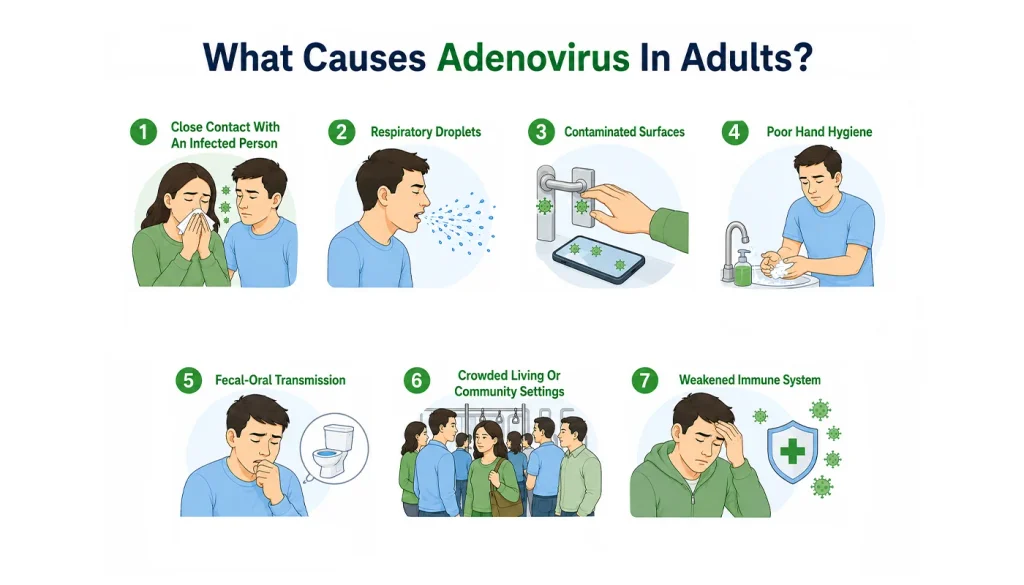
It can be frustrating when an infection seems to appear unexpectedly, especially when you are unsure where the exposure occurred. In adults, adenovirus infection is more likely when certain everyday exposures or personal health factors increase the opportunity for the virus to spread. Recognizing these risk factors can help you take practical steps to reduce exposure and protect yourself and others.
Close Contact With An Infected Person
Adenovirus can spread through close personal contact with someone who is infected. Activities involving direct contact with respiratory or other infected secretions can transfer the virus. This is especially important in households and other settings where people spend considerable time together.
Respiratory Droplets
Coughing and sneezing can release adenovirus-containing respiratory droplets into the surrounding environment. Another person may become infected after inhaling these droplets or when contaminated secretions reach the eyes, nose, or mouth. Respiratory spread is an important route for adenovirus infections affecting the airways.
Contaminated Surfaces
Adenovirus can survive on certain environmental surfaces and objects, allowing transmission when a person touches contamination and then touches their eyes, nose, or mouth. Frequently touched items can therefore contribute to the spread of infection.
Poor Hand Hygiene
Inadequate handwashing can make it easier for adenovirus to move from contaminated hands to the eyes, nose, or mouth. Proper hand hygiene is particularly important after contact with respiratory secretions, bodily fluids, or potentially contaminated surfaces.
Fecal-Oral Transmission
Some adenovirus types can spread through the fecal-oral route when microscopic amounts of infected stool reach another person’s mouth. This can occur through contaminated hands, food, water, or surfaces, making careful hygiene especially important after using the bathroom.
Crowded Living Or Community Settings
Crowded environments can increase opportunities for adenovirus transmission because people have more frequent close contact and share common surfaces. Outbreaks can occur in settings such as military facilities, healthcare facilities, schools, dormitories, and other group environments.
Weakened Immune System
A weakened immune system does not directly cause adenovirus exposure, but it can increase the risk of developing severe illness. Adenovirus may also reactivate during significant immune suppression, particularly after certain medical treatments or transplantation.
Adenovirus In Kids
Adenovirus is common in children and can spread easily in homes, schools, daycares, and other places where children have close contact. Most children recover without serious problems, but younger children may need closer monitoring because illness can sometimes become more severe. Good hygiene and avoiding close contact while sick can help reduce transmission.
Dangerous Symptoms In Kids
- Trouble breathing or breathing much faster than usual.
- Blue, gray, or pale lips, face, or skin.
- Severe dehydration, very little urination, or inability to keep fluids down.
- Extreme sleepiness, confusion, or difficulty waking the child.
- Severe weakness or unusual lack of responsiveness.
- Persistent or worsening fever with a child who appears increasingly unwell.
- Severe chest pain or significant breathing discomfort.
What Causes Adenovirus In Kids?
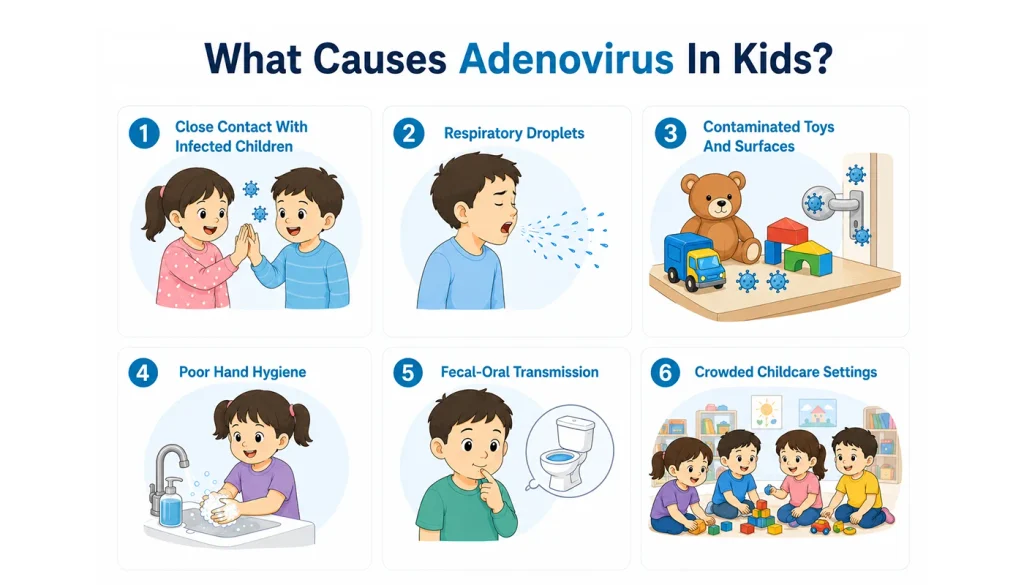
It can be concerning when a child becomes sick without an obvious reason, particularly because children often have frequent contact with other children. Certain exposures and everyday situations can increase the likelihood of adenovirus transmission in kids. Knowing these risk factors can help parents and caregivers reduce exposure and limit the spread of infection.
Close Contact With Infected Children
Children often spend time playing, sharing spaces, and interacting closely with others, which can increase opportunities for adenovirus transmission. Contact with an infected child’s respiratory secretions or other bodily fluids can allow the virus to spread. This makes schools, daycare centers, and households common settings for exposure.
Respiratory Droplets
An infected child can release virus-containing respiratory droplets when coughing, sneezing, or talking. These droplets can reach another child’s nose, mouth, or eyes and lead to infection. Close indoor contact can increase the likelihood of respiratory transmission.
Contaminated Toys And Surfaces
Children frequently touch toys, desks, door handles, and other shared objects before touching their faces. Adenovirus can remain infectious on some surfaces, allowing contaminated objects to contribute to transmission. Regular cleaning of frequently touched items can help reduce exposure.
Poor Hand Hygiene
Children may not wash their hands thoroughly or may frequently touch their eyes, nose, and mouth. If their hands become contaminated with adenovirus, these habits can provide an opportunity for the virus to enter the body. Teaching children proper handwashing can help reduce the risk of infection.
Fecal-Oral Transmission
Some adenovirus types can spread when tiny amounts of infected stool reach another person’s mouth. This can happen through contaminated hands, surfaces, food, or water. Careful handwashing after diaper changes and bathroom use is particularly important for preventing this route of transmission.
Crowded Childcare Settings
Daycare centers, schools, camps, and other group settings can increase exposure because children share spaces and have frequent close interactions. When an adenovirus infection is circulating, these conditions can make person-to-person transmission easier. Good hygiene and appropriate infection-control practices can help limit spread.
When To Go To The ER
Most adenovirus infections are mild, but severe or rapidly worsening illness may require emergency care. If symptoms become difficult to manage at home or there are signs of a serious complication, seeking prompt medical attention can help prevent the condition from becoming more dangerous.
- Difficulty breathing or severe shortness of breath.
- Chest pain or pressure.
- Blue, gray, or pale lips or skin.
- Severe dehydration or inability to keep fluids down.
- Very little or no urination.
- Confusion, fainting, or difficulty staying awake.
- Severe weakness or rapidly worsening illness.
- Seizures or loss of consciousness.
STAT Specialty Hospital For Adenovirus Care
Adenovirus can range from a mild infection to a more serious illness that requires prompt medical attention. If your condition worsens unexpectedly or you develop signs of a serious complication, timely evaluation can help identify the cause and determine the appropriate care. Our ER offers an average ER wait time of just 12 minutes, helping you receive prompt emergency care when you need it.
At STAT Specialty Hospital, our experienced emergency physicians can evaluate adenovirus-related illness, assess the severity of your condition, and provide appropriate treatment based on your needs. Seek emergency attention for severe difficulty breathing, chest pain, bluish lips or skin, confusion, severe dehydration, or rapidly worsening symptoms.
Key Takeaways
- Adenovirus is a group of viruses that can affect children and adults.
- It can spread through close contact, respiratory droplets, contaminated surfaces, and infected bodily fluids.
- Most adenovirus infections are mild, but some cases can become serious.
- People with weakened immune systems may have a higher risk of severe adenovirus infection.
- Severe breathing problems, chest pain, confusion, severe dehydration, or rapidly worsening illness require urgent medical attention.
Frequently Asked Questions
How Long Does Adenovirus Last?
Most adenovirus infections improve within a few days to a couple of weeks, depending on the type of infection and the person’s overall health. Some symptoms may persist longer, especially after respiratory infections.
How Long Is Adenovirus Contagious?
Adenovirus can remain contagious for days or even weeks after symptoms improve. The exact period varies by the adenovirus type and infection, so practicing good hand hygiene and avoiding close contact while sick can help reduce transmission.