

If your child or loved one suddenly develops a harsh cough, fever, or trouble breathing, it can be worrying, especially when symptoms seem to worsen quickly. You may wonder whether it is a common cold or something more serious.
Parainfluenza refers to a group of respiratory viruses that can cause infections ranging from mild cold-like symptoms to croup, bronchitis, and pneumonia. While many cases improve on their own, severe breathing symptoms require prompt medical attention. If symptoms become severe or breathing becomes difficult, seek care at our emergency room in Eagle Pass, which is available 24/7 for emergency medical needs.
Types Of Parainfluenza
It is understandable to feel concerned when respiratory symptoms become severe or keep getting worse. Parainfluenza viruses can affect people differently depending on the virus type, age, and overall health. Some infections cause mild cold-like symptoms, while others can affect the upper or lower airways. Knowing the differences can help you recognize symptoms and seek medical care when needed.
- Parainfluenza 1 (Human Parainfluenza Virus 1): This type commonly affects the upper airways and is a frequent cause of croup, particularly in young children. Symptoms may include a barking cough, hoarseness, fever, and noisy breathing.
- Parainfluenza 2 (Human Parainfluenza Virus 2): This type can cause croup and other upper respiratory infections. Symptoms may include cough, runny nose, sore throat, fever, and congestion.
- Parainfluenza 3 (Human Parainfluenza Virus 3): This type is more strongly associated with lower respiratory infections, including bronchiolitis and pneumonia. Infants, older adults, and people with weakened immune systems may have a higher risk of complications.
- Parainfluenza 4 (Human Parainfluenza Virus 4): This type is less commonly detected and generally causes milder respiratory illness. It can still cause cough, sore throat, congestion, and fever.
What Causes Parainfluenza?
It is understandable to feel concerned when a respiratory infection causes persistent coughing, fever, congestion, or breathing problems. Parainfluenza occurs when a person becomes infected with one of the human parainfluenza viruses (HPIVs), which spread mainly through respiratory secretions and close contact. Anyone can become infected, and people can develop parainfluenza more than once during their lifetime.
Parainfluenza 1
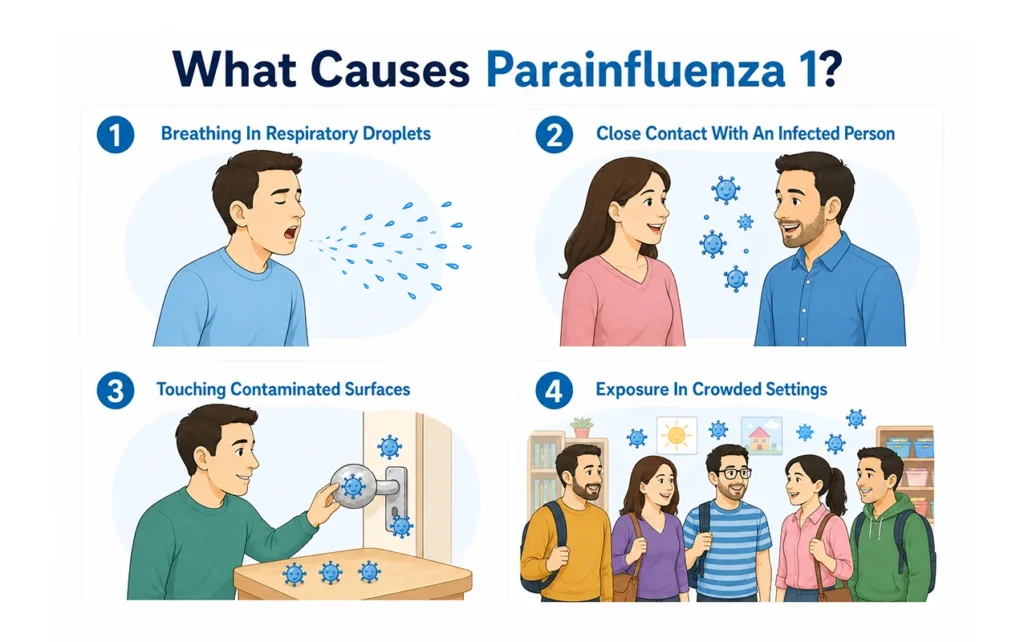
Parainfluenza 1, or HPIV-1, is commonly associated with croup in children, although it can also cause other respiratory infections. The virus spreads between people through respiratory droplets, close contact, and contaminated hands or surfaces.
1. Breathing In Respiratory Droplets
When someone infected with HPIV-1 coughs, sneezes, or breathes, virus-containing respiratory droplets can reach another person’s nose, mouth, or eyes. Close exposure increases the chance of transmission, particularly in poorly ventilated or crowded settings.
2. Close Contact With An Infected Person
Direct contact with an infected person can spread HPIV-1 when respiratory secretions are transferred between people. Activities such as hugging, kissing, shaking hands, or caring for someone who is sick can increase exposure. Children may face more opportunities for transmission because of frequent close contact at home, school, or daycare.
3. Touching Contaminated Surfaces
HPIV can remain infectious on some surfaces for several hours, depending on the surface and environmental conditions. Touching contaminated objects and then touching the eyes, nose, or mouth can provide another route of infection. Regular handwashing can help reduce this risk.
4. Exposure In Crowded Settings
Crowded environments can make respiratory viruses easier to spread because people have closer and more frequent contact. Childcare centers, schools, and households may facilitate transmission when an infected person is present. Good hand hygiene and limiting close contact while sick can help reduce exposure.
Parainfluenza 2
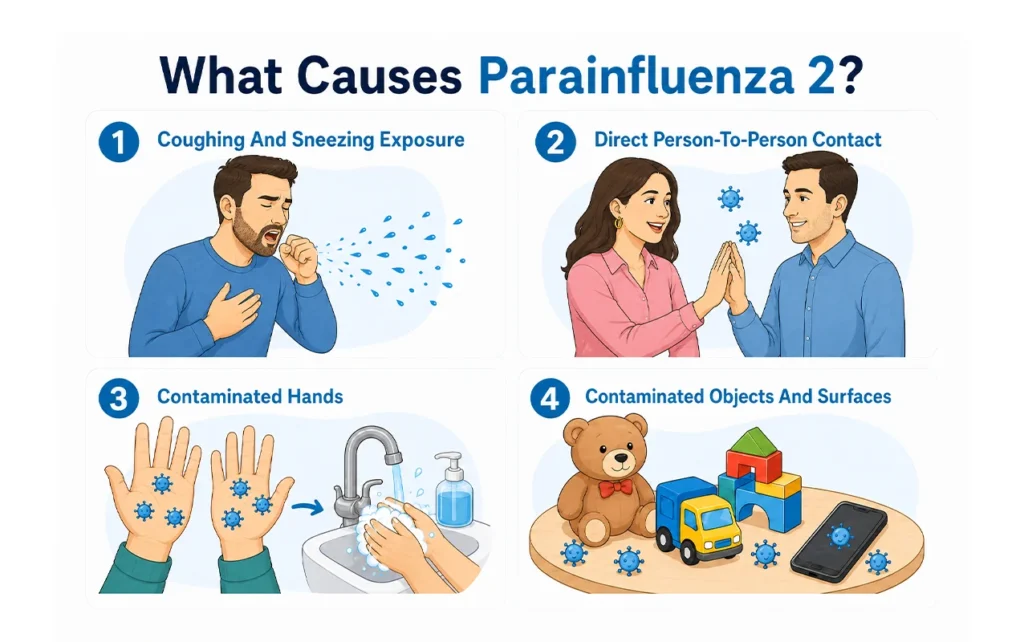
Parainfluenza 2, or HPIV-2, can cause croup and other upper or lower respiratory illnesses. Like the other HPIV types, it spreads between people through respiratory droplets, close contact, and contact with contaminated surfaces.
1. Coughing And Sneezing Exposure
Respiratory secretions released when an infected person coughs or sneezes can expose people nearby to HPIV-2. The virus may enter through the nose, mouth, or eyes when infectious droplets reach these areas. Close and prolonged exposure can increase the likelihood of infection.
2. Direct Person-To-Person Contact
Close physical contact with someone carrying HPIV-2 can transfer infectious respiratory secretions. Frequent contact is particularly relevant in households and childcare environments where people spend extended periods together. Avoiding close contact with someone who is sick can reduce opportunities for transmission.
3. Contaminated Hands
An infected person’s respiratory secretions can contaminate their hands during coughing, sneezing, or touching their nose and mouth. If those hands touch shared objects or another person’s hands, the virus may be transferred and later reach the nose, mouth, or eyes. Regular handwashing can help interrupt this route of spread.
4. Contaminated Objects And Surfaces
HPIV-2 may remain infectious on certain surfaces for a period of time. Touching contaminated objects and then touching the face can contribute to transmission. Cleaning frequently touched surfaces and practicing good hand hygiene can help lower the risk.
Parainfluenza 3
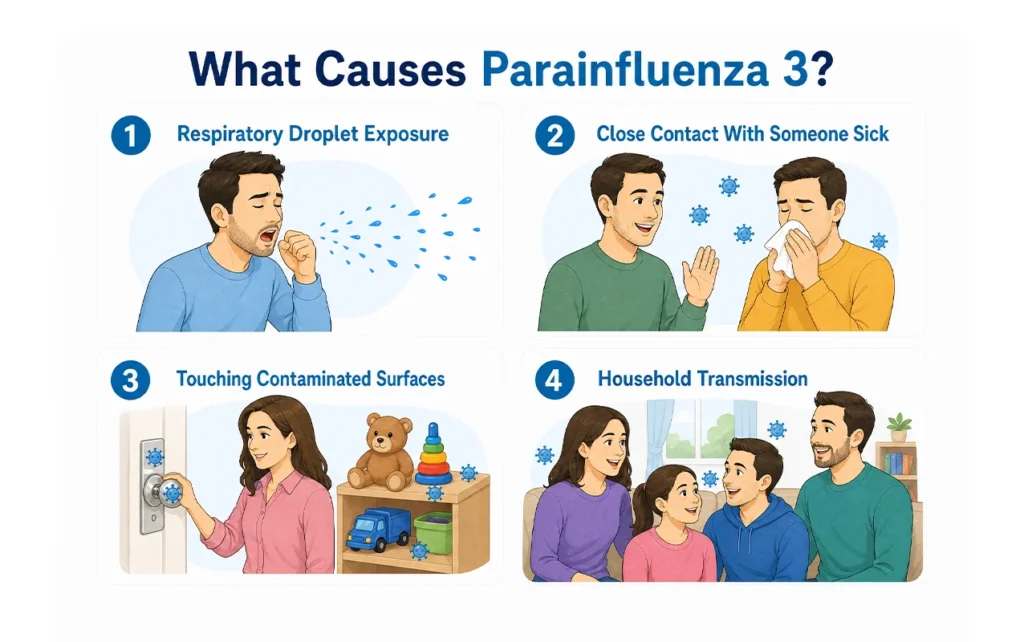
Parainfluenza 3, or HPIV-3, is more often associated with bronchiolitis, bronchitis, and pneumonia, particularly in young children. Infection occurs after exposure to the virus, which can spread through respiratory droplets, close contact, or contaminated surfaces.
1. Respiratory Droplet Exposure
Coughing and sneezing can release infectious respiratory droplets containing HPIV-3. People nearby may become infected when these droplets reach their respiratory tract. This is especially relevant during close, prolonged contact with an infected person.
2. Close Contact With Someone Sick
Being in close contact with a person who has HPIV-3 increases the opportunity for exposure to infectious respiratory secretions. This can occur at home, school, childcare, or other shared environments. Limiting close contact while someone has active respiratory symptoms can help reduce transmission.
3. Touching Contaminated Surfaces
HPIV-3 can persist on some surfaces for several hours depending on environmental conditions. Touching these surfaces and then touching the face can allow the virus to reach the eyes, nose, or mouth. Frequent handwashing is particularly important after touching shared or frequently handled objects.
4. Household Transmission
People living with someone who has a respiratory infection may have repeated close exposure to the virus. Household contact can therefore provide multiple opportunities for HPIV-3 transmission, especially when people share bedrooms or common spaces. Improving ventilation and avoiding close contact while sick may help reduce exposure.
Parainfluenza 4
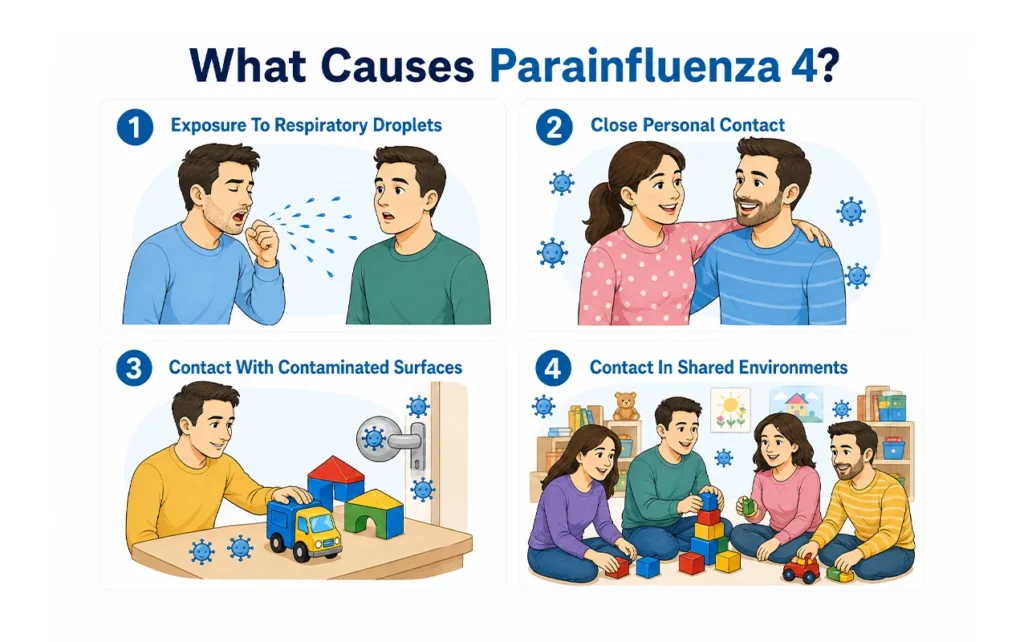
Parainfluenza 4, or HPIV-4, is detected less often than the other types, partly because testing is less frequent. It can still cause respiratory illness ranging from mild symptoms to more serious infections and spreads through the same general routes as other HPIVs.
1. Exposure To Respiratory Droplets
An infected person’s cough, sneeze, or respiratory secretions can expose others to HPIV-4. Infection can occur when the virus reaches the nose, mouth, or eyes. Because respiratory droplets are an important route of HPIV transmission, close proximity to an infected person can increase exposure.
2. Close Personal Contact
Close contact with an infected person can increase exposure to HPIV-4. Sharing living or caregiving spaces can make transmission more likely, particularly when respiratory secretions are present. Avoiding unnecessary close contact during active illness can help limit the spread.
3. Contact With Contaminated Surfaces
HPIV-4 may be transmitted when infectious respiratory secretions contaminate surfaces. Touching those surfaces and then touching the face can provide an opportunity for infection. Washing hands regularly can reduce the chance of transferring respiratory secretions to the eyes, nose, or mouth.
4. Contact In Shared Environments
Schools, childcare facilities, workplaces, and households can provide opportunities for respiratory virus transmission when an infected person is present. Close interactions and shared surfaces can increase exposure, particularly during respiratory illness outbreaks. Good hand hygiene and staying home when sick can help reduce the risk of spreading HPIV.
When To Go To The ER
Most parainfluenza infections are mild, but some can cause serious complications such as croup, bronchiolitis, or pneumonia. Seek emergency care if symptoms become severe, worsen quickly, or interfere with breathing.
- Difficulty Breathing: Severe shortness of breath, rapid breathing, or struggling to breathe requires immediate care.
- Severe Croup: Stridor, severe barking cough, or noisy breathing at rest can signal airway narrowing.
- Bluish Skin: Blue or gray lips, face, or skin may indicate low oxygen and require emergency care.
- Chest Pain: Severe or persistent chest pain, especially with breathing problems, needs urgent evaluation.
- Severe Dehydration: Seek care for very little urination, inability to drink, or severe weakness.
- Confusion: Extreme sleepiness, confusion, unresponsiveness, or seizures require immediate attention.
- Worsening Symptoms: Get urgent care if symptoms suddenly worsen or return more severely.
- High-Risk Patients: Infants, older adults, and immunocompromised people need prompt evaluation when symptoms worsen.
If symptoms become severe or breathing becomes difficult, visit the nearest emergency room for prompt medical evaluation and emergency care.
How To Treat Parainfluenza By Type
Treatment depends on the symptoms and severity rather than only the specific parainfluenza type. Most infections need supportive care at home, while complications such as croup, bronchiolitis, or pneumonia may require medical treatment.
Parainfluenza 1 Treatment
- Rest And Fluids: Rest and drink plenty of fluids to support recovery.
- Fever Relief: Acetaminophen or ibuprofen can help reduce fever and discomfort when used correctly.
- Croup Care: Severe croup may require steroids or other emergency treatment.
Parainfluenza 2 Treatment
- Stay Hydrated: Drink enough fluids to prevent dehydration.
- Manage Fever: Use age-appropriate fever reducers as directed.
- Ease Congestion: Saline drops and humidified air may help relieve congestion.
Parainfluenza 3 Treatment
- Rest And Hydration: Rest and fluids can support recovery from mild infection.
- Manage Symptoms: Fever, cough, and congestion can be treated with appropriate supportive care.
- Treat Pneumonia: Severe pneumonia or breathing problems may require oxygen and hospital care.
Parainfluenza 4 Treatment
- Supportive Care: Most cases are treated with rest, fluids, and symptom relief.
- Reduce Fever: Appropriate fever-reducing medicine may ease discomfort.
- Monitor Breathing: Seek medical care if coughing or breathing problems become severe.
STAT Specialty Hospital For Parainfluenza Care
Parainfluenza can cause mild respiratory symptoms but may lead to croup, bronchiolitis, or pneumonia. If symptoms worsen or breathing becomes difficult, timely medical evaluation is important. Our 24/7 emergency room is available to provide prompt evaluation and care when serious symptoms occur.
At STAT Specialty Hospital, experienced emergency physicians can evaluate parainfluenza, assess its severity, and provide appropriate care. Seek emergency attention for severe breathing problems, bluish lips or skin, chest pain, confusion, severe dehydration, or rapidly worsening symptoms.
Key Takeaways
- Parainfluenza is a group of respiratory viruses that can cause infections ranging from mild colds to croup, bronchiolitis, and pneumonia.
- Parainfluenza 1 and 2 are commonly linked to croup, especially in young children.
- Parainfluenza 3 can cause more serious lower respiratory infections, including bronchiolitis and pneumonia.
- Treatment usually focuses on rest, fluids, fever control, and relieving respiratory symptoms.
- Seek emergency care for severe breathing difficulty, bluish skin, chest pain, confusion, severe dehydration, or rapidly worsening symptoms.
Frequently Asked Questions
How Long Does Parainfluenza Last?
Most parainfluenza infections improve within several days to about a week, although cough and other respiratory symptoms may last longer. Severe infections can take more time to recover from.
Is Parainfluenza Contagious?
Yes. Parainfluenza is contagious and spreads mainly through respiratory droplets, close contact, and contaminated surfaces. Good hand hygiene and avoiding close contact while sick can help reduce transmission.
How Long Is Parainfluenza Contagious?
People are generally most contagious during the early days of illness. However, children and people with weakened immune systems may continue spreading the virus for longer.