
Dealing with sudden ear pain or changes in your hearing can be frightening, especially when it happens without warning. It is completely understandable to feel worried, frustrated, or unsure about what to do next. Knowing when to seek medical care can make a significant difference in protecting your hearing and preventing complications.
A ruptured eardrum should never be ignored, particularly if it is accompanied by severe pain, bleeding, dizziness, hearing loss, or fluid draining from the ear. While some cases heal on their own, others require prompt medical evaluation to reduce the risk of infection and long-term hearing problems. Seek timely care at our emergency room Laredo, TX, for proper evaluation and treatment when concerning symptoms appear.
What Does A Ruptured Eardrum Feel Like?
A ruptured eardrum often causes sudden, sharp ear pain followed by muffled hearing, ringing in the ear (tinnitus), dizziness, or fluid and bloody drainage. Some people also notice a feeling of pressure or balance problems. Prompt medical evaluation is important, especially after an injury or severe ear infection.
A prospective observational study published in the National Library of Medicine (PMC/PubMed) found that 88.6% of traumatic ruptured eardrums healed spontaneously within 12 weeks, although healing depended on factors such as the size and location of the perforation.
Dangerous Eardrum Rupture Signs To Watch For
- Severe or worsening ear pain.
- Sudden hearing loss or rapidly declining hearing.
- Bleeding or pus-like fluid draining from the ear.
- Persistent ringing in the ear (tinnitus).
- Severe dizziness, vertigo, or difficulty maintaining balance.
- Weakness or drooping on one side of the face.
- High fever or signs of a severe ear infection.
- Nausea or vomiting accompanied by dizziness.
- Symptoms that do not improve or continue to worsen after a few days.
- Ear injury caused by a significant blow, explosion, or penetrating object.
If you or a loved one experiences any of these warning signs, do not ignore them. Our earache emergency room provides prompt evaluation and treatment to address severe symptoms, prevent complications, and protect your hearing.
What Causes A Ruptured Eardrum?
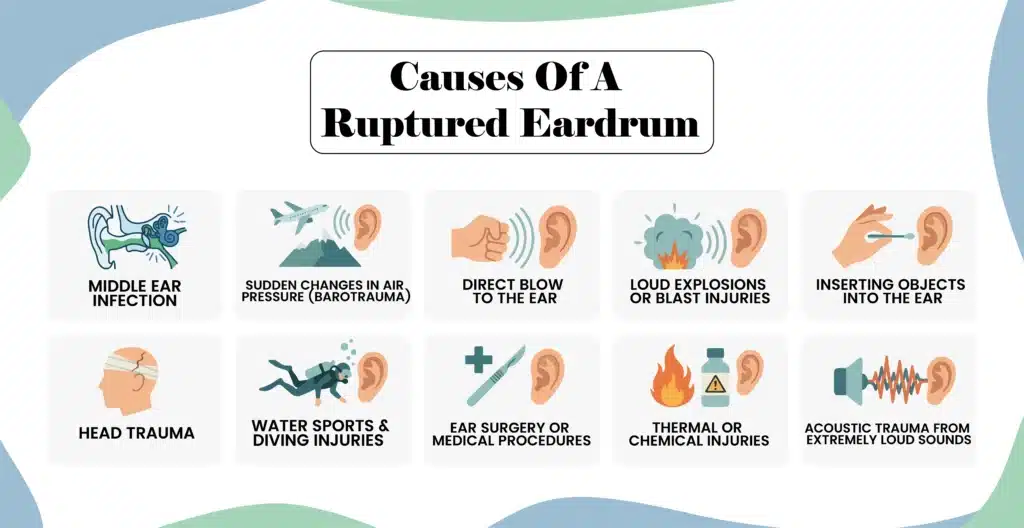
A ruptured eardrum can happen for several reasons, ranging from infections to sudden injuries or pressure changes. Identifying the underlying cause is important because it helps determine the most appropriate treatment and reduces the risk of hearing loss or other complications. Some causes require immediate medical attention, while others may heal with proper care.
Middle Ear Infection
A middle ear infection is one of the most common causes of a ruptured eardrum. As fluid and pus build up behind the eardrum, pressure increases until the membrane tears to relieve it. Although the pain may suddenly decrease after the rupture, medical treatment is still necessary to treat the infection and prevent complications.
Sudden Changes In Air Pressure (Barotrauma)
Rapid pressure changes during flying, scuba diving, or mountain travel can place excessive stress on the eardrum. If the pressure inside and outside the ear cannot equalize, the eardrum may tear. Equalizing ear pressure during travel can help lower this risk.
Direct Blow To The Ear
A strong impact to the side of the head or ear during sports, accidents, or physical assault can rupture the eardrum. The force creates a sudden pressure wave that damages the delicate membrane.
Loud Explosions Or Blast Injuries
Extremely loud noises from explosions, fireworks, or gunshots create powerful sound waves that can tear the eardrum. These injuries may also damage the inner ear, leading to hearing loss or balance problems. Immediate medical assessment is important after blast-related injuries.
Inserting Objects Into The Ear
Using cotton swabs, hairpins, keys, or other objects to clean the ear can accidentally puncture the eardrum. Children may also insert small objects into their ears, increasing the risk of injury. The ear usually cleans itself naturally, making deep cleaning unnecessary.
Head Trauma
Serious head injuries from falls, vehicle accidents, or sports can damage the structures of the ear, including the eardrum. A rupture caused by head trauma may occur alongside other serious injuries. Emergency medical care is essential if a head injury is suspected.
Water Sports And Diving Injuries
High-impact water activities such as diving, waterskiing, or jumping into water incorrectly can create sudden pressure against the ear. This force may rupture the eardrum, especially if the ear strikes the water at high speed. Proper technique and protective equipment can help reduce the risk.
Ear Surgery Or Medical Procedures
Although uncommon, certain ear procedures or surgeries can accidentally injure the eardrum. In most cases, these injuries are recognized quickly and managed by the treating healthcare provider. Following post-procedure instructions helps support proper healing.
Thermal Or Chemical Injuries
Exposure to hot liquids, steam, or harsh chemicals entering the ear can damage the eardrum and surrounding tissues. These injuries may cause severe pain, hearing changes, and inflammation. Immediate medical care is recommended to limit further damage.
Acoustic Trauma From Extremely Loud Sounds
Repeated or sudden exposure to extremely loud sounds, such as industrial machinery or high-volume speakers, can sometimes rupture the eardrum. The risk is greater when the sound is intense and occurs at close range. Wearing appropriate hearing protection helps prevent noise-related ear injuries.
When To Go To The ER
A ruptured eardrum can sometimes heal on its own, but certain symptoms may indicate a serious injury or infection that requires emergency care. Seek immediate medical attention if you experience any of the following warning signs.
- Sudden or complete hearing loss.
- Severe ear pain that is worsening or unbearable.
- Heavy bleeding or continuous fluid draining from the ear.
- Severe dizziness, vertigo, or difficulty walking.
- Loss of consciousness after a head or ear injury.
- Weakness or drooping on one side of the face.
- A high fever with severe ear pain or pus-like drainage.
- Persistent nausea or vomiting with dizziness.
- A ruptured eardrum caused by a serious head injury, explosion, or penetrating object.
- Symptoms that rapidly worsen or do not improve after initial treatment.
If you are experiencing severe or worsening symptoms, getting evaluated quickly can help prevent complications and support proper healing. Visit the closest emergency room near me for immediate medical assessment and treatment when urgent ear symptoms occur.
Ruptured Eardrum Treatment
Treatment for a ruptured eardrum depends on the size of the tear, its cause, and whether an infection is present. While many cases heal on their own, others require medical treatment to prevent complications and protect your hearing. Early evaluation helps ensure the best recovery and reduces the risk of long-term damage.
- Observation And Follow-Up: Many small ruptured eardrums heal on their own within a few weeks. Your doctor may monitor the healing process with follow-up ear examinations to ensure the tear is closing properly.
- Over-The-Counter Pain Relievers: Most doctors recommend over-the-counter pain relievers such as acetaminophen or ibuprofen to help relieve ear pain and reduce discomfort.
- Prescription Antibiotic Ear Drops: Most doctors recommend prescription antibiotic ear drops if a bacterial infection is present or there is a high risk of infection. These medications help clear the infection while protecting the healing eardrum.
- Oral Antibiotics: Most doctors recommend oral antibiotics when the infection extends beyond the ear or is more severe. These medications should only be taken as prescribed and the full course should be completed.
- Keeping The Ear Dry: Preventing water from entering the ear is an important part of treatment. Use a waterproof ear covering while showering and avoid swimming until your healthcare provider confirms the eardrum has healed.
- Avoiding Pressure Changes: Avoid flying, scuba diving, forceful nose blowing, or activities that increase pressure inside the ear. These actions can delay healing or make the tear larger.
- Eardrum Patching (Paper Patch): If the tear does not heal on its own, an ear specialist may place a special paper patch over the perforation. This procedure encourages the edges of the eardrum to grow together and heal.
- Tympanoplasty Surgery: Larger or persistent perforations may require tympanoplasty, a surgical procedure that repairs the eardrum using a small tissue graft. Surgery is usually recommended when the tear does not heal naturally or causes ongoing hearing problems.
- Treating The Underlying Cause: If the rupture resulted from an ear infection, injury, or pressure-related damage, treating the underlying condition is essential. Addressing the cause helps prevent repeat injuries and supports complete recovery.
- Hearing Evaluation And Follow-Up Care: Your doctor may recommend hearing tests after treatment, especially if hearing loss continues. Regular follow-up appointments ensure the eardrum is healing properly and help identify any complications early.
Ruptured Eardrum Care At STAT Specialty Hospital
A ruptured eardrum (perforated eardrum) can lead to pain, hearing changes, dizziness, and an increased risk of infection if left untreated. At STAT Specialty Hospital, patients with suspected eardrum injuries receive prompt evaluation to determine the severity of the perforation and identify any underlying infection or trauma affecting the ear. Our 24/7 emergency room provides timely care when urgent evaluation and treatment are needed.
At STAT Specialty Hospital, our specialists provide evidence-based care tailored to each patient’s condition, whether the injury requires observation, medication, or advanced treatment. Our goal is to relieve symptoms, support proper healing, protect your hearing, and help prevent long-term complications through timely, personalized care.
Key Takeaways
- A ruptured eardrum is a tear or hole in the eardrum that can affect hearing and increase the risk of infection.
- Common symptoms include sudden ear pain, hearing loss, ringing in the ear, dizziness, and ear drainage.
- Middle ear infections, injuries, loud noises, and sudden pressure changes are among the most common causes.
- Seek emergency care for severe hearing loss, heavy bleeding, facial weakness, severe dizziness, or head trauma.
- Many small eardrum perforations heal on their own, but some require medication or surgical repair.
- Keep the affected ear dry and avoid inserting objects into the ear while it heals.
- Early diagnosis and treatment can help prevent complications and protect long-term hearing.
Frequently Asked Questions
What Side Should I Sleep On With A Ruptured Eardrum?
Sleep with the affected ear facing upward to reduce pressure and encourage drainage. Elevating your head with an extra pillow may also improve comfort. Follow your healthcare provider’s instructions for the best recovery.
Is A Ruptured Eardrum Painful?
Yes. A ruptured eardrum often causes sudden, sharp ear pain, although the pain may lessen after the tear occurs. Other symptoms can include hearing loss, ringing in the ear, dizziness, and ear drainage.
How Long Does A Ruptured Eardrum Take To Heal?
Most small ruptured eardrums heal within a few weeks, while larger tears may take several months or require treatment. Recovery depends on the size, cause, and whether an infection is present.
Can A Ruptured Eardrum Heal On Its Own?
Yes. Many small eardrum perforations heal naturally with proper care, especially if the ear is kept dry and free from infection. However, larger or persistent tears may require medical procedures or surgery.
Are Ear Infections Contagious?
No, ear infections themselves are not contagious. However, the viruses or bacteria that can cause an ear infection, such as those responsible for colds or respiratory infections, can spread from person to person. Practicing good hygiene, including frequent handwashing and covering coughs or sneezes, can help reduce the risk of these infections.
Do Ear Infections Go Away On Their Own?
Yes, many ear infections, especially mild viral infections, can go away on their own as the immune system fights off the infection. Symptoms often improve within a few days. However, persistent pain, high fever, fluid drainage, or signs of a bacterial infection may require medical treatment. Prompt evaluation and appropriate ear infection treatment can help prevent complications.