

It can be frightening to see someone suddenly lose awareness, stare blankly, or experience uncontrolled body movements without warning. Many families feel confused and anxious during these episodes, especially when they happen for the first time. Understanding Types of Seizures helps people recognize what may be occurring and seek the right care.
Some seizures can be brief and may stop on their own, but others can signal a serious neurological issue that needs urgent attention. Sudden convulsions, loss of consciousness, or repeated jerking movements should never be ignored. Immediate medical evaluation at an Emergency Room in Del Rio is important, especially if the episode is prolonged or affects breathing.
What Is A Seizure?
A seizure is a sudden burst of abnormal electrical activity in the brain that temporarily disrupts normal communication between nerve cells. This can affect movement, awareness, behavior, or sensation depending on the brain region involved. Common symptoms include staring spells, confusion, uncontrolled jerking movements, or brief loss of consciousness. Seizures may last seconds to minutes and can occur once or repeatedly depending on the underlying cause, and some cases may require seizure treatment emergency care.
A PubMed-indexed review published in Epilepsia by Hauser and Beghi (2008) reports that the incidence of a first unprovoked seizure ranges from 23 to 61 per 100,000 person-years, highlighting that new seizures are a clinically significant neurological event worldwide.
Dangerous Seizure Symptoms
- Seizure lasting over 5 minutes.
- Repeated seizures without recovery.
- Breathing difficulty or blue lips.
- Prolonged confusion or unresponsiveness.
- Injury during seizure.
- First-time seizure in adults.
Seizure Types And Their Symptoms
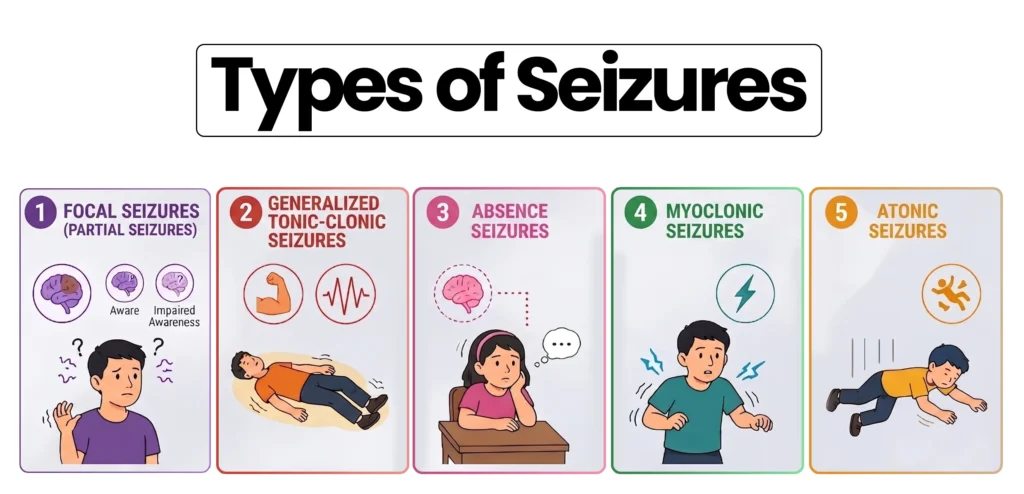
Seizures can present in many different ways depending on where abnormal electrical activity starts in the brain. Some episodes may be subtle and brief, while others can cause full loss of consciousness and intense physical movements. These events can be alarming, especially when they occur without warning. Understanding how they present is important for early recognition and knowing when to visit the closest emergency room near me.
Focal Seizures (Partial Seizures)
Focal seizures begin in one specific area of the brain and may affect movement, sensation, or awareness. Some individuals stay fully conscious, while others may feel confused or disconnected from their surroundings. These seizures can remain localized or spread to other brain regions. Symptoms vary widely depending on the affected brain area.
Symptoms
- Jerking or twitching in one part of the body
- Unusual smells, tastes, or sensations
- Staring with reduced awareness
- Sudden confusion or fear
- Repetitive movements like lip smacking
Generalized Tonic-Clonic Seizures
These seizures involve both sides of the brain from the start and are often more severe. They typically include a sudden loss of consciousness followed by muscle stiffening and rhythmic jerking. The episode can last several minutes and is followed by a recovery phase with fatigue and confusion. These seizures usually require urgent medical evaluation.
Symptoms
- Sudden collapse and loss of consciousness
- Body stiffening followed by jerking movements
- Tongue biting or drooling
- Loss of bladder control
- Post-seizure confusion and exhaustion
Absence Seizures
Absence seizures are brief episodes that may look like staring spells or daydreaming. They are most common in children but can continue into adulthood. These seizures usually last only a few seconds and may occur many times a day. Because of their subtle nature, they are often mistaken for inattention.
Symptoms
- Sudden blank staring
- Brief loss of awareness
- Subtle blinking or lip movements
- No response during the episode
- Immediate return to normal activity
Myoclonic Seizures
Myoclonic seizures cause sudden, brief muscle jerks that can affect one part or the whole body. These movements are usually very quick and may happen in clusters. They often occur shortly after waking up and can be mistaken for clumsiness. In some cases, they are linked to epilepsy syndromes.
Symptoms
- Sudden muscle jerks or twitches
- Brief shock-like movements
- Dropping objects unexpectedly
- Occur in clusters
- No loss of awareness in most cases
Atonic Seizures
Atonic seizures cause a sudden loss of muscle tone, leading to collapse or head drop. They are often referred to as “drop attacks” because they can cause falls. These seizures are brief but can lead to injury due to sudden loss of control. They are more common in certain epilepsy syndromes.
Symptoms
- Sudden collapse or falling
- Head dropping forward
- Brief loss of muscle control
- Possible injury from falls
- Very short duration
When To Go To The ER
A seizure can sometimes be a medical emergency, especially when it lasts too long, happens repeatedly, or causes serious physical or breathing problems. Quick medical attention at a 24/7 emergency room is important to prevent complications and ensure the brain is not under prolonged stress.
- Seizure lasting more than 5 minutes.
- Repeated seizures without full recovery in between.
- Difficulty breathing or turning blue.
- Serious injury during a seizure, such as head trauma.
- First-ever seizure in an adult.
- Confusion or unresponsiveness lasting unusually long.
- Seizure occurring in water or during pregnancy.
How To Treat Seizures
Seizure treatment depends on the underlying cause, type, and severity of the condition. The main goal is to control episodes, prevent recurrence, and reduce the risk of complications. Some cases need long-term therapy, while others may only require short-term management after proper diagnosis. Medical evaluation is essential to choose the safest and most effective approach.
- Antiseizure Medications (First-Line Treatment): Most doctors recommend drugs like levetiracetam, valproate, or lamotrigine to help control abnormal brain activity and reduce seizure frequency.
- Emergency Seizure Medications: Benzodiazepines such as diazepam or lorazepam are used in emergencies to quickly stop prolonged seizures, as most doctors recommend them for urgent care.
- Over-The-Counter Supportive Medicines: OTC drugs may help with symptoms like fever or pain, but they do not treat seizures directly and should only be used with medical advice.
- Ketogenic Diet Therapy: A high-fat, low-carb diet may help reduce seizures, especially in children with drug-resistant epilepsy, under medical supervision.
- Surgical Procedures: In severe cases not responding to medication, surgery may be considered to remove or target the seizure focus in the brain.
- Vagus Nerve Stimulation (VNS Therapy): An implanted device helps regulate brain activity and may reduce seizure frequency in resistant cases.
Types Of Seizures Care At STAT Specialty Hospital
Seizures can be unpredictable and may require urgent medical attention to ensure patient safety and proper diagnosis. At STAT Specialty Hospital, patients experiencing neurological symptoms are evaluated promptly using advanced diagnostic tools and clinical expertise. Our goal is to identify the underlying cause and provide immediate stabilization to reduce risks and complications.
At STAT Specialty Hospital, Types Of Seizures are carefully assessed and managed with evidence-based treatment plans tailored to each patient’s condition. Our team focuses on long-term seizure control, patient education, and follow-up care to improve quality of life and prevent future episodes.
Key Takeaways
- Seizures are caused by sudden abnormal electrical activity in the brain and can vary in severity and symptoms
- Early recognition of warning signs like loss of consciousness, jerking movements, or confusion is crucial
- Seizures are classified into different types, including focal, generalized tonic-clonic, absence, myoclonic, and atonic seizures
- Some seizures can become medical emergencies, especially if they last longer than 5 minutes or occur repeatedly
- Proper diagnosis is essential because treatment depends on the underlying cause and seizure type
- Treatment options include antiseizure medications, emergency drugs, diet therapy, and in some cases surgical procedures
- Timely medical care can significantly reduce complications and improve long-term seizure control
Frequently Asked Questions
What Causes Seizures?
Seizures can develop due to multiple factors such as epilepsy, head trauma, stroke, brain infections, tumors, genetic conditions, high fever, low blood sugar, or certain medications. In some cases, no clear cause is identified even after detailed medical testing and evaluation.
What Does A Seizure Feel Like?
The experience of a seizure varies depending on its type and the brain area involved. Some people notice warning signs like strange sensations, anxiety, or confusion, while others may suddenly lose awareness or experience shaking and uncontrolled movements without remembering the event.
What To Do If Someone Has A Seizure?
Stay calm and make sure the person is safe by clearing nearby objects that could cause injury. Gently turn them onto their side if possible and avoid restraining them or placing anything in their mouth. Call emergency services immediately if the seizure lasts longer than 5 minutes, repeats, or if breathing becomes difficult.