

If you are feeling sick, uneasy, and unsure what is causing the nausea, it can be both uncomfortable and concerning. Many people wonder, Can a UTI Cause Nausea? When symptoms appear suddenly without a clear explanation, especially when they start affecting daily comfort and energy.
At our emergency room Eagle Pass, TX, we often see patients who are surprised that a urinary tract infection can go beyond burning or frequent urination. In some cases, it can also trigger nausea, and when the infection becomes more serious or reaches the kidneys, it may require urgent medical evaluation and treatment.
What Is a UTI?
A urinary tract infection (UTI) is a bacterial infection affecting the urinary system, including the bladder, urethra, ureters, or kidneys. It most commonly occurs when bacteria such as E. coli enter the urinary tract and multiply, leading to inflammation and irritation.
According to an NIH-supported study published in the National Library of Medicine, UTIs are among the most common outpatient infections, with a lifetime incidence of 50%–60% in adult women.
UTI Symptoms That Are Dangerous
- High fever or chills.
- Severe nausea or vomiting.
- Pain in the lower back or side near the kidneys.
- Blood in the urine.
- Confusion, dizziness, or extreme weakness.
- Difficulty urinating or inability to urinate.
- Rapid heartbeat or trouble breathing.
- Severe pelvic or abdominal pain.
- Symptoms that worsen quickly despite treatment.
- Signs of dehydration, such as dry mouth or fainting.
What Is Nausea?
Nausea is the uneasy sensation that makes a person feel like they may vomit, often accompanied by stomach discomfort, sweating, dizziness, or loss of appetite. Infections such as UTIs can trigger nausea when inflammation and immune system responses begin affecting the stomach and nervous system.
According to an NIH-published study in American Family Physician, nausea and vomiting affect about 50% to 90% of pregnancies, demonstrating how common and medically significant these symptoms are across healthcare settings.
Nausea Symptoms That Should Never Be Ignored
- Persistent nausea lasting more than 24–48 hours.
- Repeated vomiting or inability to keep fluids down.
- Signs of dehydration such as dry mouth, dark urine, or dizziness.
- Severe abdominal pain or cramping.
- High fever or chills along with nausea.
- Blood in vomit or vomit that looks like coffee grounds.
- Sudden, severe headache or confusion.
- Chest pain or difficulty breathing.
- Unexplained weight loss or loss of appetite.
- Nausea accompanied by severe weakness or fainting.
If you or a loved one experiences these symptoms, visit a nausea emergency room immediately for prompt medical evaluation and treatment.
Also read: What Causes Nausea
Can UTI Cause Nausea
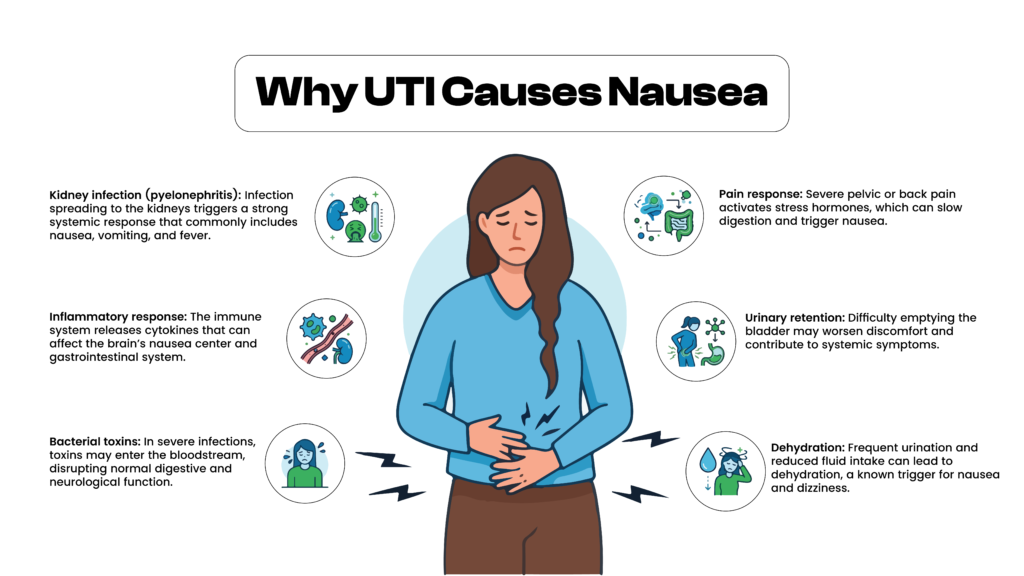
Yes, a urinary tract infection (UTI) can cause nausea, especially when the infection becomes more severe or spreads beyond the bladder. While mild UTIs may only cause urinary symptoms, more advanced infections can affect the whole body and lead to stomach discomfort, loss of appetite, and nausea. In some cases, this symptom indicates that the infection may involve the kidneys and requires prompt medical attention.
Why UTI Causes Nausea
- Kidney infection (pyelonephritis): Infection spreading to the kidneys triggers a strong systemic response that commonly includes nausea, vomiting, and fever.
- Inflammatory response: The immune system releases cytokines that can affect the brain’s nausea center and gastrointestinal system.
- Bacterial toxins: In severe infections, toxins may enter the bloodstream, disrupting normal digestive and neurological function.
- Pain response: Severe pelvic or back pain activates stress hormones, which can slow digestion and trigger nausea.
- Urinary retention: Difficulty emptying the bladder may worsen discomfort and contribute to systemic symptoms.
- Dehydration: Frequent urination and reduced fluid intake can lead to dehydration, a known trigger for nausea and dizziness.
When To Go To The ER
You should go to the ER if UTI symptoms become severe, worsen quickly, or start affecting your whole body. While mild UTIs can often be treated with antibiotics, certain symptoms may indicate a more serious infection that requires urgent medical care to prevent complications.
- High fever or chills: A fever above 101°F (38.3°C) with chills may suggest the infection has reached the kidneys or bloodstream and needs immediate evaluation.
- Severe nausea or vomiting: If nausea prevents you from keeping fluids or medication down, it can quickly lead to dehydration and signals a more serious infection.
- Back or side pain (kidney area): Pain in the lower back or sides may indicate a kidney infection, which requires prompt ER treatment to avoid complications.
- Blood in urine: Visible blood or dark, cloudy urine can be a sign of worsening infection or inflammation in the urinary tract.
- Confusion, weakness, or dizziness: These symptoms may suggest the infection is affecting the whole body and could be becoming systemic.
- Worsening or persistent symptoms: If symptoms do not improve within 24–48 hours of treatment or rapidly worsen, emergency evaluation is recommended.
How To Get Rid Of Nausea From UTI
Nausea caused by a UTI usually improves once the underlying infection is treated. The main focus is controlling the infection, staying hydrated, and supporting the body until antibiotics start working. If symptoms are severe or persistent, medical evaluation is important to prevent complications like kidney involvement.
- Treat the underlying UTI: Antibiotics prescribed by the doctor are the most important treatment. Once the infection is controlled, nausea typically reduces within a few days.
- Stay well hydrated: Drinking water helps flush bacteria from the urinary tract and can also reduce nausea. Small, frequent sips are easier to tolerate if you feel sick.
- Use anti-nausea medication (if prescribed by the doctor): Doctors may prescribe antiemetic medicines to control nausea and vomiting, especially if you cannot keep fluids or antibiotics down.
- Eat light, bland foods: Foods like toast, rice, bananas, and crackers are easier on the stomach and can help reduce nausea without worsening symptoms.
- Rest and avoid irritants: Rest helps the body fight infection. Avoid caffeine, alcohol, and spicy foods as they can irritate the bladder and worsen discomfort.
- Monitor symptoms closely: If nausea worsens, or you develop fever, back pain, or vomiting, seek emergency care immediately, as it may indicate a kidney infection.
Can a UTI Cause Nausea at STAT Specialty Hospital
A urinary tract infection can sometimes lead to symptoms beyond urinary discomfort, especially when the infection becomes more severe. If you are experiencing nausea along with burning urination, fever, or weakness, it may be a sign that the infection needs prompt medical attention. Early evaluation helps prevent complications and ensures proper treatment.
At STAT Specialty Hospital, we frequently evaluate patients who ask, “Can a UTI Cause Nausea?” when their symptoms start to worsen or feel unusual. Nausea in these cases should not be ignored, especially if it is accompanied by back pain or vomiting, as it may indicate kidney involvement and the need for urgent care.
Key Takeaway
- A urinary tract infection (UTI) is a bacterial infection that can affect the bladder, urethra, or kidneys
- UTIs can cause symptoms beyond urinary issues, including nausea, especially in more severe cases
- Kidney involvement is one of the main reasons UTI symptoms become systemic and include nausea, fever, and vomiting
- Inflammation, immune response, and bacterial toxins can also contribute to nausea
- Additional factors like pain, dehydration, and stress response may worsen nausea in UTI patients
- Dangerous symptoms include high fever, severe vomiting, back pain, blood in urine, and confusion
- Nausea from UTI is usually treated by addressing the infection with antibiotics prescribed by the doctor
- Anti-nausea medications prescribed by the doctor, hydration, and rest can help manage symptoms
- Seek emergency care if symptoms worsen or do not improve within 24–48 hours
- Early evaluation at facilities like STAT Specialty Hospital helps prevent complications and supports faster recovery
FAQ
Can a UTI go away on its own?
Mild UTIs may improve with hydration, but most require antibiotics prescribed by a doctor to fully clear the infection and prevent complications.
How long does a UTI last?
With antibiotics prescribed by a doctor, symptoms usually improve in 24–48 hours and clear in 3–7 days, but without treatment, they can worsen or spread.
Are UTIs contagious?
UTIs are not directly contagious, but bacteria can spread during sexual activity, increasing the risk of infection.
What to take for nausea?
Fluids, rest, and bland foods can help with mild nausea, while stronger symptoms may require anti-nausea medication prescribed by a doctor.