

When allergies leave you dealing with a stuffy nose, sneezing, facial pressure, or constant postnasal drip, it can be frustrating to figure out what is really happening. Sometimes, these symptoms may feel like more than a typical allergy flare-up.
So, does allergy cause sinusitis? It can. Allergies may trigger inflammation and swelling that interfere with normal sinus drainage, creating conditions that can contribute to sinusitis. If your symptoms are worsening or not going away, it is important to know when they need medical attention. For prompt evaluation, visit our emergency room in Eagle Pass.
Dangerous Allergy-Related Sinusitis Symptoms
Allergies and sinusitis can produce overlapping symptoms, making it difficult to tell them apart based on congestion alone. Allergic inflammation can cause swelling in the nasal passages and interfere with sinus drainage, potentially contributing to sinusitis.
A large NHANES-based study found sinusitis occurred in 22.4% of people with allergy symptoms, compared with 7.1% without allergy symptoms, suggesting a significant association.
- Nasal congestion or stuffy nose.
- Sneezing.
- Runny nose.
- Postnasal drip.
- Facial pressure or pain.
- Headache.
- Itchy or watery eyes.
- Reduced sense of smell.
- Thick nasal drainage.
- Cough.
- Fatigue.
- Fever, which is more suggestive of an infection than allergies.
If allergy or sinusitis symptoms are severe, worsening, or difficult to manage, seek prompt allergy care to evaluate your symptoms and prevent potential complications.
How Allergy Causes Sinusitis
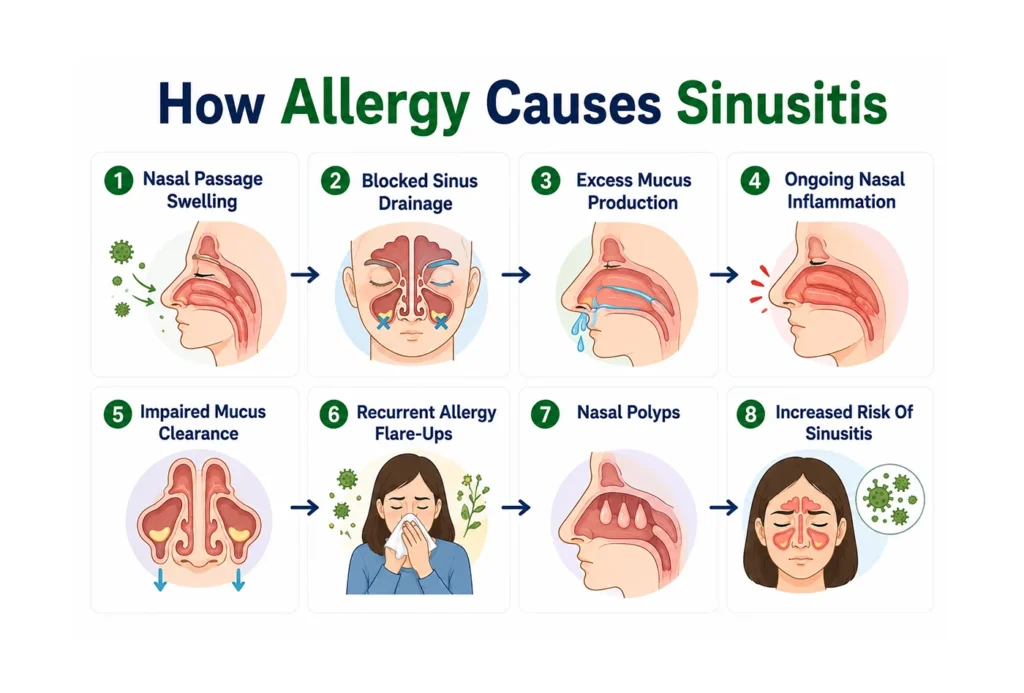
If you frequently deal with allergies, ongoing nasal congestion and sinus pressure can become frustrating and uncomfortable. Allergic inflammation can affect the normal function of the nose and sinuses, making it harder for mucus to move through the sinus passages. Over time, this may create conditions that contribute to sinusitis, although allergies are not the only factor involved.
Nasal Passage Swelling
Allergic reactions can cause the tissues lining the nose to become swollen and inflamed. This swelling can narrow the spaces through which air and mucus normally pass. When the nasal passages remain congested, normal sinus drainage can become more difficult.
Blocked Sinus Drainage
Healthy sinuses need to drain mucus continuously into the nasal cavity. Allergy-related inflammation can contribute to blockage around the sinus openings, preventing mucus from flowing out normally. When drainage is impaired, mucus can become trapped inside the sinuses and contribute to inflammation.
Excess Mucus Production
Allergic reactions can stimulate the nasal glands and increase mucus production. When this occurs alongside swollen nasal tissues, mucus may have difficulty moving through the normal drainage pathways. The resulting congestion can contribute to the conditions associated with sinusitis.
Ongoing Nasal Inflammation
Repeated exposure to allergens can keep the nasal lining inflamed for extended periods. Persistent inflammation may affect the tissues surrounding the sinus openings and contribute to ongoing nasal and sinus symptoms. Research suggests that chronic allergic inflammation may worsen or contribute to chronic rhinosinusitis in some people.
Impaired Mucus Clearance
The sinuses rely on tiny hair-like structures called cilia to move mucus toward the nasal cavity. Inflammation and congestion can interfere with normal mucociliary clearance, allowing mucus to remain in the sinus passages for longer. This impaired clearance can contribute to sinus inflammation and blockage.
Recurrent Allergy Flare-Ups
Frequent allergy flare-ups can repeatedly expose the nasal passages to inflammation. If congestion and swelling return whenever a person encounters an allergen, the sinus drainage pathways may repeatedly become affected. This ongoing cycle may increase the likelihood of persistent or recurrent sinus symptoms.
Nasal Polyps
Nasal polyps are soft, noncancerous growths that can develop from chronic inflammation in the nose or sinuses. When they become large enough, they can further obstruct nasal passages and interfere with sinus drainage. Allergic inflammation may coexist with conditions involving nasal polyps and chronic rhinosinusitis.
Increased Risk Of Sinusitis
People experiencing allergy symptoms may have a greater likelihood of experiencing sinusitis, although the relationship is complex and does not mean allergies directly cause every case. One NHANES-based study of 7,244 participants found sinusitis was reported in 22.4% of those with allergy symptoms compared with 7.1% of those without allergy symptoms.
When To Go To The ER
Most allergy-related sinus symptoms do not require emergency care, but certain warning signs can indicate a serious infection or complication. Seek emergency medical attention if symptoms become severe, spread around the eyes, affect your vision, or involve neurological changes.
- Severe or rapidly worsening headache.
- Swelling, redness, or severe pain around the eyes.
- Double vision, blurred vision, or other sudden vision changes.
- High fever accompanied by severe sinus symptoms.
- Confusion or unusual changes in mental alertness.
- Stiff neck.
- Swelling of the forehead.
- Difficulty moving the eye or severe eye pain.
- Symptoms that suddenly become much worse.
If you experience these warning signs, visit an ER near me for prompt evaluation and treatment.
How To Treat Allergy-Related Sinusitis
Allergy-related sinus symptoms can be uncomfortable and may keep returning without proper treatment. Care focuses on reducing inflammation, easing congestion, improving sinus drainage, and controlling allergy symptoms. Most doctors recommend treatment based on symptom severity and how long the symptoms have lasted.
- Nasal Corticosteroid Sprays: Most doctors recommend these as a first-line option to reduce nasal swelling, congestion, sneezing, and drainage.
- Antihistamines: Most doctors recommend newer antihistamines to relieve allergy symptoms such as sneezing, itching, and runny nose.
- Saline Nasal Rinses: Most doctors recommend saline rinses to clear mucus and allergens from the nasal passages. Use distilled, sterile, or boiled and cooled water.
- Decongestants: Most doctors recommend using these only for short-term relief when appropriate. Nasal sprays should not generally be used for more than three days.
- Avoiding Allergens: Most doctors recommend limiting exposure to triggers such as pollen, dust mites, mold, and pet dander to reduce recurring inflammation.
- Allergy Immunotherapy: Most doctors recommend allergy shots or other immunotherapy when symptoms remain difficult to control with standard treatments.
- ENT Evaluation: Most doctors recommend specialist evaluation when symptoms repeatedly return or fail to improve, especially if nasal polyps or structural blockage are suspected.
- Sinus Surgery: Most doctors recommend surgery only when persistent sinus problems do not respond to appropriate medical treatment or significant blockage requires correction.
STAT Specialty Hospital For Allergy-Related Sinusitis Care
Allergies can cause persistent congestion, facial pressure, drainage, and other uncomfortable symptoms that may affect your daily life. If symptoms become severe, worsen suddenly, or are accompanied by concerning signs, prompt medical evaluation can help identify the cause and prevent complications. Our ER offers an average wait time of just 12 minutes, helping you get the care you need without a long wait.
At STAT Specialty Hospital, our experienced emergency physicians can evaluate whether allergy causes sinusitis and determine the appropriate treatment based on your symptoms. From diagnostic evaluation and medication to IV fluids and other supportive care when medically necessary, our team provides compassionate emergency care for children and adults 24/7.
Key Takeaways
- Allergies can contribute to sinusitis by causing nasal inflammation, swelling, and impaired sinus drainage.
- Allergy symptoms and sinusitis symptoms can overlap, but they are not the same condition.
- Common symptoms include nasal congestion, sneezing, postnasal drip, facial pressure, headache, and reduced sense of smell.
- Treating allergies may help reduce inflammation and lower the risk of recurring sinus problems.
- Seek emergency care for severe headache, swelling around the eyes, vision changes, confusion, stiff neck, or rapidly worsening symptoms.
Frequently Asked Questions
Can Allergies Cause A Sore Throat?
Yes. Allergies can cause a sore throat when postnasal drip irritates the throat, often with sneezing, congestion, and itchy eyes.
Can Allergies Cause Fever?
No. Allergies typically do not cause a fever because they are not caused by an infection. Fever is more commonly linked to illnesses such as colds, flu, or other infections.