

Dealing with an upper respiratory infection can be frustrating, especially when congestion, coughing, sore throat, and fatigue make everyday activities harder. Many people search for relief when symptoms start interfering with sleep, work, or daily routines.
While most upper respiratory infections improve with proper care, some symptoms can become serious if they worsen or do not improve. Knowing when to manage symptoms at home and when to seek medical attention is important. If your symptoms become severe or concerning, our emergency room in Eagle Pass is available to provide prompt medical evaluation and care.
What Is An Upper Respiratory Infection?
An upper respiratory infection (URI) is an infection affecting the nose, sinuses, throat, larynx, or upper airways. Most URIs are caused by viruses and can produce symptoms such as nasal congestion, runny nose, sneezing, sore throat, cough, headache, and fatigue.
A PubMed study found respiratory viruses in 32.1% of samples from symptomatic adults with upper respiratory infections, including rhinovirus, adenovirus, and other respiratory viruses.
Dangerous Upper Respiratory Infection Symptoms You Should Never Ignore
Most upper respiratory infections cause mild symptoms, but certain warning signs can indicate a more serious respiratory illness or complication. Seek prompt medical attention if you experience any of these symptoms:
- Difficulty breathing or shortness of breath.
- Persistent chest pain or pressure.
- Confusion, severe dizziness, or difficulty staying awake.
- Severe weakness, unsteadiness, or inability to perform normal activities.
- Bluish, gray, or unusually pale lips, face, or skin.
- Severe dehydration, including significantly reduced urination.
- A fever or cough that improves but suddenly returns or becomes worse.
- Seizures or other sudden changes in alertness.
If you also experience symptoms that may indicate a urological emergency, seek prompt medical attention rather than waiting for them to improve.
How To Treat Upper Respiratory Infection
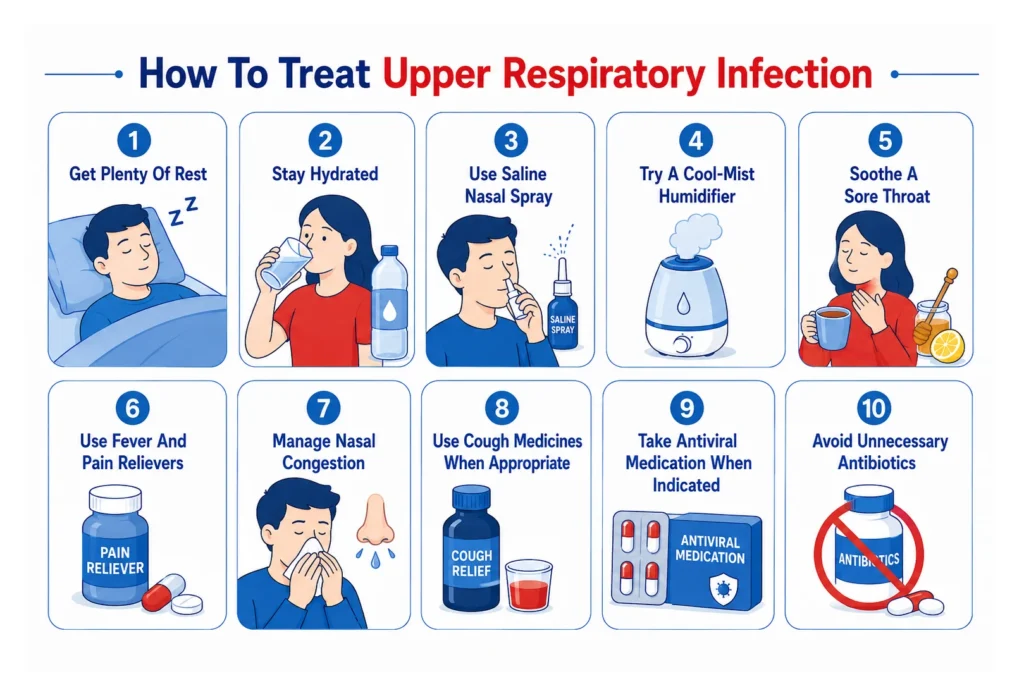
When an upper respiratory infection leaves you dealing with congestion, coughing, sore throat, fatigue, or fever, it can make even simple daily activities feel exhausting. The right approach depends on the cause and severity of your symptoms, as well as your age and overall health.
Get Plenty Of Rest
Rest gives your body time to recover while your immune system responds to the infection. Aim for adequate sleep and reduce strenuous physical activity while symptoms are significant. Taking breaks during the day can also help prevent excessive fatigue and support recovery.
Stay Hydrated
Drinking plenty of water and other fluids can help prevent dehydration during an upper respiratory infection. Fluids may also help keep mucus thinner, making nasal secretions easier to clear. Contact a doctor if you have severe dehydration or cannot keep fluids down.
Use Saline Nasal Spray
Saline nasal sprays or drops can moisturize irritated nasal passages and loosen mucus caused by congestion. They may make breathing through a blocked nose more comfortable. Use these products according to package directions or as recommended by a healthcare professional.
Try A Cool-Mist Humidifier
A clean cool-mist humidifier can add moisture to dry air and may ease nasal congestion and throat irritation. Keep the humidifier clean to prevent mold and microorganism growth. A doctor may recommend humidified air as part of supportive symptom care.
Soothe A Sore Throat
Warm salt-water gargles can temporarily reduce throat irritation associated with an upper respiratory infection. Throat lozenges may also provide short-term relief for some people. Ask a doctor or pharmacist which options are appropriate, particularly for young children.
Use Fever And Pain Relievers
Acetaminophen or ibuprofen may help reduce fever, headaches, muscle aches, and other discomfort. These medicines should be taken according to the label or as recommended by a doctor. People with certain medical conditions or those taking other medications should consult a healthcare professional first.
Manage Nasal Congestion
Decongestants may temporarily relieve a blocked or stuffy nose by reducing swelling inside the nasal passages. They are not suitable for everyone, particularly people with certain health conditions. Ask a doctor or pharmacist before using them and follow the recommended dosage and duration.
Use Cough Medicines When Appropriate
Certain cough medicines may reduce coughing or help loosen mucus when symptoms become bothersome. The appropriate medication depends on whether the cough is dry, productive, or associated with another condition. A doctor or pharmacist should recommend the appropriate product and dosage.
Take Antiviral Medication When Indicated
Some respiratory infections, including influenza and COVID-19, may require antiviral medication rather than routine cold care. These medicines work best when started promptly in eligible patients. Antiviral treatment should be recommended or prescribed by a doctor after evaluating the infection and individual risk factors.
Avoid Unnecessary Antibiotics
Antibiotics do not treat viral upper respiratory infections such as the common cold. They should only be used when a doctor determines that a bacterial infection is present and antibiotic treatment is appropriate. Unnecessary antibiotic use can cause side effects and contribute to antibiotic resistance.
When To Go To The ER
Most upper respiratory infections can be managed at home, but severe or rapidly worsening symptoms may require emergency medical attention. Go to the ER if you develop signs of a serious respiratory problem, severe dehydration, or a significant change in your alertness or overall condition.
- Severe difficulty breathing or shortness of breath.
- Chest pain, pressure, or tightness.
- Bluish, gray, or unusually pale lips, face, or skin.
- Confusion, fainting, or difficulty staying awake.
- Severe dehydration or inability to keep fluids down.
- A severe or rapidly worsening headache, especially with other concerning symptoms.
- Seizures or a sudden change in mental status.
- Symptoms that improve but suddenly return or become significantly worse.
- Severe weakness or inability to perform normal daily activities.
If these symptoms occur, seek immediate medical attention at the ER near me for prompt evaluation and treatment.
STAT Specialty Hospital For Upper Respiratory Infection Care
If your upper respiratory infection symptoms become severe, such as difficulty breathing, chest pain, severe dehydration, or worsening weakness, seek emergency medical attention promptly. At STAT Specialty Hospital, our emergency team provides 24/7 evaluation and treatment for respiratory illnesses, helping patients receive timely care when symptoms require immediate attention.
Knowing how to cure upper respiratory infection depends on the cause and severity of your symptoms. From diagnostic testing and medications to oxygen therapy and IV fluids when medically necessary, our experienced team provides personalized care for children and adults while focusing on safe, efficient recovery. With our ER wait time averaging just 12 minutes, you can receive prompt medical attention when you need it.
Key Takeaways
- Most upper respiratory infections are caused by viruses and improve with supportive care.
- Rest, hydration, saline nasal sprays, and other symptom-relief measures can make recovery more comfortable.
- Antibiotics should only be used when a doctor confirms a bacterial infection requiring antibiotic treatment.
- Antiviral medications may be recommended or prescribed by a doctor for certain respiratory infections.
- Seek emergency care for severe breathing problems, chest pain, confusion, severe dehydration, or rapidly worsening symptoms.
- Persistent or worsening symptoms should be evaluated by a healthcare professional to rule out complications.
Frequently Asked Questions
Is A Upper Respiratory Infection Contagious?
Yes, most upper respiratory infections are contagious, particularly when caused by viruses. They can spread through respiratory droplets, close contact, or contaminated surfaces. Staying home when sick, washing your hands frequently, covering coughs and sneezes, and avoiding close contact with others can reduce the risk of transmission.
How Long Should Upper Respiratory Infection Last?
Most uncomplicated upper respiratory infections improve within 7 to 10 days, although some symptoms, particularly coughing or nasal congestion, may last longer. The duration can vary depending on the virus, your immune response, and overall health. If symptoms persist without improvement or become significantly worse, consult a healthcare professional.
Why Do I Keep Getting Upper Respiratory Infections?
Repeated upper respiratory infections can occur because many different viruses can cause them, and immunity to one virus does not necessarily prevent another infection. Frequent exposure to children, crowded environments, or people who are sick can also increase your risk. If infections are unusually frequent, severe, or prolonged, discuss them with a doctor to determine whether an underlying factor may be contributing.