

Yes, a bacterial infection can absolutely cause a high fever, and in many cases, it is one of the first and most telling signs that your body is actively fighting off a serious bacterial threat. When harmful bacteria enter the body, the immune system releases chemicals that raise body temperature as a defense mechanism, making fever one of the most reliable early indicators that something more than a common cold is at play.
Not all fevers are the same, and a high fever caused by a bacterial infection often behaves differently from the mild temperature spikes commonly associated with viral illnesses. Recognizing warning signs and seeking timely care at our emergency room in Eagle Pass can help prevent serious complications.
What Is A Bacterial Infection?
A bacterial infection occurs when harmful bacteria enter the body and begin multiplying, overwhelming the immune system’s ability to contain them without a significant response. According to MedlinePlus, bacteria are single-celled organisms that can infect virtually any part of the body, including the skin, lungs, urinary tract, blood, and brain. Common bacterial infections include strep throat, urinary tract infections, pneumonia, and skin infections, all of which are capable of triggering a fever as the immune system mounts its response.
What Are the Symptoms Of A Bacterial Infection?
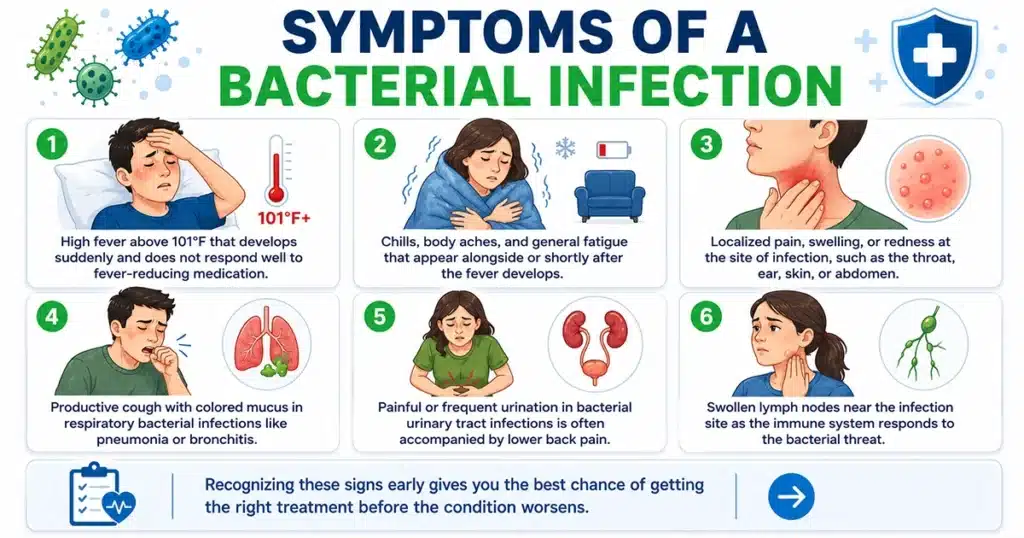
Bacterial infections can cause different symptoms depending on the affected area and severity of the infection. Recognizing these warning signs early and seeking our high fever treatment can help prevent complications and support faster recovery before the condition worsens.
- High fever above 101°F that develops suddenly and does not respond well to fever-reducing medication
- Chills, body aches, and general fatigue that appear alongside or shortly after the fever develops
- Localized pain, swelling, or redness at the site of infection, such as the throat, ear, skin, or abdomen
- Productive cough with colored mucus in respiratory bacterial infections like pneumonia or bronchitis
- Painful or frequent urination in bacterial urinary tract infections is often accompanied by lower back pain
- Swollen lymph nodes near the infection site as the immune system responds to the bacterial threat
If you want to understand more about how fever behaves and how long it typically lasts, our guide on how long a fever lasts covers what is normal and when to be concerned.
What Causes High Fever In Bacterial Infections?
When bacteria enter the body, the immune system responds by releasing proteins called pyrogens that signal the brain to raise the body temperature. This is not a malfunction but a deliberate defense response designed to make survival harder for invading bacteria. Here is exactly what happens during that process:
- Pyrogens are released by immune cells and travel to the brain, triggering the hypothalamus to raise the body’s temperature set point.
- The elevated temperature creates a less hospitable environment for bacteria and slows their ability to multiply throughout the body.
- White blood cells become more active at higher temperatures, improving their ability to detect and destroy bacterial invaders.
- The more widespread or aggressive the infection, the more intense the immune response and the higher the resulting fever tends to be.
- Serious bacterial infections like sepsis or pneumonia are associated with significantly higher and more persistent fevers than milder localized ones.
Bacterial Infection vs Viral Infection: Which Causes Higher Fever?
Both bacterial and viral infections can cause fever, but there are meaningful differences in how those fevers behave that can help identify the underlying cause. Understanding these differences matters because the treatment for each is completely different.
- Bacterial fevers tend to be higher, more persistent, and less responsive to fever-reducing medications like ibuprofen or acetaminophen.
- Viral fevers typically spike early, fluctuate throughout the day, and improve gradually with rest and hydration over 3 to 5 days.
- Bacterial infections often cause localized symptoms such as a severely sore throat in strep throat or severe ear pain in a bacterial ear infection, alongside a high fever.
- Viral infections more commonly produce widespread cold-like symptoms, including a runny nose, congestion, and watery eyes, without a single localized source.
- A bacterial fever that returns after briefly improving or remains high beyond 3 to 5 days is a strong signal that antibiotics are needed.
How To Treat A Bacterial Infection With High Fever?
The treatment approach for a bacterial infection depends on its location, severity, and the type of bacteria involved. Early treatment is always the most effective way to prevent the infection from spreading or causing complications.
- Antibiotics are the primary treatment for bacterial infections and must be prescribed by a doctor based on the specific type of bacteria causing the infection.
- Fever-reducing medications such as ibuprofen or acetaminophen can help bring down the temperature and relieve discomfort while antibiotics begin to work.
- Staying hydrated is essential since high fever causes fluid loss that can quickly lead to dehydration if not actively managed.
- Rest allows the immune system to direct its full energy toward fighting the infection and supporting recovery.
- Completing the full course of antibiotics is critical even when symptoms improve early, as stopping too soon can allow the infection to return stronger.
According to the CDC, antibiotic resistance is a growing public health concern, and antibiotics should only be taken when prescribed by a healthcare provider for a confirmed bacterial infection.
When To Go To The ER
While some bacterial infections may be managed with routine care, certain warning signs require immediate medical attention. If you or someone you care for experiences severe symptoms, visit the nearest emergency room for prompt evaluation and treatment.
- Fever above 103°F that does not come down with medication or keeps returning after briefly improving.
- Signs of dehydration, including extreme thirst, dry mouth, dark urine, or dizziness, alongside the fever.
- Stiff neck, severe headache, or sensitivity to light with high fever, which may indicate bacterial meningitis.
- Confusion, disorientation, or difficulty staying awake alongside a high fever.
- Difficulty breathing, rapid heart rate, or chest pain accompanying a fever from a suspected respiratory infection.
- High fever in adults with diabetes, a weakened immune system, or a chronic medical condition that increases infection risk.
- Any high fever in an infant under 3 months of age, regardless of other symptoms present.
For more on how high fever affects adults specifically, our guide on high fever in adults explains the warning signs and what to do when your temperature becomes dangerous.
Bacterial Infection Care At STAT Specialty Hospital
A bacterial infection with high fever can escalate quickly, and delaying care may increase the risk of serious complications. At STAT Specialty Hospital, our 24/7 emergency room provides fast diagnostic testing, accurate treatment, and comprehensive care for bacterial infections of all types and severity levels. Whether you are experiencing a persistent high fever, localized infection symptoms, or signs of a serious infection, STAT Specialty Hospital team is prepared to evaluate your condition and begin the right treatment promptly. Do not wait for symptoms to worsen; seek the care you need today.