

Waking up with discomfort in your ear, trouble focusing, or a persistent irritating pressure can feel frustrating and unsettling in daily life. Many people overlook early signs, but Swimmer’s Ear (Outer Ear Infections) often begins in ways that quietly disrupt comfort and routine before becoming more noticeable. You’re not alone in experiencing this kind of sudden ear-related distress that seems to worsen at the worst possible time.
What may start as mild irritation can escalate quickly, especially when symptoms are ignored or self-managed without proper care. Pain can intensify, swelling may increase, and the infection can spread deeper into the ear canal, making recovery more difficult. Seeking prompt evaluation at Laredo emergency room can help prevent complications and ensure timely treatment.
What Is Swimmer’s Ear
Swimmer’s Ear (Outer Ear Infections), medically known as otitis externa, is an infection or inflammation of the ear canal that runs from the outer ear to the eardrum. It typically develops when bacteria or fungi enter the ear canal and thrive in warm, moist conditions, especially after swimming or water exposure.
A clinical review from the NIH NCBI notes that otitis externa is one of the most common causes of ear pain, affecting approximately 10% of people during their lifetime, with higher risk in swimmers and children.
Dangerous Swimmer’s Ear Symptoms
- Severe Ear Pain That Worsens On Touch Or Movement Of The Outer Ear.
- Increasing Swelling Or Redness Around The Ear Canal Or Outer Ear.
- Pus-Like Or Foul-Smelling Ear Discharge.
- Partial Hearing Loss Or Muffled Hearing Sensation.
- Fever Along With Ear Pain Or General Fatigue.
- Pain Spreading To The Jaw, Face, Or Neck Area.
- Complete Ear Canal Blockage Due To Swelling Or Debris.
If you or a loved one experiences any of these warning signs, don’t ignore the symptoms. Our earache emergency room provides prompt evaluation and treatment to help relieve pain, address infection, and prevent further complications.
What Causes Swimmer’s Ear
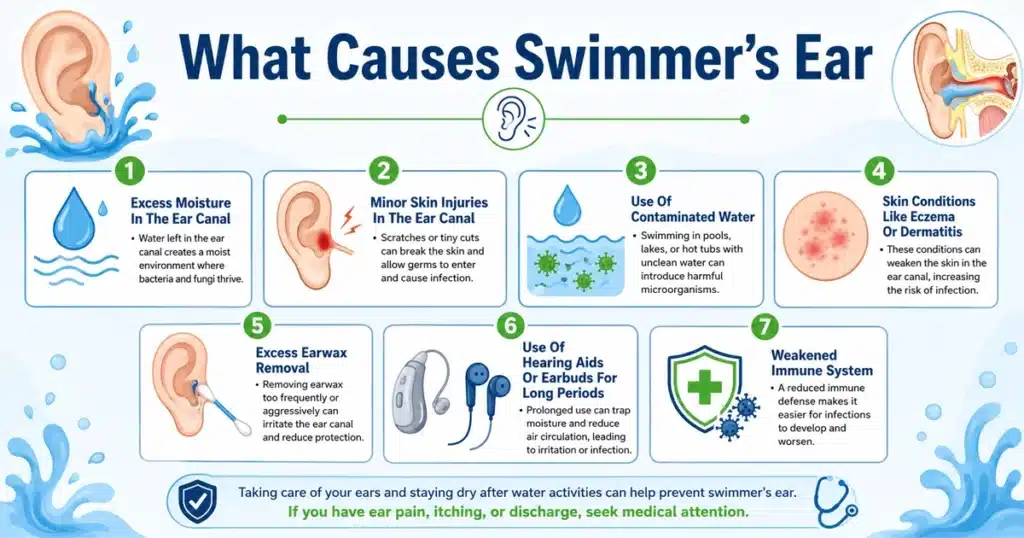
Swimmer’s ear often develops when the delicate balance inside the ear canal is disrupted, leading to irritation and infection. Many people notice symptoms after everyday activities, without realizing how easily the condition can begin. Understanding the underlying triggers is important because early awareness can help prevent worsening pain, swelling, and discomfort that may interfere with daily life and hearing.
- Excess Moisture In The Ear Canal: Water trapped in the ear after swimming, bathing, or heavy sweating creates a persistently damp environment. This moisture softens the skin inside the ear canal and allows bacteria or fungi to multiply more easily, increasing the risk of infection over time.
- Minor Skin Injuries In The Ear Canal: Using cotton swabs, fingernails, or earbuds can cause small scratches or abrasions inside the ear. These tiny breaks in the skin barrier make it easier for germs to enter and trigger inflammation or infection, even from normal skin bacteria.
- Use Of Contaminated Water: Swimming in lakes, pools with poor sanitation, or untreated water sources exposes the ear to higher levels of bacteria and other microorganisms. Once these pathogens enter the ear canal, they can rapidly cause irritation and infection.
- Skin Conditions Like Eczema Or Dermatitis: Chronic skin issues can weaken the protective lining of the ear canal, making it dry, cracked, and more sensitive. This compromised barrier increases vulnerability to bacterial or fungal infections.
- Excess Earwax Removal: Earwax naturally protects the ear by trapping dirt and preventing bacterial growth. Over-cleaning or removing too much wax eliminates this defense, leaving the ear canal exposed and more prone to infection.
- Use Of Hearing Aids Or Earbuds For Long Periods: Wearing devices in the ear for extended durations can trap heat and moisture, creating an enclosed environment where microbes can thrive. This prolonged irritation can also damage the skin lining of the ear canal.
- Weakened Immune System: Conditions such as diabetes, chronic illness, or immune suppression reduce the body’s ability to fight infections effectively. As a result, even mild exposure to bacteria can lead to a more severe or persistent ear infection.
When To Go To The ER
Swimmer’s ear can often be treated early, but in some cases it may become severe enough to require urgent medical attention. If symptoms worsen quickly or begin to affect daily functioning, it may indicate a deeper or more serious infection. Seeking emergency care at the right time can help prevent complications such as spreading infection or potential hearing issues.
- Severe Or Uncontrolled Ear Pain That Does Not Improve With Basic Pain Relief.
- High Fever Along With Ear Pain Or General Weakness.
- Swelling That Causes The Ear Canal To Become Nearly Or Completely Blocked.
- Pus-Like, Bloody, Or Foul-Smelling Discharge From The Ear.
- Sudden Or Noticeable Hearing Loss In One Or Both Ears.
- Pain Spreading To The Face, Jaw, Or Neck Area.
- Dizziness, Balance Problems, Or Severe Headache Along With Ear Symptoms.
If your ear symptoms are worsening or you are unsure about the severity of the infection, do not wait for complications to develop. Finding an emergency room near me can help you get timely evaluation and treatment to protect your hearing and overall health.
How To Treat Swimmer’s Ear
Managing a swimmer’s ear effectively requires timely care to reduce pain, control infection, and prevent complications from developing. Many people try to ignore early discomfort, but symptoms can worsen quickly if the underlying infection is not addressed properly. With the right medical approach, most cases improve within a few days, helping restore comfort and normal ear function.
- Over-The-Counter Pain Relief Medications: Medicines like ibuprofen or acetaminophen may help reduce pain and inflammation. However, most doctors recommend using these only for temporary symptom relief until proper medical evaluation is done.
- Prescription Antibiotic Ear Drops: These are commonly used to target bacterial infections directly in the ear canal. Most doctors recommend antibiotic drops such as ciprofloxacin or ofloxacin when bacterial infection is confirmed.
- Antifungal Ear Medications: If the infection is fungal in nature, antifungal ear drops may be prescribed. Most doctors recommend these when symptoms do not improve with standard antibiotic treatment.
- Ear Cleaning Procedures (Aural Toilet): A healthcare provider may gently clean the ear canal to remove discharge, debris, or excess wax. This helps medications work more effectively and speeds up recovery.
- Wick Placement In Severe Swelling: In cases where the ear canal is significantly swollen, a small medicated wick may be inserted. Most doctors recommend this method to ensure medication reaches deep inside the inflamed ear canal.
Swimmer’s Ear Care At STAT Specialty Hospital
Swimmer’s Ear can become painful and disruptive when left untreated, affecting comfort, sleep, and hearing. At STAT Specialty Hospital, our team provides focused evaluation and accurate diagnosis to identify the cause of infection and guide treatment. With our ER wait time of 15 minutes, patients can receive prompt care without unnecessary delays.
At STAT Specialty Hospital, Swimmer’s Ear (Outer Ear Infections) is managed with evidence-based treatment plans tailored to each patient’s condition and symptom severity. Our specialists focus on relieving pain, clearing infection, and restoring normal ear function while also guiding patients on prevention to avoid recurrence.
Key Takeaways
- Swimmer’s Ear (Outer Ear Infections) is a common ear canal infection that can worsen quickly if left untreated.
- Early symptoms like itching, mild pain, or discomfort should not be ignored as they may progress to severe pain and swelling.
- Moisture, minor ear injuries, contaminated water, and weakened ear protection are major contributing factors.
- Severe symptoms such as fever, discharge, hearing loss, or spreading pain require urgent medical attention.
- Timely treatment with ear drops, pain relief, and professional ear cleaning can prevent complications and speed recovery.
- Proper ear care and avoiding excessive moisture or injury can significantly reduce the risk of recurrence.
Frequently Answered Questions
How Long Does Swimmer’s Ear Last?
With appropriate treatment, most cases begin to improve within 48 to 72 hours and typically resolve within 7 to 10 days. However, more severe infections or delayed treatment may extend the healing time and require closer medical follow-up.
What Is The Best Antibiotic For Swimmer’s Ear?
The most commonly used treatment is prescription antibiotic ear drops, which target the infection directly in the ear canal. Most doctors recommend options such as ciprofloxacin or ofloxacin based on the severity and type of infection.
How Long Does Swimmer’s Ear Last Without Treatment?
Without proper treatment, symptoms may persist for several weeks and can progressively worsen over time. This delay can increase the risk of severe pain, swelling, ear discharge, and potential hearing difficulties or complications.
How To Prevent Swimmer’s Ear?
Prevention focuses on keeping the ear canal dry and avoiding irritation. This includes thoroughly drying ears after swimming or bathing, avoiding the use of cotton swabs or sharp objects inside the ear, and regularly cleaning earphones or hearing aids to reduce bacterial buildup.
Do Ear Infections Go Away On Their Own?
Some mild ear infections may improve on their own, but many require treatment to prevent worsening symptoms and complications. If pain, swelling, fever, or hearing changes occur, seek medical evaluation promptly.