
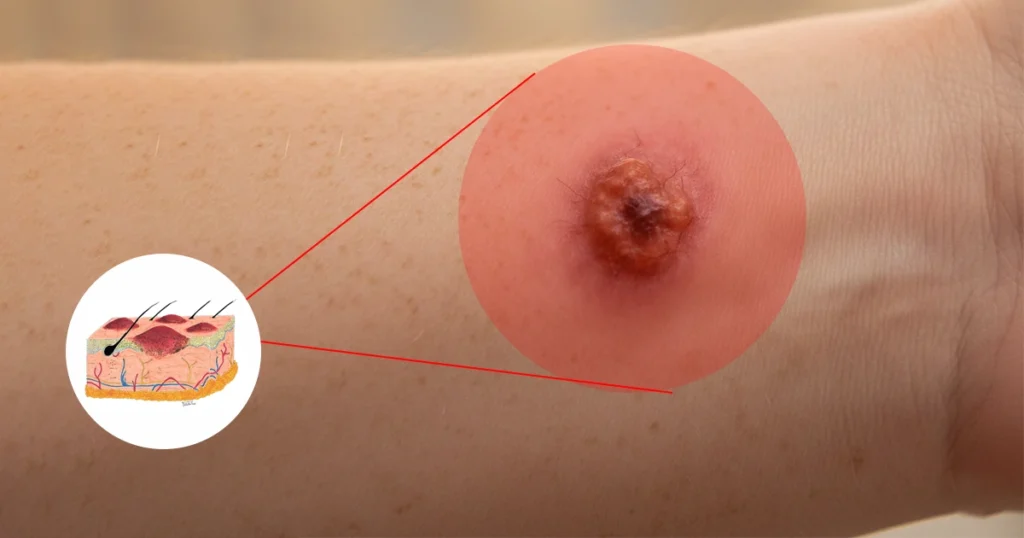
Lesions are areas of abnormal tissue that can appear anywhere in the body, from your skin to your organs. While the term may sound alarming, not all lesions are dangerous. Knowing the difference between a harmless mark and a potentially serious issue can help you make informed decisions about your health.
Lesions can appear for many reasons, including infections, trauma, inflammation, or cancer. They may show up as a mole, a mouth sore, or a growth on an organ. At the Laredo Emergency Room, our team sees patients with various lesions daily, providing expert care and quickly identifying any serious conditions to guide the right treatment.
Types of Lesions
Lesions vary by nature, location, appearance, and cause. They can be benign or malignant, appear on the skin, organs, or mouth, and take forms such as cysts, ulcers, or blisters. Understanding these differences helps guide diagnosis and treatment effectively.
Lesions by Nature
Lesions by nature are classified as benign or malignant. Benign lesions are non-cancerous and usually slow-growing, while malignant lesions are cancerous and can invade nearby tissues. Knowing the nature of a lesion helps guide diagnosis and treatment decisions.
- Benign Lesions: Benign lesions are non-cancerous and typically slow-growing. Common examples include moles, cysts, and lipomas. While harmless, they should still be monitored for changes. In fact, a pediatric dermatology study found that nearly 98.97% of non-melanocytic skin tumors in children were benign, with only about 1.03% being malignant, showing how rare serious cases are in younger patients.
- Malignant Lesions: Malignant lesions are cancerous and can invade surrounding tissues. Examples include melanoma, liver cancer lesions, and certain brain tumors. Early detection is critical to prevent the spread and ensure timely treatment.
Lesions by Location in the Body
Lesions can appear in different parts of the body, and their location often influences symptoms, diagnosis, and treatment. Identifying where a lesion occurs helps healthcare providers determine its cause and urgency. Here are the main types by location:
- Skin Lesions: These include moles, warts, rashes, and other visible marks. As some of the most common types of skin lesions, they’re often noticed first and can signal underlying infections or other health conditions.
- Brain Lesions: Caused by stroke, tumors, or multiple sclerosis, brain lesions can affect cognitive or motor functions. Early detection is crucial to prevent serious neurological damage.
- Liver Lesions: Examples include cysts and hemangiomas. Imaging tests like ultrasounds or CT scans are usually required to detect and monitor these lesions.
- Bone Lesions: Can be lytic (bone loss) or sclerotic (bone hardening), impacting structural integrity and potentially causing pain or fractures.
- Oral Lesions: Include ulcers, leukoplakia, or sores in the mouth. They can affect eating, speaking, and may signal infections or precancerous conditions.
- Genital Lesions: May indicate infections such as herpes or syphilis. Timely evaluation is important to prevent complications and transmission.
Lesions by Appearance / Characteristics
Lesions can take many forms, and their appearance often provides important clues about their cause and severity. Classifying lesions by characteristics helps healthcare providers decide on the best approach for diagnosis and treatment.
- Cystic Lesions: These are fluid-filled sacs that can form under the skin or within organs. They are usually benign but may require monitoring if they grow or cause discomfort.
- Solid Lesions: Composed of dense tissue, solid lesions can be benign or malignant. Imaging and sometimes biopsy are used to determine their nature.
- Ulcerative Lesions: Open sores that can result from infection, trauma, or chronic disease. They often require prompt care to prevent complications.
- Vesicular Lesions: Appear as small fluid-filled blisters, commonly caused by viral infections like herpes or chickenpox.
- Annular Lesions: Ring-shaped lesions that may indicate fungal infections or autoimmune conditions.
- Exophytic Lesions: Growths that extend outward from the surface of tissue, sometimes seen in skin or oral lesions.
- Target Lesions: Lesions with a bullseye appearance, often linked to specific infections or immune reactions.
Lesions by Cause
Understanding the cause of a lesion is crucial for proper treatment and management. Lesions can develop due to infections, injuries, autoimmune reactions, or abnormal cell growth, and each type requires a different approach.
- Infectious Lesions: Caused by viruses, bacteria, or fungi, these lesions may appear as sores, rashes, or blisters. Prompt diagnosis helps prevent spread and complications.
- Traumatic Lesions: Result from physical injury, such as cuts, abrasions, or Morel-Lavallée lesions. Proper care is essential to prevent infection and promote healing.
- Inflammatory / Autoimmune Lesions: Occur in conditions like lupus or multiple sclerosis, where the immune system attacks healthy tissue. These lesions often require specialized medical management.
- Neoplastic Lesions: Arise from abnormal cell growth, which can be benign or malignant. Early detection and monitoring are vital to prevent potential cancer progression.
Are Lesions Cancerous?
Not all lesions are cancerous, but some may signal serious health issues. Warning signs include rapid growth, irregular shape, unusual color, or persistent pain. Diagnostic tests, including biopsies, are essential to confirm whether a lesion is benign or malignant. A large study of 4,726 patients found that during total body skin exams, about 5.1 malignant lesions were discovered per 100 patients, many of which were completely incidental. These findings highlight how professional exams can detect serious issues early, even when patients are unaware of a concerning lesion.
Primary vs Secondary Lesions
Lesions are classified as primary or secondary based on how they develop. Primary lesions appear first as the initial abnormality, such as macules or papules. Secondary lesions form from changes to primary lesions over time, including crusts, scars, or ulcers, often reflecting the progression or healing process.
Primary Lesions
Primary lesions are the first signs of abnormal tissue changes and appear directly on healthy skin or mucous membranes. Common types include macules (flat spots), papules (small raised bumps), nodules (larger lumps), vesicles (fluid-filled blisters), and pustules (pus-filled bumps). Early identification of primary lesions is crucial for accurate diagnosis and timely treatment.
Secondary Lesions
Secondary lesions develop as primary lesions evolve or due to external factors like scratching, infection, or healing. They include crusts, scales, ulcers, scars, and fissures. Recognizing secondary lesions helps healthcare providers understand the lesion’s progression and guide effective management while preventing complications.
Get Expert Care for Lesions at STAT Specialty Hospital
If you notice a lesion on your skin, in your mouth, or anywhere else, it’s important to get it checked promptly. Early evaluation helps prevent complications and ensures accurate diagnosis of benign, malignant, or oral lesions. Rapid emergency care centers are especially useful when a lesion appears suddenly or begins to change.
At Stat Specialty Hospital, our team evaluates a wide range of lesions every day, allowing us to quickly spot concerning signs and guide timely treatment. This experience gives patients reliable answers fast and the expert care they need when something unexpected appears.