

You might be asking yourself, “Why is my mucus black?” Noticing dark or black-colored mucus can be alarming, but it may happen for several reasons, ranging from harmless environmental exposure to more serious underlying conditions. Understanding the causes, symptoms, and treatments can help you respond appropriately.
Seeing black mucus can make anyone anxious, especially if it occurs repeatedly. Sometimes, it may be linked to inhaled particles, infections, or lung conditions, which is why consulting our emergency room in Del Rio can provide clarity and peace of mind.
Why Is My Snot Black?
Black nasal mucus, or “black snot,” can occur when soot, dust, or smoke particles accumulate in your airways. A case report of a coal worker showed black-pigmented sputum caused by particle buildup in the lungs. This demonstrates that black mucus may reflect real environmental or occupational exposure. Even after exposure ends, the mucus can remain dark temporarily.
Symptoms of Black Mucus
- Persistent or recurring cough.
- Presence of dark-colored phlegm or black specks in phlegm.
- Shortness of breath or difficulty breathing.
- Chest discomfort or tightness.
- Fatigue or general malaise.
What Causes Black Mucus?
Mucus is a protective fluid produced by your nose, sinuses, throat, and lungs. It traps dust, germs, pollen, and other particles while keeping airways moist. Changes in its color or consistency often signal how your body reacts to irritants, infections, or other stressors. Understanding the underlying causes helps in managing or treating abnormal mucus effectively.
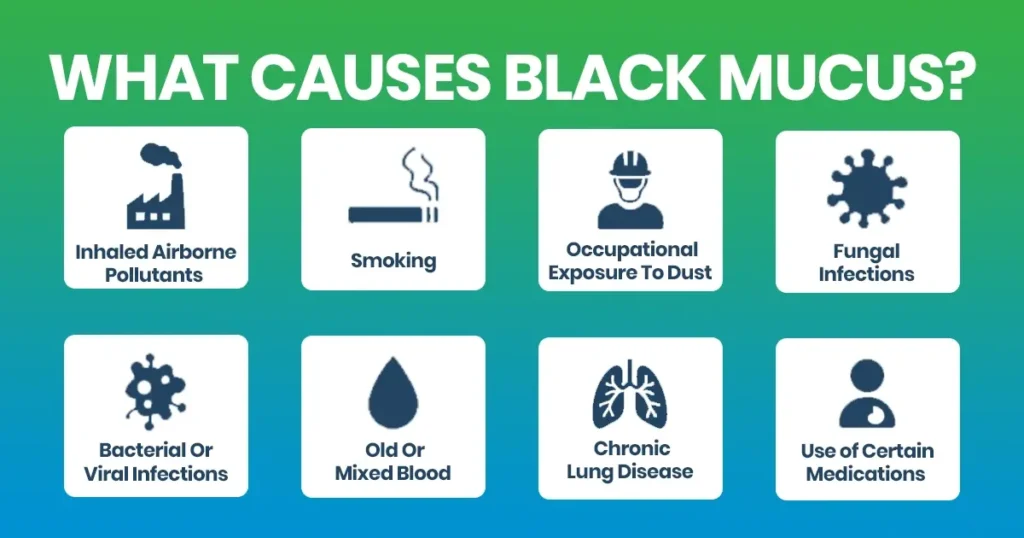
1. Inhaled Airborne Pollutants
Dust, soot, smoke, and industrial pollutants can settle in the respiratory tract and mix with mucus, giving it a dark appearance. Wildfire smoke, urban pollution, and construction dust are common sources. Reducing exposure and using air purifiers or masks can help the mucus gradually return to normal color.
2. Smoking
Tobacco smoke contains tar and fine particles that accumulate in the lungs and airways. This can lead to black phlegm, black mucus, or sputum with black spots. Smoking also damages cilia, the tiny hair-like structures that help clear mucus, making it thicker and darker. Avoiding smoking and secondhand smoke improves lung function and airway clearance.
3. Occupational Exposure to Dust
Working in construction, mining, or industries handling coal, silica, or carbon black increases inhalation of dark particles. These particles can accumulate in airways, causing persistent black mucus or phlegm. Chronic exposure may lead to occupational lung diseases like Anthracosis. Wearing protective masks or respirators is essential to reduce long-term damage.
4. Fungal Infections
Fungal infections in the lungs or sinuses can darken mucus, especially in immunocompromised individuals. Fungi can irritate the airway and cause tissue damage, resulting in black mucus. Early diagnosis and antifungal treatment prevent complications. Even mild fungal infections can temporarily change mucus color.
5. Bacterial or Viral Infections
Severe or chronic respiratory infections, such as the common cold, can alter mucus color and consistency. Dark or black phlegm may appear due to cellular debris or minor bleeding. While color alone doesn’t confirm the infection type, it signals an active immune response. Timely medical evaluation ensures proper treatment and prevents worsening.
6. Old or Mixed Blood
Minor bleeding from nosebleeds or airway irritation can darken mucus. Dry air, coughing, or minor trauma may contribute. Usually, this is harmless and resolves on its own. Persistent dark mucus or repeated bleeding should be checked to rule out underlying issues.
7. Chronic Lung Disease
Chronic lung conditions reduce the body’s ability to clear mucus efficiently. This leads to thick, dark phlegm and increases infection risk. Over time, mucus may appear black or contain specks from trapped cellular debris. Managing the underlying disease is crucial to reduce inflammation and improve airway function.
8. Use of Certain Medications
Blood-thinning medications or conditions that increase bleeding risk can cause minor airway bleeding. Even small amounts of blood in mucus can darken it, producing black or brown flecks. Pulmonary congestion or fluid buildup may also contribute. Regular monitoring and medical consultation are advised to prevent complications.
When Mucus Is Dangerous?
Black mucus is not always dangerous, but persistent discoloration or associated symptoms require attention. Watch for these signs:
- Persistent productive cough.
- Sputum with black spots, black secretion, or phlegm with brown flecks.
- Coughing up blood or rust-colored phlegm.
- Shortness of breath, chest pain, or tightness.
- Unexplained weight loss, fatigue, night sweats, and fever.
If you notice these symptoms with black mucus or phlegm, contact STAT Specialty Hospital immediately for prompt evaluation.
How to Get Rid of Mucus?
Supporting your body to clear mucus can make breathing easier and reduce discomfort. Simple lifestyle steps, like maintaining clean air, staying hydrated, and avoiding irritants, can significantly help your respiratory health. Taking proactive care of your airways can also prevent further complications and improve overall comfort.
- Avoid Irritants And Pollutants: Limit exposure to smoke, dust, industrial pollutants, and wildfires. Masks or air filters reduce inhalation of particles.
- Increase Hydration: Drinking water thins mucus, aiding its clearance and reducing black phlegm or black mucus.
- Use Humidifiers Or Steam Inhalation: Moist air soothes airways, prevents dryness, and decreases black specks in phlegm.
- Quit Smoking / Avoid Secondhand Smoke: Reduces tar, soot, and carbon particle buildup in lungs and mucus.
- Expectorants Or Mucolytic Agents: Medications that loosen thick mucus or phlegm help expel sputum with black spots.
- Treat Underlying Infections Or Conditions: Follow prescribed medications for bacterial, viral, or fungal infections; manage chronic lung diseases per medical advice.
- Regular Medical Check-Ups: Occupational exposure or chronic lung disease patients should monitor lung health via imaging, sputum analysis, or pulmonary tests.
Black Mucus? Expert Care at STAT Specialty Hospital
Wondering “Why is my mucus black?” can signal exposure to pollutants, infections, or other respiratory issues. At STAT Specialty Hospital, our specialists provide timely evaluations to determine the underlying cause and recommend appropriate treatments. Early attention can prevent complications and help restore normal respiratory health.
Through personalized outpatient care, we guide patients on managing symptoms, reducing irritation, and supporting lung and sinus health. With expert advice and lifestyle tips, patients can breathe easier and minimize future episodes of abnormal mucus.